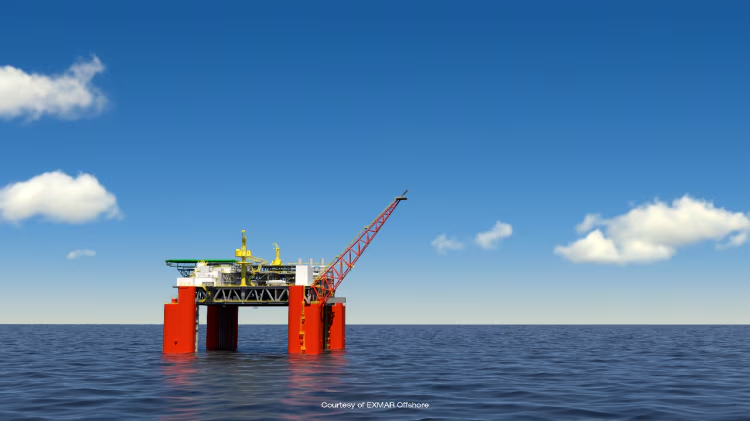
The recent approval of bp’s Kaskida deepwater project in the U.S. Gulf of Mexico marks a pivotal moment for the supermajor and the broader energy investment landscape. This development is not merely another offshore venture; it signals bp’s decisive return to large-scale, virgin field development in a region critical for long-term crude supply, nearly 16 years after the Deepwater Horizon incident. For investors, Kaskida represents a significant capital allocation strategy, a testament to technological prowess, and a vote of confidence in the enduring role of deepwater resources in meeting future global energy demand, despite fluctuating short-term market dynamics and environmental concerns.
Kaskida: A Cornerstone in bp’s Future Portfolio
The Kaskida project, slated to commence crude production in 2029, is a monumental undertaking with a projected initial output equivalent to approximately 275 million barrels. This figure is just the beginning, as the seafloor section is estimated to hold as much as 10 billion barrels of resources. This $5 billion investment is a clear indicator of bp’s commitment to strengthening its deepwater portfolio and securing long-term production assets. What makes Kaskida particularly noteworthy is its history: discovered nearly two decades ago, its development was stalled by the extreme high pressures and complex geology, requiring significant technological advancements to make it viable. This approval, therefore, isn’t just about unlocking reserves; it’s about showcasing the industry’s sustained innovation in tackling formidable engineering challenges to bring vital energy resources to market. For investors eyeing bp’s long-term growth trajectory and resilience, Kaskida, alongside other major projects like the Tiber-Guadalupe deepwater development, underscores a strategic and technologically driven approach to resource expansion.
Navigating Current Market Realities and Investor Sentiment
While the Kaskida project looks towards 2029 for first oil, investors are naturally focused on the immediate market pulse. As of today, Brent crude trades at $92.96 per barrel, reflecting a slight dip of 0.3% from its opening, with a daily range between $92.57 and $94.21. Similarly, WTI crude sits at $89.36, down 0.35% for the day, having traded between $88.76 and $90.71. This recent softness follows a more pronounced trend, with Brent crude having fallen by approximately 7% from $101.16 on April 1st to $94.09 by April 21st. Our proprietary data indicates that readers are actively scrutinizing price direction, with common queries like “is WTI going up or down” and “what do you predict the price of oil per barrel will be by end of 2026?” dominating investor discussions this week.
These immediate price fluctuations, while important for short-term trading strategies, must be viewed through a different lens when evaluating multi-billion-dollar, multi-decade projects like Kaskida. bp’s decision to sanction this project, despite the recent downward pressure on crude prices, signals a robust long-term outlook for global oil demand and a belief in sustained profitability for deepwater assets. Companies undertaking such massive capital expenditures are not betting on next week’s price, but rather on the structural supply-demand dynamics that will prevail by the end of the decade and beyond. This strategic foresight is crucial for investors seeking durable value in the energy sector, distinguishing long-term conviction from transient market noise.
The Long Game: Kaskida’s Role in Future Supply and Market Dynamics
The approval of Kaskida is a forward-looking decision that will profoundly influence the supply landscape in the latter half of the decade. With first oil anticipated in 2029, this project illustrates the significant lead times inherent in deepwater exploration and production. While investors are keenly awaiting immediate market indicators like the EIA Weekly Petroleum Status Reports, scheduled for April 22nd and April 29th, and the API Weekly Crude Inventory updates on April 28th and May 5th, these events provide snapshots of current supply-demand balances. However, Kaskida’s impending production, along with insights from the EIA Short-Term Energy Outlook on May 2nd, will begin to paint a clearer picture of the longer-term trajectory.
The consistent Baker Hughes Rig Count reports on April 24th and May 1st offer a real-time gauge of drilling activity, primarily in onshore and shallower waters. Kaskida, by contrast, represents a strategic commitment to ultra-deepwater resources, which require a different scale of investment, technology, and regulatory oversight. Despite objections from environmental groups regarding the risks of ultra-deepwater drilling, bp has reiterated its “highest priority” on safety and environmental protection. This project signifies that major energy companies, backed by regulatory approvals, are prepared to deploy advanced technology and substantial capital to unlock complex reserves, confident in their ability to manage risks and meet future energy needs. For long-term investors, Kaskida reinforces the strategic importance of the U.S. Gulf of Mexico as a reliable, technologically advanced source of crude, critical for global energy security.