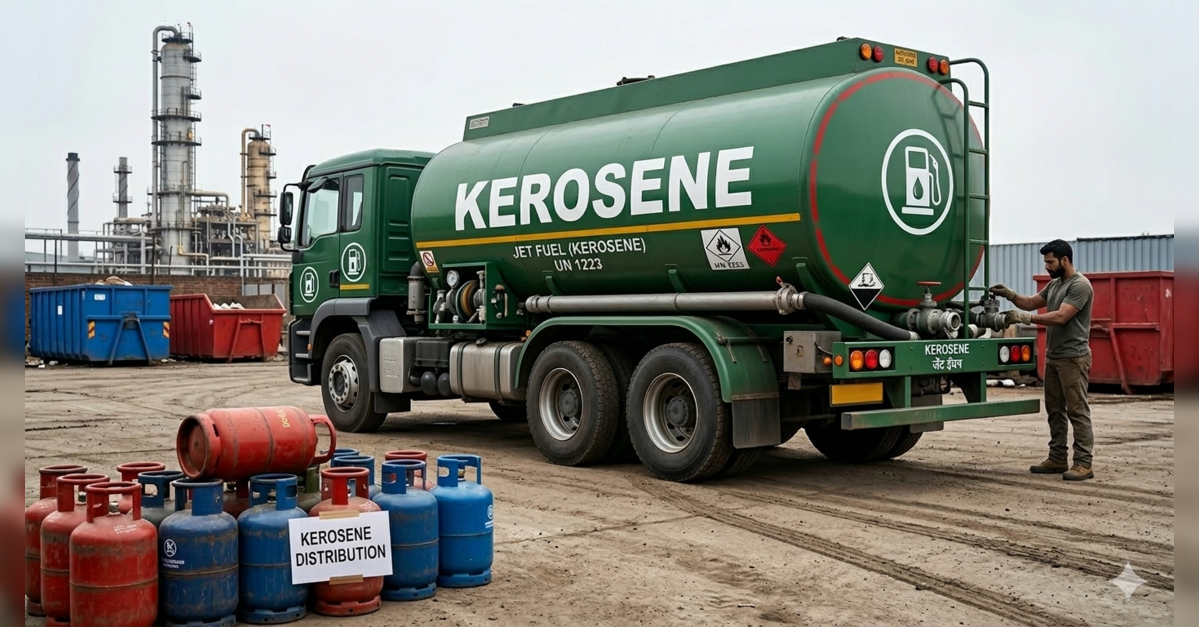
The global energy landscape is constantly shifting, but recent developments in India underscore the acute vulnerability of supply chains to geopolitical flashpoints. As escalating tensions in West Asia disrupt critical maritime routes, India, a major energy importer, has been compelled to implement extraordinary measures, temporarily reintroducing kerosene for household use and permitting coal for commercial establishments. This pivot highlights the immediate challenges faced by nations heavily reliant on imported energy and offers a stark reminder to investors about the intricate balance of supply, demand, and geopolitical risk in the oil and gas sector.
Geopolitical Chokepoints and India’s Immediate Energy Rebalancing Act
The catalyst for India’s energy policy shift lies squarely in the Strait of Hormuz, a vital 21-mile-wide maritime passage between Iran and Oman. This narrow, 50-mile-long choke point, with its restricted 2-mile shipping lanes, serves as the sole sea exit for oil and gas from major producers like Saudi Arabia, Kuwait, and the UAE, carrying approximately one-fifth of the world’s crude oil and liquefied natural gas (LNG). India’s dependence is particularly pronounced: the nation imports roughly 88% of its crude oil, 50% of its LNG, and 60% of its LPG, with a significant majority transiting through this strait.
The widening conflict in West Asia, which intensified following strikes and retaliatory actions starting February 28, has severely curtailed energy flows through the Strait. For India, this disruption means more than half of its crude oil imports, about 55% of its crucial LPG supplies for cooking, and nearly 30% of its LNG imports are under threat. While alternative crude sources like Russia have proven viable, replacing LPG is far more challenging. India consumed 31.3 million tonnes of LPG in 2024-25, producing only 12.8 million tonnes domestically. A staggering 85-90% of its LPG imports originate from countries reliant on the Strait of Hormuz. In response, the Indian government has prioritized household cooking gas, implementing temporary measures such as allocating an additional 48,000 kilolitres of kerosene, supplementing the regular monthly quota of approximately 100,000 kilolitres, and encouraging commercial users like hotels to switch to alternative fuels such as biomass, refuse-derived fuel (RDF) pellets, and coal.
Market Snapshot: Geopolitical Risk vs. Broader Price Action
Despite the severe supply chain disruptions highlighted by India’s actions, the immediate impact on global crude prices has been somewhat contained. As of today, Brent Crude trades at $92.96, reflecting a marginal daily decline of 0.3%, with WTI Crude similarly down 0.35% at $89.36. This relatively stable intraday movement contrasts with the broader market trend observed over the past two weeks, where our proprietary data shows Brent crude declining by 7%, from $101.16 on April 1st to $94.09 on April 21st. The price of gasoline stands at $3.11, down 0.64% for the day.
This divergence suggests that while geopolitical risks remain a significant factor, the market is also weighing other elements. The availability of alternative crude sources, as evidenced by India’s ability to pivot to Russian oil, may be mitigating upward price pressure on crude. However, the specific challenge with LPG, which is less easily replaced due to logistical complexities and the geographic concentration of alternative suppliers in North America, could signal localized price spikes or increased arbitrage opportunities for investors tracking refined products. The market’s current posture indicates a cautious assessment, where the immediate supply crunch for a critical commodity like LPG in a major consuming nation like India is not yet translating into a widespread crude oil rally, perhaps due to broader demand concerns or inventory levels reflected in upcoming reports.
Investor Focus: Addressing Core Questions Amidst Volatility
Our proprietary reader intent data reveals a consistent theme among investors this week: a fundamental uncertainty about price direction. Queries such as “is WTI going up or down?” and “what do you predict the price of oil per barrel will be by end of 2026?” underscore the prevailing anxiety. India’s temporary fuel shift vividly illustrates the complexities driving this volatility. While the conflict in West Asia creates an immediate supply risk, the broader market’s tempered reaction to crude prices suggests that investors are grappling with multiple, often conflicting, signals.
For investors, India’s situation is a case study in demand resilience meeting supply fragility. The necessity for the government to step in with emergency measures highlights that demand for essential fuels like LPG is inelastic, even at higher prices. However, the market’s ability to find alternative crude sources, albeit with logistical challenges, suggests a degree of flexibility in the global oil supply chain. Those seeking to position themselves for the remainder of 2026 must consider how such regional disruptions, even if temporary, could impact refining margins, the demand for specific refined products like kerosene and LPG, and the long-term strategic decisions of major energy consumers. The emphasis should be on companies with diversified supply portfolios, robust logistics, or those positioned to benefit from shifts in fuel demand, such as providers of alternative energy solutions or refiners adept at adjusting output based on regional needs.
Forward Outlook: Key Data Points and Strategic Implications
Looking ahead, the next few weeks will provide crucial data points for investors assessing the ongoing impact of geopolitical tensions and India’s energy rebalancing. The upcoming EIA Weekly Petroleum Status Reports, scheduled for April 22nd, April 29th, and May 6th, will be particularly insightful. These reports will offer a glimpse into U.S. crude oil and product inventories, which could reflect any global shifts in supply or demand stemming from disruptions in critical regions. A drawdown in inventories, particularly of refined products, could signal tightening global markets beyond crude itself.
Furthermore, the Baker Hughes Rig Count reports on April 24th and May 1st will indicate whether North American producers are responding to sustained elevated prices by increasing drilling activity. A rise in the rig count could signal expectations of long-term price strength, potentially offsetting some geopolitical risks. Most critically, the EIA Short-Term Energy Outlook on May 2nd will provide updated global supply and demand forecasts. This report will be essential for understanding how major agencies are incorporating ongoing regional conflicts, and subsequent demand shifts like India’s, into their projections for the remainder of 2026 and beyond. Investors should closely monitor these releases for indications of how energy markets are adapting to evolving geopolitical realities, paying particular attention to any revised outlooks for refined product markets given India’s unique challenges with LPG supply.


