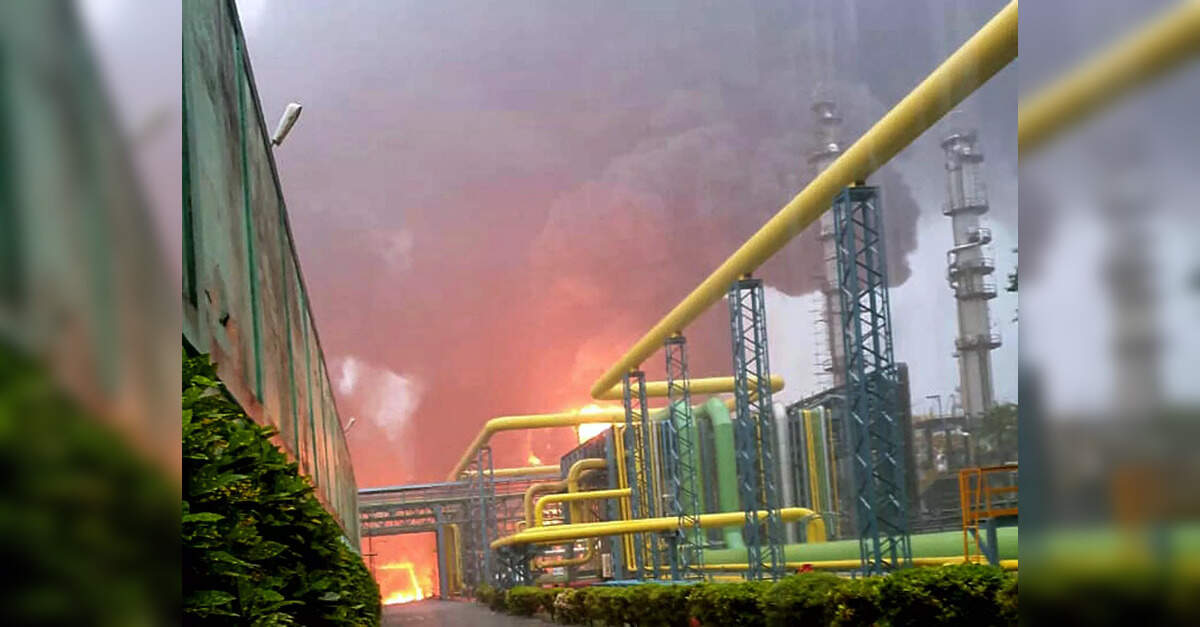
India’s burgeoning energy demand faces a new challenge as disruptions stemming from the ongoing West Asia conflict trigger significant supply curtailments in its city gas distribution (CGD) sector. This immediate crisis is projected to reduce daily sales volumes by 8-10 percent, primarily impacting industrial and commercial users. While the domestic and automotive sectors are largely shielded due to priority allocation, the incident underscores India’s vulnerability to global supply chain shocks and raises crucial questions for investors monitoring the subcontinent’s energy landscape.
Geopolitical Ripples and India’s Gas Supply Crunch
The immediate catalyst for this contraction is Qatar’s declaration of force majeure on LNG deliveries, a critical development given that the Middle Eastern nation accounts for approximately 45 percent of India’s total LNG imports. This disruption cascades through the gas value chain, leading to a projected 8-10 percent decline in the CGD industry’s daily sales volume. The impact, however, is far from uniform. Industrial and commercial piped natural gas (PNG) customers are bearing the brunt, experiencing curtailments that could reach 40-50 percent of their supply. This segment’s heavy reliance on imported LNG makes it particularly susceptible to international supply shocks. In stark contrast, compressed natural gas (CNG) and domestic PNG supplies are expected to remain stable, protected by priority allocation rules and their substantial reliance on domestically produced gas, which fulfills about 60 percent of the CGD sector’s total gas requirement. While this insulation is positive for consumer stability, it highlights the structural split within India’s gas market and the distinct risk profiles for different segments.
Navigating Tight Global LNG Markets and Investor Concerns
The challenge for Indian gas traders seeking alternative supplies is compounded by a global LNG market already operating near full capacity. Key exporting facilities worldwide are running at 90-95 percent utilization, leaving minimal room to offset the absence of Qatar’s substantial 77-80 million tonnes per annum (MTPA) export volumes, should the situation prolong. This tight supply environment naturally drives up spot prices, making immediate diversification costly and difficult. Investors are keenly watching how these dynamics might influence broader energy prices, with many asking about the trajectory of crude and natural gas. Our proprietary reader intent data reveals a consistent investor query: “is WTI going up or down?” and a broader interest in “what do you predict the price of oil per barrel will be by end of 2026?” While the current gas market specifics in India are localized, they contribute to the overarching narrative of geopolitical risk and supply uncertainty that influences these price expectations across the energy complex. The limited global excess supply means even localized disruptions can have disproportionate effects on market sentiment and price discovery.
Crude Stability Amidst Gas Volatility: A Divergent Market View
Interestingly, the acute supply challenges within India’s gas market are not currently mirrored by significant upward pressure on crude oil prices. As of today, Brent crude trades at $92.96 per barrel, reflecting a marginal decline of 0.3 percent for the day, with its range between $92.57 and $94.21. Similarly, WTI crude is priced at $89.36 per barrel, also down 0.35 percent, trading within a daily range of $88.76 to $90.71. This relative stability, or even slight softening, in crude prices over the past 24 hours contrasts sharply with the immediate gas supply crunch in India. Looking at the broader trend, Brent crude has seen a notable retracement over the past two weeks, dropping from $101.16 on April 1st to $94.09 on April 21st, representing a 7 percent decline of $7.07. This divergence suggests that while specific regional disruptions, like the Qatar force majeure, can severely impact local gas markets, the global crude market may be influenced by a different set of factors, including broader demand outlooks or other supply reassessments. For investors, this creates a nuanced environment, where targeted investments in gas infrastructure or alternative energy sources in affected regions might offer different risk-reward profiles compared to traditional crude plays.
Forward Outlook: Key Events and Strategic Responses
Looking ahead, the resilience of CGD players in India will be tested, although current assessments suggest credit profiles will be cushioned by healthy balance sheets and robust sponsor support. While operating margins might see only limited impact, operating cash accruals are likely to moderate due to the volume contraction. From a broader market perspective, several upcoming events will offer critical insights into energy supply and demand dynamics. Investors should closely monitor the EIA Weekly Petroleum Status Reports on April 22nd, April 29th, and May 6th, which provide crucial data on U.S. crude, gasoline, and distillate inventories, influencing global sentiment. The Baker Hughes Rig Count on April 24th and May 1st will indicate North American production trends, while the API Weekly Crude Inventory reports on April 28th and May 5th offer early indications of inventory shifts. Most importantly for forward-looking analysis, the EIA Short-Term Energy Outlook, due on May 2nd, will provide a comprehensive forecast for global energy markets, including natural gas, which will be essential for understanding the long-term implications of current disruptions. India’s strategic response, focusing on diversifying LNG import sources and potentially accelerating domestic production, will be paramount in mitigating future vulnerabilities and ensuring long-term energy security.


