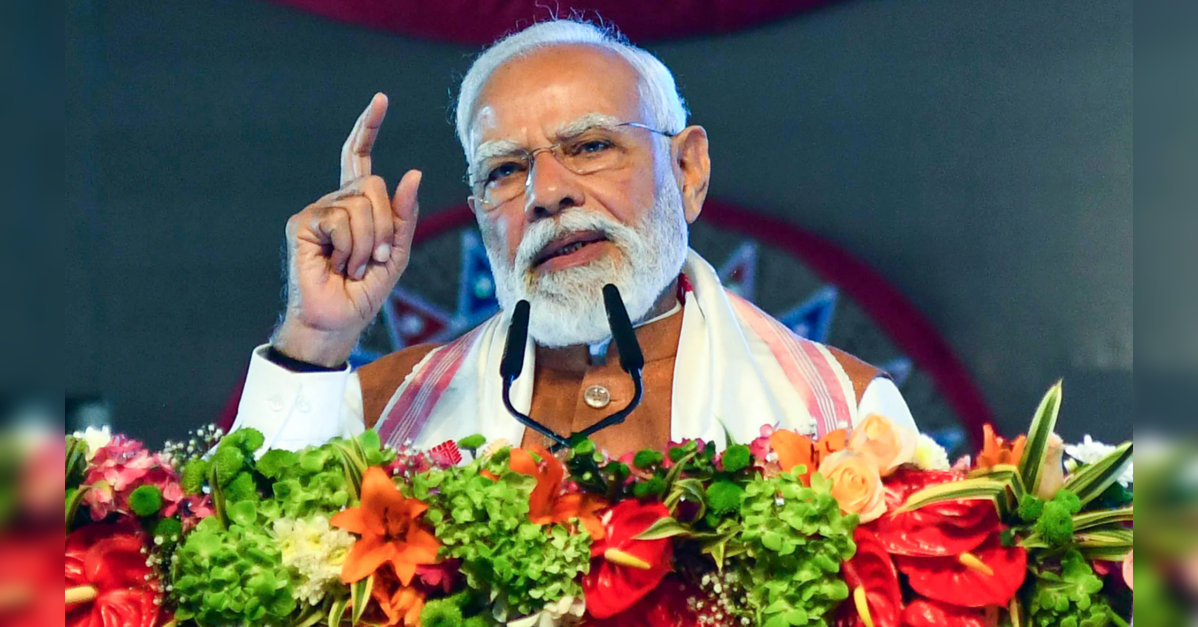
India’s energy landscape is undergoing a significant transformation, driven by ambitious infrastructure projects designed to bolster domestic supply chains and enhance national energy security. A recent highlight is the inauguration of the capacity augmentation project for the Numaligarh–Siliguri Product Pipeline (NSPL) by Prime Minister Narendra Modi in Guwahati. This strategic upgrade, spearheaded by Oil India Limited, is not merely an operational improvement; it signals a robust commitment to the “Hydrocarbon Vision 2030 for the North-East” and presents compelling long-term investment opportunities in the region’s energy sector. For investors tracking India’s growth story, understanding the implications of such pivotal developments is crucial, especially as global energy markets continue to navigate volatility.
Strategic Capacity Expansion Powers Regional Growth
The Numaligarh–Siliguri Product Pipeline stands as a critical artery for petroleum product distribution in India’s North-East. Its recently completed capacity augmentation project has dramatically increased its throughput, from an initial 1.72 million metric tonnes per annum (MMTPA) to a robust 5.5 MMTPA. This 654-km, 16-inch diameter pipeline is now better equipped to support the planned expansion of the Numaligarh Refinery, which itself is set to grow from 3.0 MMTPA to an impressive 9.0 MMTPA. This synchronized growth strategy underpins the government’s broader vision to transform the North-East into a self-sufficient energy hub, reducing reliance on distant imports and fostering regional economic development. Notably, the project was executed with remarkable efficiency, completing at a cost of approximately ₹750 crore, significantly below the approved outlay of ₹860 crore, demonstrating strong project management and fiscal discipline from Oil India Limited.
Navigating Global Volatility with Domestic Strength
In a global market characterized by persistent price fluctuations, India’s push for domestic energy infrastructure takes on heightened significance. As of today, Brent crude trades at $92.99, down 0.27% within its daily range of $92.57-$94.21. This benchmark has seen a notable decline over the past two weeks, dropping from $101.16 on April 1st to $94.09 on April 21st, representing a 7% decrease. Similarly, WTI crude is priced at $89.44, down 0.26% today. This downward trend underscores the inherent volatility in global energy prices, which major importers like India are keen to mitigate. By strengthening its internal transportation and refining capabilities, India aims to create a more resilient energy ecosystem. Projects like the NSPL expansion enhance the ability to process and distribute domestically refined products, providing a buffer against international price shocks and ensuring a more stable supply for consumers. This strategic move aligns with a long-term hedging strategy, lessening the impact of external market dynamics on domestic fuel prices and supply security.
Operational Enhancements and Investment Outlook
Beyond headline capacity numbers, the NSPL project involved crucial infrastructure upgrades that promise improved operational efficiency and safety. Key pigging stations at Sekoni, Guwahati, Bongaigaon, and Madarihat were converted into intermediate pumping stations, enhancing flow rates and reliability. Furthermore, pumping facilities at the Numaligarh dispatch terminal were expanded, and the Siliguri receipt terminal saw significant upgrades. These technical improvements are vital for sustaining the increased throughput and ensuring seamless operations across the pipeline’s extensive route. From an investor perspective, such meticulous project execution and operational foresight are strong indicators of a company’s commitment to long-term asset value. The project also delivered substantial socio-economic benefits, generating approximately 4.1 million man-hours of employment over three years across Assam and West Bengal, which further solidifies government and public support for future energy initiatives in the region.
Future Catalysts and Investor Concerns
Investors are consistently seeking clarity on market direction, with common queries ranging from “is WTI going up or down?” to “what do you predict the price of oil per barrel will be by end of 2026?” While this pipeline project is domestic, it contributes to the broader narrative of robust demand from a major global consumer, indirectly influencing long-term market sentiment. As India enhances its internal energy security, it stabilizes its demand profile against external shocks. Looking ahead, several key events on our calendar will offer further insights into the global energy supply-demand balance. The EIA Weekly Petroleum Status Reports on April 22nd, April 29th, and May 6th, along with the Baker Hughes Rig Count reports on April 24th and May 1st, will provide crucial updates on U.S. inventory levels and drilling activity. Moreover, the EIA Short-Term Energy Outlook on May 2nd will offer a macro-level forecast that investors will scrutinize for clues on future price trajectories. India’s continued investment in projects like NSPL underscores a strategic commitment to energy independence, which, while not directly impacting short-term global benchmarks, contributes to a more stable demand picture from the world’s third-largest oil consumer, providing a foundational element for long-term energy sector investments.


