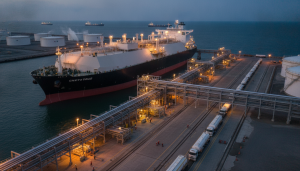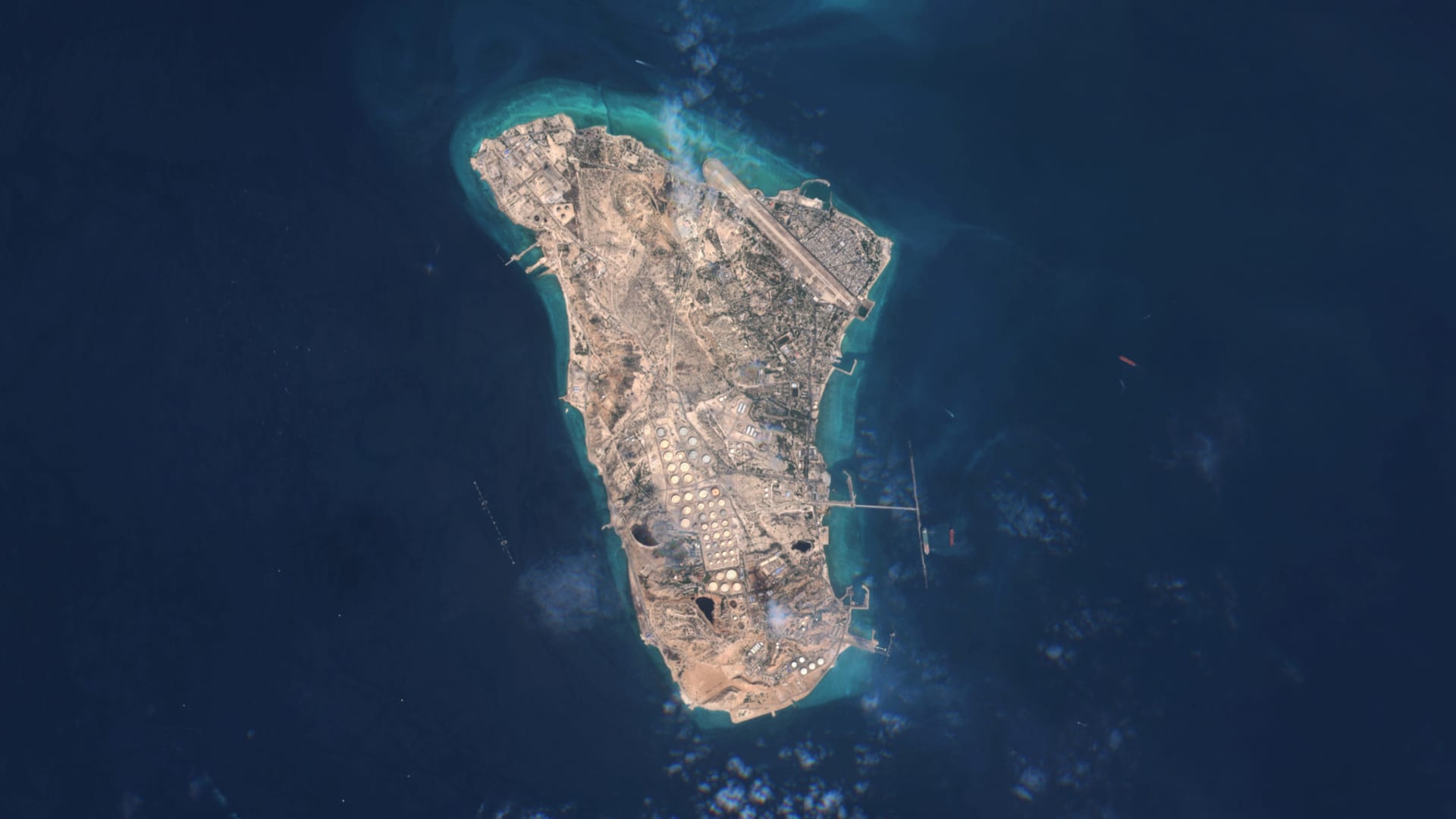
The strategic importance of Kharg Island, often dubbed Iran’s “oil lifeline,” has once again thrust itself into the forefront of geopolitical discussions, casting a long shadow over global oil supply stability. Recent reports suggesting the Trump administration has discussed seizing this vital hub underscore the extreme risks involved, not just militarily but, critically, for energy markets worldwide. This five-mile-long coral island, situated approximately 15 miles off the Iranian mainland in the northern Persian Gulf, is more than just a geographic point; it accounts for an estimated 90% of Iran’s crude oil exports and boasts a formidable loading capacity of roughly 7 million barrels per day. Any direct action against such a critical asset would undoubtedly send shockwaves through an already sensitive market, forcing investors to immediately re-evaluate their risk exposure and supply forecasts.
Geopolitical Stakes: Kharg Island as a Supply Pressure Point
Discussions regarding a potential U.S. move on Kharg Island, first reported on March 7, have dramatically escalated the perceived geopolitical risk in the Persian Gulf. While the island has remained untouched through nearly two weeks of U.S. and Israeli-led strikes against Iran that began on February 28, the very contemplation of such an operation signals a potential shift towards more direct and high-stakes confrontation. Military strategists confirm that taking and holding Kharg Island would be no trivial undertaking, requiring a significant ground force operation, with estimates suggesting around 5,000 troops would be necessary. This represents a substantial commitment that U.S. defense officials have historically expressed reluctance to undertake in the region. However, the strategic allure is clear: disabling Kharg Island would create maximum leverage over Tehran, effectively crippling its primary economic artery. This scenario, alongside Iran’s retaliatory targeting of ships in the Strait of Hormuz – a critical chokepoint through which about 20% of global oil and gas supply typically transits – paints a picture of escalating tensions with profound implications for global crude flows.
Market Dynamics: Navigating Volatility Amidst Geopolitical Threats
The mere prospect of a Kharg Island incident has added a layer of uncertainty to oil price movements, which have already been volatile since the late February airstrikes. As of today, Brent Crude trades at $92.76 per barrel, down 0.51% within a daily range of $92.57 to $94.21. Similarly, U.S. West Texas Intermediate (WTI) Crude stands at $89.24 per barrel, reflecting a 0.48% decline today, trading between $88.76 and $90.71. While these daily movements reflect broader market dynamics, it’s crucial for investors to zoom out. Our proprietary data indicates that Brent crude has seen a notable correction over the past two weeks, declining approximately 7% from $101.16 on April 1 to $94.09 on April 21. This recent downward trend, despite persistent geopolitical tensions, suggests that the market may not be fully pricing in the extreme supply shock potential of a Kharg Island event. Should such a scenario materialize, the current price levels would likely be an immediate floor, with significant upward pressure anticipated as traders scramble to account for a potential loss of 7 million barrels per day of Iranian crude from the global supply chain.
Investor Focus: Seeking Clarity Amidst Uncertainty
Our internal reader intent data reveals a keen investor focus on price direction and market fundamentals, with common questions surfacing like “is wti going up or down” and “what do you predict the price of oil per barrel will be by end of 2026?” These inquiries underscore the demand for clarity in a complex environment. The Kharg Island situation directly impacts these forward-looking price predictions. A severe disruption could easily push prices well beyond current levels, fundamentally altering the supply-demand balance for the remainder of 2026. Conversely, a de-escalation of tensions, or a perception that the threat is not immediate, could allow prices to consolidate or even continue their recent downward trajectory as other macroeconomic factors come into play. Investors are keenly aware of the interconnectedness of geopolitical events and fundamental data, seeking robust analysis that bridges these two critical domains.
Forward Outlook: Key Dates for Energy Investors
In the near term, while geopolitical developments remain paramount, investors should closely monitor upcoming energy events for crucial insights into market fundamentals that could either cushion or exacerbate the impact of any supply shock. This week brings the EIA Weekly Petroleum Status Report on Wednesday, April 22, followed by the Baker Hughes Rig Count on Friday, April 24. These reports will offer fresh data on U.S. crude inventories, refinery activity, and drilling levels, providing a snapshot of domestic supply and demand. Looking ahead, the API Weekly Crude Inventory report on Tuesday, April 28, and another EIA Weekly Petroleum Status Report on Wednesday, April 29, will continue to refine the picture. A particularly significant event is the EIA Short-Term Energy Outlook (STEO) scheduled for Saturday, May 2. This comprehensive report provides updated forecasts for supply, demand, and prices, offering a critical benchmark against which to measure the potential impact of a Kharg Island disruption. In a scenario where inventories are already tight and demand remains robust, any threat to Iranian exports would be magnified, leading to a swifter and more dramatic market reaction. Conversely, an unexpected build in inventories or a downward revision in demand forecasts could offer some buffer, though likely insufficient to fully absorb a 7 million bpd shortfall.
The threat surrounding Kharg Island represents a significant and highly unpredictable variable in the global oil market. Investors must prepare for potential extreme volatility, understanding that while current prices reflect a degree of geopolitical risk, a direct confrontation at this strategic Iranian export hub could trigger an unprecedented supply shock. Staying informed on both geopolitical developments and fundamental energy data, particularly through the upcoming EIA and API reports, will be paramount for navigating the weeks and months ahead.