TotalEnergies’ Strategic Push in Brazil’s Pre-Salt
TotalEnergies (NYSE: TTE) has significantly bolstered its production profile in Brazil, with the recent startup of the Lapa Southwest project marking a strategic milestone. This expansion in the Santos basin offshore Brazil is not just about adding barrels; it reinforces the energy major’s commitment to low-cost, low-emission production and its ambitious 3% annual output growth target through 2030. For investors tracking global energy developments, this move signals TotalEnergies’ continued focus on high-potential, long-life assets, positioning the company for sustained value creation amidst evolving market dynamics.
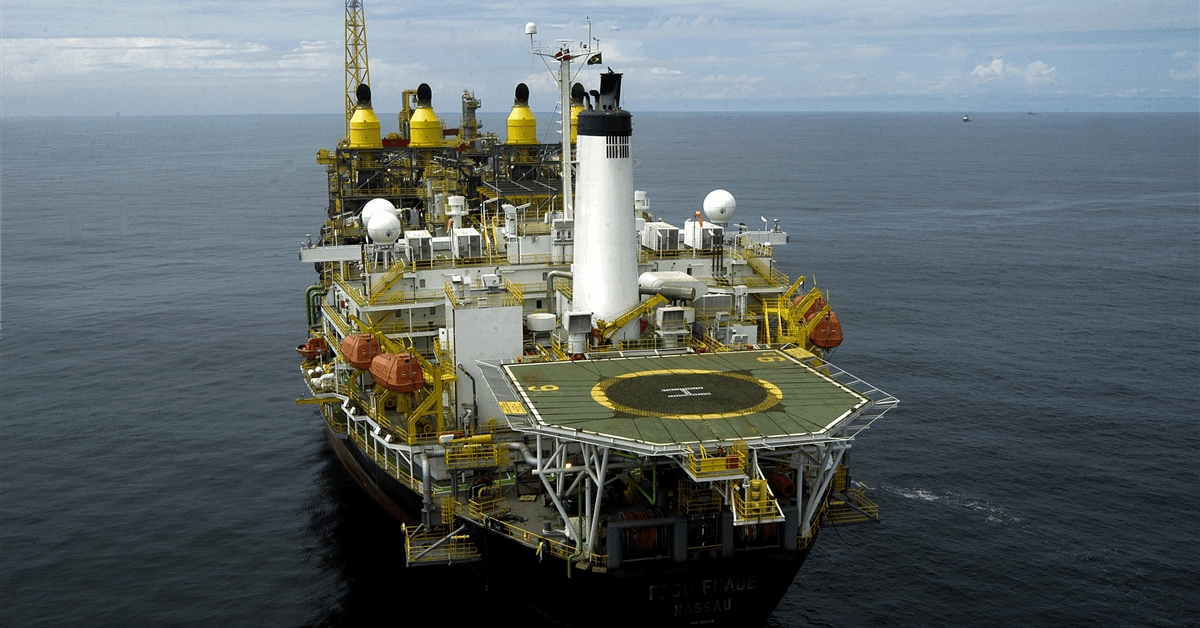
TotalEnergies’ decision to bring the Lapa Southwest project online is a clear indicator of its strategic emphasis on Brazil’s prolific pre-salt region. This new phase of development adds an impressive 25,000 barrels per day (bpd) to the Lapa field’s output, elevating its total production capacity to approximately 60,000 bpd. Connecting three new wells to the existing Lapa floating production, storage and offloading (FPSO) facility, the project demonstrates efficient capital deployment following its final investment decision (FID) on January 16, 2023, with an estimated budget of around $1 billion. This low-cost, low-emission oil production aligns perfectly with TotalEnergies’ broader corporate strategy, as articulated by its exploration and production president, underscoring Brazil’s role as a “key growth country” that contributed 184,500 barrels of oil equivalent per day to the company’s production last year. The Lapa Southwest expansion is a tangible step towards achieving the company’s stated objective of growing production by 3% annually until 2030, offering investors a clear pathway for future earnings.
Market Dynamics and the Value Proposition of New Supply
The timing of TotalEnergies’ increased output from Lapa Southwest comes during a period of nuanced crude oil market sentiment. As of today, Brent crude trades at $92.76 per barrel, reflecting a slight dip of 0.51% within a daily range of $92.57 to $94.21. Similarly, WTI crude is at $89.24 per barrel, down 0.48%, fluctuating between $88.76 and $90.71. This recent performance follows a notable softening in prices over the past two weeks, with Brent crude declining from $101.16 on April 1st to $94.09 on April 21st, a substantial 7% decrease. Against this backdrop, new production streams, particularly those characterized by “low-cost” operations, become even more critical for integrated energy majors. Our proprietary reader intent data reveals that investors are keenly asking, “is WTI going up or down?” and “what do you predict the price of oil per barrel will be by end of 2026?” While short-term volatility persists, projects like Lapa Southwest provide a robust foundation for TotalEnergies, offering resilient cash flows even in a fluctuating price environment. The ability to bring additional, competitively priced barrels to market enhances TotalEnergies’ operational leverage and its capacity to maintain dividends and pursue further growth, regardless of daily price swings.
Deepening Partnerships and Future Brazilian Growth
TotalEnergies’ success in Brazil is not solely an individual effort but a testament to strategic partnerships. In the Lapa field, TotalEnergies operates with a 48% stake, alongside Shell PLC (27%) and a joint venture (25%) owned by Spain’s Repsol SA (60%) and China Petroleum and Chemical Corp (40%). This collaborative model spreads capital expenditure and operational risk, a common and effective strategy in large-scale offshore developments. Our proprietary reader intent data indicates strong investor interest in individual partner performance, with questions like “How well do you think Repsol will end in April 2026” highlighting the scrutiny applied to all participants in these ventures. TotalEnergies also strategically increased its Lapa stake from 45% through a swap with Shell last year, demonstrating active portfolio management. Beyond Lapa, TotalEnergies is deeply involved in the massive Mero field, part of the Libra block, which is operated by Brazil’s state-owned Petrobras (38.6%). Here, TotalEnergies and Shell each hold a 19.3% stake, alongside CNPC and CNOOC. The Mero field is a powerhouse, already boasting four operational FPSOs, with the Mero4 project, featuring the new Alexandre de Gusmão FPSO (180,000 bpd capacity), expected to come online in May 2025. This project alone will significantly contribute to Mero’s ambitious target of 770,000 bpd total output. The broader Brazilian pipeline for TotalEnergies also includes the Shell-operated Orca field (formerly Gato do Mato), targeted for 2029 startup with a capacity of up to 120,000 bpd, where TotalEnergies previously held a stake. These multi-partner, multi-field developments underscore Brazil’s critical role in the long-term production strategies of these global energy giants.
Navigating Future Catalysts and Investor Outlook
The continuous flow of operational updates from key regions like Brazil, exemplified by TotalEnergies’ Lapa Southwest startup, converges with a regular drumbeat of market data that shapes investor sentiment. Over the next two weeks, the energy market will closely monitor several critical data points that will influence short-term price movements and potentially impact investment decisions in companies like TotalEnergies. Key among these are the EIA Weekly Petroleum Status Reports, scheduled for April 22nd, April 29th, and May 6th. These reports provide vital insights into U.S. crude oil, gasoline, and distillate inventories, which can act as immediate catalysts for price shifts. Additionally, the Baker Hughes Rig Count on April 24th and May 1st will offer an indication of future supply trends, particularly in North America. The API Weekly Crude Inventory reports on April 28th and May 5th will also be closely watched as leading indicators. Perhaps most impactful for the broader outlook will be the EIA Short-Term Energy Outlook released on May 2nd, which provides crucial forecasts for supply, demand, and prices. These upcoming events, combined with the successful execution of projects like Lapa Southwest, will help inform investor expectations regarding the future trajectory of oil prices and the performance of integrated majors. For TotalEnergies, continued operational excellence in Brazil, coupled with a disciplined capital allocation strategy and a focus on high-return, lower-emission barrels, positions the company favorably to navigate market volatility and capitalize on long-term energy demand. Investors should track these data points carefully, as they provide essential context for evaluating the ongoing value creation from TotalEnergies’ expanding global portfolio.


