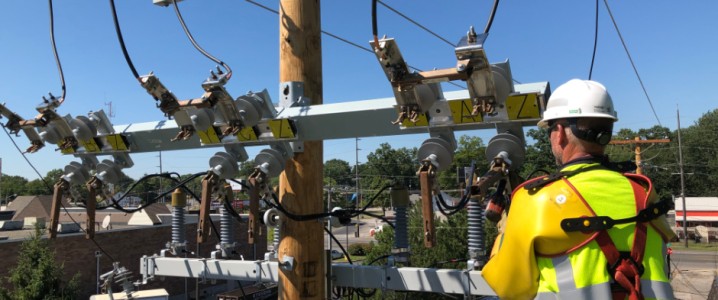
The SPARK Initiative: A Foundational Investment in the Energy Transition
The U.S. Department of Energy’s latest $1.9 billion SPARK initiative represents a pivotal strategic move to bolster the nation’s aging power grid. Officially known as Speed to Power through Accelerated Reconductoring and other Key Advanced Transmission Technology Upgrades, this program funnels significant capital into upgrading existing transmission lines rather than embarking on the often decade-long process of constructing entirely new infrastructure. By replacing older wires with higher-capacity conductors and deploying advanced grid technologies, SPARK aims to rapidly expand the grid’s throughput. This focus on “reconductoring” is a recognition of the urgent need to meet burgeoning electricity demand, enhance reliability, and ultimately lower costs for consumers amidst a rapidly evolving energy landscape. For investors, this isn’t just a technical upgrade; it’s a critical enabler for the broader energy transition, creating a robust backbone for future power demands driven by electrification, data centers, and new industrial loads.
Meeting Surging Demand: The Imperative for Grid Resilience
The rationale behind the SPARK program is stark: the U.S. grid, in many regions, is operating near its operational limits. After years of stagnation, electricity demand is accelerating, propelled by the insatiable appetite of data centers, the widespread push for electrification across sectors, and the emergence of new industrial loads. This demand surge, coupled with the increasing frequency and intensity of extreme weather events and a shifting mix of generation resources, is placing unprecedented stress on the power system. Secretary of Energy Chris Wright highlighted the program’s alignment with modernizing the grid and expanding American energy production, while Assistant Secretary Katie Jereza emphasized its dual goal of increasing capacity and improving day-to-day reliability. The $1.9 billion SPARK funding builds upon the DOE’s existing Grid Resilience and Innovation Partnerships program, which committed up to $10.5 billion over five years. What sets SPARK apart is its specific emphasis on rapid deployment technologies, particularly reconductoring, offering a pragmatic and timely solution to increase transfer capacity using existing infrastructure corridors, bypassing the protracted permitting and land disputes that plague new construction.
Market Undercurrents: Price Volatility Amidst Structural Shifts
While the SPARK initiative tackles foundational electricity infrastructure, it operates within a broader energy market experiencing its own dynamics. As of today, Brent crude trades at $92.85, reflecting a marginal dip of 0.42% within a daily range of $92.57 to $94.21. WTI crude also saw a slight decline, settling at $89.39, down 0.31%. This minor daily fluctuation comes against a backdrop of a more significant downturn over the past two weeks, with Brent having shed $7.07, or 7%, from $101.16 on April 1st to $94.09 on April 21st. Gasoline prices stand at $3.11, down 0.64%. This recent volatility in crude prices underscores the constant interplay of supply, demand, and geopolitical factors. However, the long-term narrative for energy investors is increasingly influenced by structural shifts like those enabled by SPARK. A more robust, higher-capacity grid is essential for the success of electrification efforts, which, over time, could redefine demand patterns for fossil fuels by shifting consumption from direct combustion to electricity generated from a diverse mix of sources. Investors must recognize that while crude prices react to immediate market forces, the ongoing investment in grid modernization lays the groundwork for future energy consumption profiles.
Investor Focus: Navigating Future Demand and Upcoming Catalysts
Our proprietary reader intent data reveals a consistent theme among investors: a keen interest in long-term price direction, with questions like “will WTI go up or down?” and “what do you predict the price of oil per barrel will be by the end of 2026?” While SPARK doesn’t directly dictate crude prices, it is a crucial piece of the puzzle for understanding the future energy landscape that will shape those prices. The success and expansion of grid capacity directly impact the viability and speed of electrification, which in turn influences overall energy demand and the relative share of various energy sources. For near-term market insights, investors will closely monitor the EIA’s Weekly Petroleum Status Report, scheduled for release on April 22nd, April 29th, and May 6th, alongside API Weekly Crude Inventory data on April 28th and May 5th, and the Baker Hughes Rig Count on April 24th and May 1st. These reports offer granular data on immediate supply-demand balances. However, for a more strategic perspective on the “end of 2026” price outlook and beyond, the EIA’s Short-Term Energy Outlook, due on May 2nd, will be a critical publication, likely providing forecasts on electricity demand growth and the evolving energy mix that directly relate to the SPARK program’s objectives.
Investment Opportunities in the Grid’s Evolution
The SPARK initiative, with its $1.9 billion funding, signals a significant and immediate opportunity for investors. The program’s emphasis on “rapid deployment technologies” and “reconductoring” means that companies specializing in advanced conductors, smart grid technologies, and innovative grid infrastructure solutions are poised for growth. This includes firms focused on high-capacity wiring materials, grid sensing and control systems, and engineering services that can execute these upgrades efficiently. Utilities actively involved in modernizing their transmission infrastructure will also see direct benefits. The timeline is clear: concept papers were due April 1st, full project applications by May 19th, with project announcements expected during the summer of 2026. This creates a tangible catalyst for companies positioned in this space, offering a clearer runway for investment decisions. As the U.S. grapples with increasing electricity demand and the complexities of integrating diverse generation sources, investment in foundational grid infrastructure like that supported by SPARK is not merely a defensive play but a proactive and essential step towards a reliable, resilient, and decarbonized energy future. Identifying the innovators and implementers in this critical sector presents a compelling opportunity within the broader energy investment thesis.


