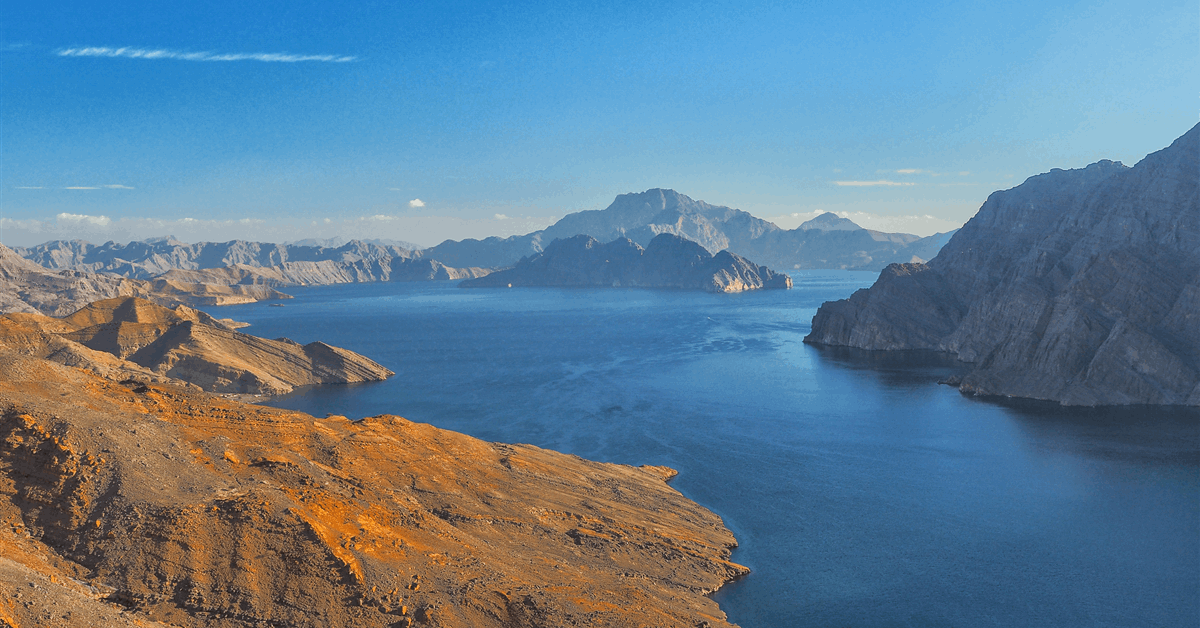
The US Navy could start escorting tankers through the Strait of Hormuz by the end of this month, Energy Secretary Chris Wright said, while President Donald Trump signaled he sees some benefits from the global oil price surge.
Wright said Thursday that US military assets were currently focused on destroying Iran’s offensive capabilities and weapons manufacturing, but could shift focus to protecting shipping traffic in the coming weeks.
“It will happen relatively soon, but it can’t happen now. We’re simply not ready,” Wright said on CNBC.
Asked if escorts could be provided by the end of the month, Wright said: “I think that, yes, I think that is quite likely the case.”
Later Thursday, Trump indicated he’s digging in as the joint US-Israel assault on Iran stretched into a second week. It was the latest mixed signal from the US president, who less than 24 hours earlier said that Tehran is “pretty much at the end of the line” of their military capabilities but cautioned that “doesn’t mean we’re going to end it immediately.”
“The United States is the largest Oil Producer in the World, by far, so when oil prices go up, we make a lot of money,” Trump posted on social media, adding that stopping Tehran from “having Nuclear Weapons, and destroying the Middle East and, indeed, the World” is “of far greater interest and importance to me.”
Taken together, the comments show how Trump and his team continue to grapple with the geopolitical and economic consequences of the conflict that the president initiated on Feb. 28. Rising oil prices have driven up fuel costs for Americans ahead of the November midterm elections, which are expected to hinge on the public’s views on the cost of living.
Ordering US Navy ships to escort tankers could cause American servicemembers to be thrust into harm’s way in order to protect oil supplies. Iran’s new supreme leader, Ayatollah Mojtaba Khamenei, said Thursday the strait should remain shut, signaling Tehran has no intention of ending the waterway’s effective closure anytime soon.
Wright’s comments came after he wrote in a now-deleted social post Tuesday that the US had successfully escorted an oil tanker through the Strait of Hormuz. Some 20% of the world’s oil and natural gas passes through the narrow shipping lane. The White House later walked back Wright’s claim and denied that any escorts had occurred.
Since the US and Israel launched the joint military operation on Iran, trade through Hormuz has all but come to a standstill, choking off the flow of oil from the Persian Gulf and sending crude prices soaring 40% in the days since. Global oil futures briefly jumped above $100 a barrel Thursday.
The Trump administration announced Wednesday it would release 172 million barrels from the US emergency oil reserve as part of a coordinated effort by nations around the world to ease surging crude prices.
The reserve only contains roughly 415 million barrels, about 60% of its capacity. Wright told CNBC that the US planned to swap the 172 million barrels it was releasing from the system for more than 200 million barrels to be delivered at later dates. That’s because at the moment, crude futures in the months ahead are significantly cheaper than they are now.
“Ultimately, this is going to help us fill the reserve,” he said.
Generated by readers, the comments included herein do not reflect the views and opinions of Rigzone. All comments are subject to editorial review. Off-topic, inappropriate or insulting comments will be removed.
element
var scriptTag = document.createElement(‘script’);
scriptTag.src = url;
scriptTag.async = true;
scriptTag.onload = implementationCode;
scriptTag.onreadystatechange = implementationCode;
location.appendChild(scriptTag);
};
var div = document.getElementById(‘rigzonelogo’);
div.innerHTML += ” +
‘ ‘ +
‘ +
”;
var initJobSearch = function () {
////console.log(“call back”);
}
var addMetaPixel = function () {
if (-1 > -1 || -1 > -1) {
/*Meta Pixel Code*/
!function(f,b,e,v,n,t,s)
{if(f.fbq)return;n=f.fbq=function(){n.callMethod?
n.callMethod.apply(n,arguments):n.queue.push(arguments)};
if(!f._fbq)f._fbq=n;n.push=n;n.loaded=!0;n.version=’2.0′;
n.queue=[];t=b.createElement(e);t.async=!0;
t.src=v;s=b.getElementsByTagName(e)[0];
s.parentNode.insertBefore(t,s)}(window, document,’script’,
‘https://connect.facebook.net/en_US/fbevents.js’);
fbq(‘init’, ‘1517407191885185’);
fbq(‘track’, ‘PageView’);
/*End Meta Pixel Code*/
} else if (0 > -1 && 63 > -1)
{
/*Meta Pixel Code*/
!function(f,b,e,v,n,t,s)
{if(f.fbq)return;n=f.fbq=function(){n.callMethod?
n.callMethod.apply(n,arguments):n.queue.push(arguments)};
if(!f._fbq)f._fbq=n;n.push=n;n.loaded=!0;n.version=’2.0′;
n.queue=[];t=b.createElement(e);t.async=!0;
t.src=v;s=b.getElementsByTagName(e)[0];
s.parentNode.insertBefore(t,s)}(window, document,’script’,
‘https://connect.facebook.net/en_US/fbevents.js’);
fbq(‘init’, ‘1517407191885185’);
fbq(‘track’, ‘PageView’);
/*End Meta Pixel Code*/
}
}
// function gtmFunctionForLayout()
// {
//loadJS(“https://www.googletagmanager.com/gtag/js?id=G-K6ZDLWV6VX”, initJobSearch, document.body);
//}
// window.onload = (e => {
// setTimeout(
// function () {
// document.addEventListener(“DOMContentLoaded”, function () {
// // Select all anchor elements with class ‘ui-tabs-anchor’
// const anchors = document.querySelectorAll(‘a .ui-tabs-anchor’);
// // Loop through each anchor and remove the role attribute if it is set to “presentation”
// anchors.forEach(anchor => {
// if (anchor.getAttribute(‘role’) === ‘presentation’) {
// anchor.removeAttribute(‘role’);
// }
// });
// });
// }
// , 200);
//});


