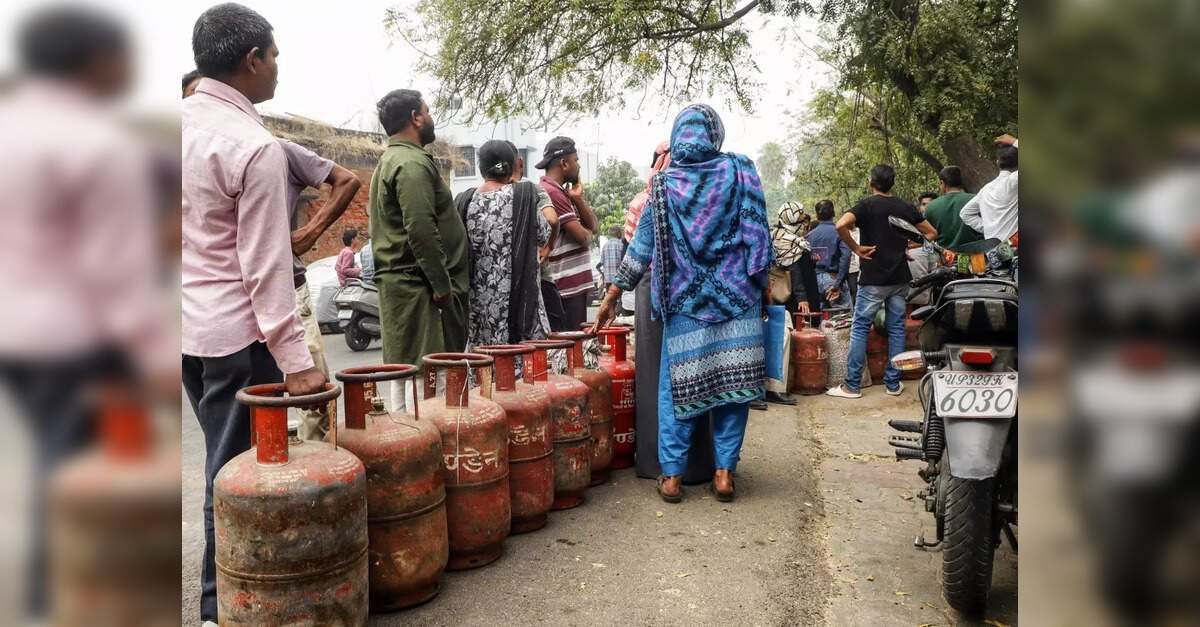
The energy market frequently presents localized supply dynamics that offer critical insights into broader global trends and investor sentiment. Currently, Bengaluru is experiencing a surge in demand for domestic LPG cylinders, driven by panic inquiries and advance bookings amidst fears of supply disruptions stemming from the widening West Asia conflict. While local dealers confirm adequate stock for domestic use, the commercial LPG sector faces an acute shortage, straining hotels and restaurants and forcing some to contemplate closure. This regional bottleneck, occurring against a backdrop of fluctuating global crude prices, provides a microcosm for investors to analyze the interplay between geopolitical risk, consumer behavior, and the resilience of energy supply chains.
Geopolitical Spillover: Localized Stress Amidst Broader Geopolitical Fears
The situation in Bengaluru serves as a stark reminder of how geopolitical tensions, even when not directly impacting global crude flows, can quickly translate into localized supply chain stress and consumer panic. Residents, concerned about potential disruptions from the West Asia conflict, are pre-emptively booking LPG refills, leading to a spike in demand for household cylinders. While distributors like Sri Giridhar Agencies and Balaji Stores report no immediate disruption to domestic supplies, confirming daily loads are arriving, the psychological impact of conflict fears is undeniable. This behavior underscores a critical aspect for energy investors: perceived risk can be as powerful a market driver as actual supply outages, especially in refined products like LPG. The distinction between the relatively stable domestic supply and the acute shortage for commercial use in Bengaluru highlights vulnerabilities specific to different market segments. The Bangalore Hotel Association’s concerns about potential shutdowns illustrate the real economic impact when supply chains for essential energy products falter, even temporarily, for industrial or commercial consumers.
Global Crude Markets: Differentiating Localized Panic from Macro Trends
While Bengaluru residents grapple with localized LPG concerns, the global crude market is navigating its own set of dynamics, demonstrating a current differentiation between regional anxieties and broader supply-demand fundamentals. As of today, Brent crude trades at $92.83, reflecting a modest decrease of 0.44% within a day range of $92.57 to $94.21. Similarly, WTI crude sits at $89.30, down 0.41%, trading between $88.76 and $90.71. This slight downward movement in global benchmarks comes despite the persistent geopolitical backdrop that fuels panic buying in places like Bengaluru. Over the past two weeks, Brent has actually seen a notable decline, retreating from $101.16 on April 1st to $94.09 by April 21st, a drop of approximately 7%. This suggests that while geopolitical risk maintains a floor under prices, the market is currently weighing other factors, such as demand outlooks, inventory levels, and the resilience of non-OPEC supply, more heavily. Gasoline prices, currently at $3.11 and down 0.64%, mirror this trend of slight moderation, indicating that the immediate fear premium might be easing on refined products at a global level, even as local situations like Bengaluru’s LPG market remain volatile.
Navigating Forward: Key Data Points for Energy Investors
For investors seeking to understand future price trajectories and supply stability, the coming weeks are packed with crucial data releases. Monitoring these events closely will be essential for assessing whether localized issues, like the Bengaluru LPG shortage, are isolated incidents or harbingers of broader market shifts. The EIA Weekly Petroleum Status Reports, scheduled for release on April 22nd, April 29th, and May 6th, will provide critical insights into U.S. crude oil and refined product inventories, refinery utilization, and demand indicators. These reports are pivotal for gauging the health of the world’s largest oil consumer. Complementing this, the API Weekly Crude Inventory reports on April 28th and May 5th offer an early look at inventory movements. Furthermore, the Baker Hughes Rig Count, due on April 24th and May 1st, will signal future U.S. production trends, providing a vital read on supply-side momentum. Perhaps most impactful for forward-looking analysis is the EIA Short-Term Energy Outlook on May 2nd, which will offer updated projections for global supply, demand, and prices, helping investors contextualize current market conditions and anticipate future movements. These upcoming events will collectively shape investor confidence and potentially amplify or dampen the impact of geopolitical narratives on crude and product markets.
Addressing Investor Concerns: Outlook for Q2 and Beyond
Investors are keenly asking about the direction of crude prices and the market outlook for the remainder of 2026, questions that underscore the prevailing uncertainty in the energy sector. While the immediate concerns in Bengaluru focus on LPG availability, the broader energy complex is grappling with a delicate balance of supply, demand, and geopolitical risk. The recent moderation in Brent and WTI prices suggests that the market, for now, is not fully pricing in a major supply disruption from the West Asia conflict. However, the potential for escalation remains a significant upside risk, capable of swiftly adding a substantial risk premium back into crude prices. On the demand side, global economic growth, particularly in China and India, will be a key determinant. Persistent inflation and higher interest rates could temper demand, creating headwinds for price appreciation. Conversely, a robust economic rebound could push prices higher. Supply considerations, including OPEC+ production policy and the ongoing resilience of U.S. shale, will also play a crucial role. For investors, the takeaway from the Bengaluru situation is a heightened awareness of supply chain fragility, particularly for refined products. While domestic LPG supplies are currently adequate, the commercial sector’s strain highlights the potential for localized shortages to emerge rapidly under stress, impacting various industries. This necessitates a vigilant approach, constantly re-evaluating the interplay of macro-economic data, geopolitical developments, and granular supply chain health to form a comprehensive investment thesis for the remainder of 2026.


