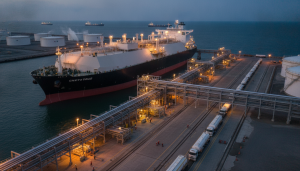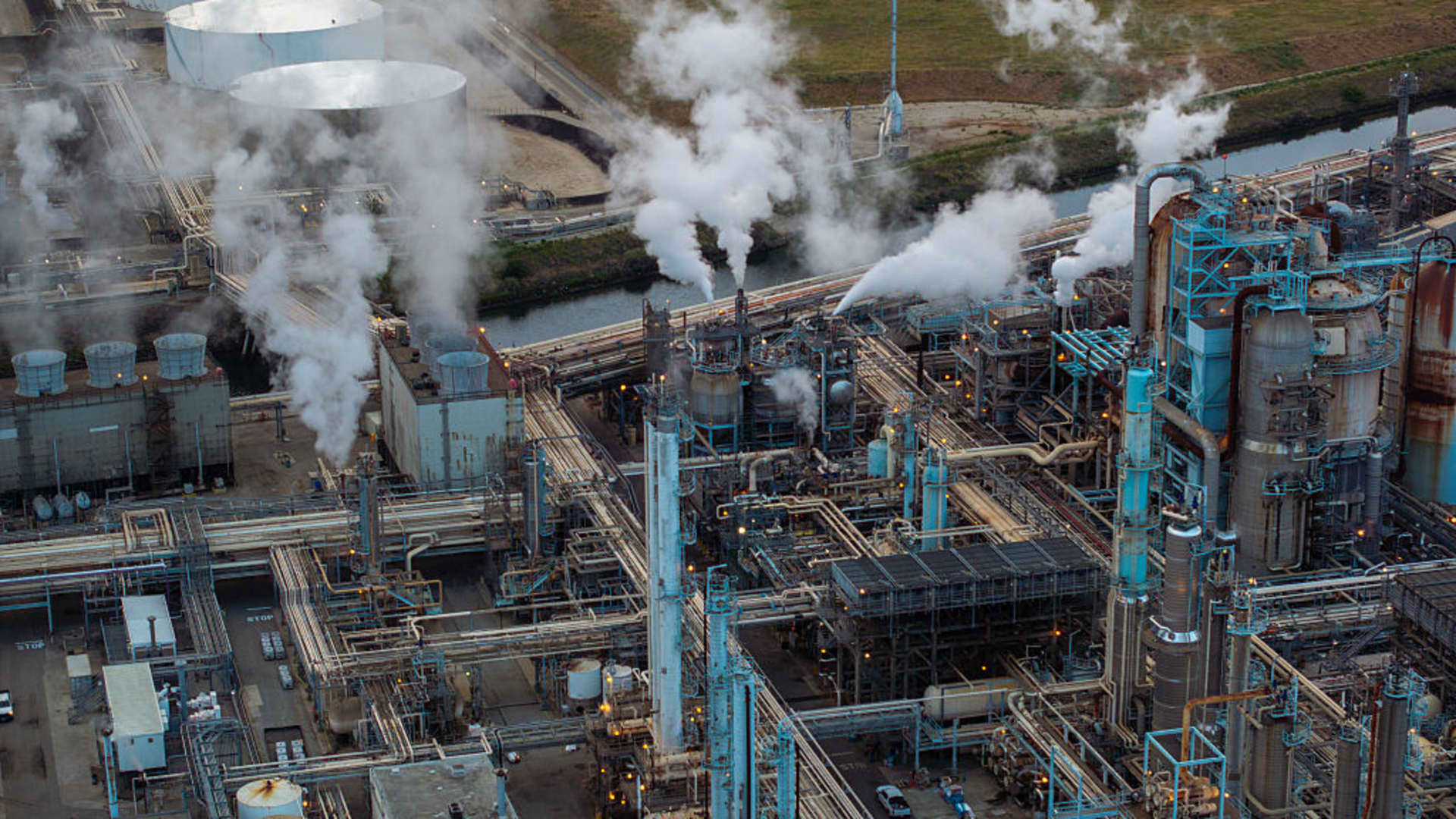
The recent announcement of the largest emergency oil stockpile release in history sends an unequivocal signal to energy markets: the ongoing conflict in the Middle East is likely to be protracted, with significant implications for global supply and prices. This unprecedented coordinated drawdown, totaling 400 million barrels from International Energy Agency (IEA) member countries and an additional 172 million barrels from the U.S. Strategic Petroleum Reserve (SPR), underscores the severity with which policymakers view the current oil shortage risk. However, the market’s initial reaction, with crude prices surging even after the announcement, highlighted deep-seated skepticism among traders regarding the measures’ ability to quickly offset massive supply disruptions, particularly those impacting the crucial Strait of Hormuz.
Strategic Reserves Deployed Amidst Prolonged Geopolitical Risk
The sheer scale of the IEA’s coordinated release, the largest since the agency’s inception in 1974, is a stark indicator of the gravity of the current geopolitical landscape. It suggests that major energy consumers are bracing for a sustained period of instability, rather than a swift resolution. Experts interpret this decisive action as a clear sign that the conflict is not expected to end in weeks, but could rather extend for months, presenting an enduring challenge to global energy flows. The critical choke point of the Strait of Hormuz, through which approximately 20 million barrels of crude oil and petroleum products transit daily—representing roughly 20% of global oil consumption—remains particularly vulnerable. Any prolonged disruption here translates into a staggering net supply loss that strategic reserves, while substantial, can only partially mitigate in the short term. The initial market surge past the $100 mark for Brent and $95 for WTI immediately following the announcement underscored this market apprehension, revealing a collective belief that the fundamental supply deficit driven by geopolitical realities outweighs the temporary balm of reserve releases.
Current Market Snapshot: Volatility Amidst Geopolitical Tension
As of today, April 22, 2026, energy markets are exhibiting a nuanced response to these overarching supply concerns. Brent Crude currently trades at $92.83 per barrel, registering a modest intraday decline of 0.44%, with its daily range fluctuating between $92.57 and $94.21. West Texas Intermediate (WTI) Crude follows a similar trajectory, priced at $89.3, down 0.41% within a range of $88.76 to $90.71. Gasoline prices have also seen a slight dip, trading at $3.11, down 0.64%. This current relative stability, however, sits within a backdrop of significant recent volatility. Our proprietary 14-day data shows Brent crude, which peaked at $101.16 on April 1st, has since experienced a notable decline, dropping to $94.09 by April 21st. The current trading price of $92.83 indicates this downward pressure has persisted from its early April highs, even if intraday movements are modest. This recent softening from its peak might reflect short-term profit-taking or a temporary market re-evaluation of the immediate impact of the SPR release. Yet, the underlying geopolitical premium remains firmly embedded, suggesting that any sustained resolution in the Middle East is the primary catalyst for a significant shift in price trajectory, rather than the temporary availability of strategic stocks.
Forward Outlook: Key Events and Sustained Price Pressures
Looking ahead, investors must brace for continued volatility driven by both geopolitical developments and critical market data releases. The expectation of a prolonged Middle East conflict means oil prices are likely to remain elevated until either a substantial ceasefire is achieved or the military capabilities impacting shipping are neutralized, allowing for the resumption of unimpeded tanker traffic through key maritime routes. Beyond the immediate headlines, several upcoming calendar events from our proprietary pipeline will offer crucial insights into supply-demand dynamics over the next 14 days. We anticipate keen investor focus on the EIA Weekly Petroleum Status Reports, scheduled for April 22nd, April 29th, and May 6th. These reports will provide vital updates on U.S. crude inventories, refinery activity, and gasoline demand, offering a real-time pulse on the domestic market’s ability to absorb or respond to global disruptions. Simultaneously, the Baker Hughes Rig Count on April 24th and May 1st will be scrutinized for any signs of increased drilling activity, indicating how U.S. producers are reacting to sustained higher prices. Perhaps most impactful will be the EIA Short-Term Energy Outlook on May 2nd, which will offer a more comprehensive forecast for global and domestic oil markets, including price projections and supply/demand estimates, providing a longer-term context for investment strategies amidst the current uncertainty. Each of these reports has the potential to introduce new market catalysts and shift investor sentiment.
Addressing Investor Concerns: Navigating Price Trajectory and Opportunity
Our first-party reader intent data reveals a clear demand for direction, with common investor queries such as ‘is WTI going up or down?’ and ‘what do you predict the price of oil per barrel will be by end of 2026?’ dominating discussions. This reflects a pervasive anxiety about market trajectory and the long-term implications of the current crisis. While short-term fluctuations are inevitable, and we’ve seen Brent retreat from its early April highs, the strategic decision to tap emergency reserves on such a scale inherently points to a structural bullish factor for the medium to long term. These reserves will eventually need to be replenished, creating a future demand floor that will likely support elevated prices even after the immediate conflict subsides. For investors, this environment necessitates a focus on resilience and strategic positioning. Companies with robust balance sheets, diversified asset portfolios, and effective hedging strategies are better equipped to navigate the immediate volatility. Furthermore, identifying producers with strong domestic footprints, or those poised to benefit from sustained higher prices and increased capital expenditure in non-conflict zones, presents a compelling opportunity. The underlying sentiment for 2026, therefore, leans towards sustained strength, with any short-term “down” movements potentially representing tactical entry points rather than a fundamental shift in the market’s long-term upward trajectory.