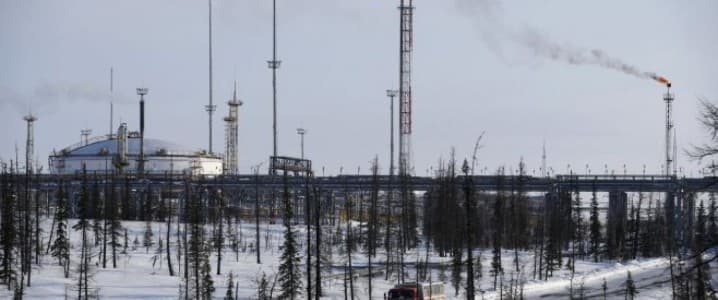
Navigating the Evolving Energy Landscape: Russia’s Geopolitical Gains Amidst Market Volatility
The global oil market remains a crucible of volatility, shaped by ongoing geopolitical tensions and a complex interplay of supply and demand dynamics. While the Middle East conflict continues to inject uncertainty, a deeper look reveals an unexpected beneficiary: Russia. Our proprietary analysis at OilMarketCap.com indicates that amidst the regional strife and efforts to stabilize prices, Russia is shrewdly repositioning its energy exports, securing a significant market advantage that warrants close attention from oil and gas investors.
Current Market Snapshot: Prices Respond to Mixed Signals
Despite persistent geopolitical risks, crude oil prices have shown a slight retrenchment in recent sessions. As of today, Brent crude trades at $92.83 per barrel, experiencing a minor dip of 0.44% within a daily range of $92.57 to $94.21. Similarly, WTI crude stands at $89.3 per barrel, down 0.41%, fluctuating between $88.76 and $90.71. This modest downturn follows a more significant trend over the past two weeks, where Brent crude has fallen from $101.16 on April 1st to $94.09 on April 21st, representing a 7% decline. This movement highlights the market’s attempt to balance immediate supply disruptions with broader sentiment and potential demand shifts. Gasoline prices also reflect this sentiment, currently at $3.11, down 0.64% for the day. Our reader intent data indicates that investors are keenly focused on the near-term trajectory of WTI, actively seeking clarity on whether these prices represent a temporary dip or the beginning of a sustained correction.
Russia’s Strategic Repositioning: Capitalizing on Supply Shocks
While the market grapples with Middle Eastern instability, Russia has emerged as a key strategic player, adeptly navigating sanctions and leveraging shifting trade dynamics. The severe disruption to Middle Eastern crude supplies, particularly of “medium sour” grades, has created a critical deficit for refiners globally. This void is precisely where Russia has stepped in. Indian refiners, facing a massive shortage of their preferred feedstock, have aggressively turned to Russian supplies. This pivot was significantly facilitated by a temporary 30-day waiver from the U.S. Treasury, allowing Indian entities to purchase sanctioned Russian crude that was already loaded onto tankers prior to March 5th. This short-term permission has proven highly impactful, potentially doubling Russia’s oil exports to India from 1 million barrels per day (mb/d) to an estimated 2 mb/d in the near term. Consequently, Russian Urals crude has commanded an unprecedented premium, trading at a premium of $4 to $5 per barrel above the Brent international benchmark on a delivered basis. This premium underscores the urgent demand for specific crude grades and Russia’s unique position to fulfill it, effectively turning geopolitical adversity into a significant economic advantage.
IEA’s Intervention and Market Efficacy for Investors
In response to escalating prices and concerns over energy security, the International Energy Agency (IEA) has orchestrated a record release of 400 million barrels from emergency reserves. This decisive action, unanimously agreed upon by its 32 member countries, aims to inject liquidity into the market and temper price inflation. IEA Executive Director Fatih Birol emphasized the “unprecedented scale” of both the market challenges and the collective response. However, oil and gas investors must critically evaluate the long-term efficacy of such interventions. While a 400 million barrel release is substantial, its impact on the underlying structural issues – particularly the shortage of specific crude grades like medium sour – may be limited. The market’s need for specific feedstock cannot always be met by a generic release of strategic reserves, which often consist of different crude qualities. Our proprietary data shows that investors are increasingly asking about the fundamental drivers of oil prices by the end of 2026, suggesting skepticism about short-term fixes and a focus on long-term supply-demand balances.
Forward-Looking Catalysts: Upcoming Data Points for Strategic Investors
Looking ahead, the next two weeks present several crucial data points that will offer deeper insights into the global oil market’s trajectory and inform investor strategies. The market will closely monitor the EIA Weekly Petroleum Status Reports, scheduled for April 22nd, April 29th, and May 6th. These reports provide vital information on U.S. crude oil, gasoline, and distillate inventories, as well as refinery utilization and production levels. Significant changes in these figures could signal shifts in domestic supply-demand balances, influencing WTI and Brent price movements. Furthermore, the Baker Hughes Rig Count, due on April 24th and May 1st, will offer an early indication of future U.S. oil and gas production trends. A sustained increase or decrease in active rigs can signal producer confidence and potential supply adjustments. Finally, the EIA Short-Term Energy Outlook (STEO), expected on May 2nd, will provide updated forecasts for global and domestic energy markets, including crude oil production, consumption, and price projections for the coming months and year. These upcoming events are critical for investors seeking to position themselves strategically in a rapidly evolving energy landscape.