Oman Attack Signals Dangerous Expansion of Middle East Oil War
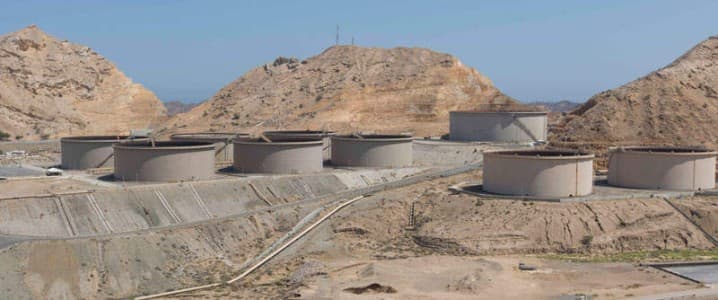
The recent drone strike on oil storage facilities at Oman’s Port of Salalah marks a significant and concerning escalation in the ongoing regional conflict, fundamentally reshaping the risk landscape for global oil supply. This incident, occurring on Wednesday, extends the theater of conflict beyond the critical Strait of Hormuz chokepoint, directly targeting alternative energy export routes that have become increasingly vital for producers seeking to mitigate transit risks. Investors must now contend with a broader array of vulnerabilities across the Middle East’s energy infrastructure, demanding a recalibration of risk premiums and supply chain resilience assessments.
Geopolitical Risk Deepens: Beyond the Chokepoint
The targeting of Salalah is not an isolated event but rather the latest in a series of calculated attacks aimed at disrupting the region’s energy logistics. Salalah, strategically located on Oman’s southern coast, has emerged as a crucial hub for tankers aiming to bypass the perilous Strait of Hormuz. By striking this facility, the perpetrators signal an intent to compromise even these alternative pathways, leaving fewer secure options for oil transit. This pattern of aggression includes earlier drone hits on fuel storage at Oman’s Port of Duqm and a significant strike against Saudi Arabia’s massive Ras Tanura oil refinery, which briefly halted operations. Furthermore, Wednesday alone saw three incidents among at least 13 vessel attacks across the Persian Gulf, Strait of Hormuz, and Gulf of Oman since hostilities commenced in late February. This persistent campaign against both fixed infrastructure and maritime shipping underscores a deliberate strategy to exert pressure on global oil supply chains, indicating that the region’s conflict is evolving into a full-scale confrontation with direct implications for energy security.
Market Contradictions: Prices Dip Amid Rising Tensions
Despite the palpable increase in geopolitical tension and explicit threats to supply, the immediate market reaction presents a complex picture, challenging conventional wisdom. As of today, Brent Crude trades at $92.86 per barrel, reflecting a marginal dip of 0.41% within a daily range of $92.57 to $94.21. Similarly, WTI Crude stands at $89.29 per barrel, down 0.42%. This current snapshot continues a broader trend: Brent has seen a notable decline of approximately 7% over the past 14 days, falling from $101.16 on April 1st to $94.09 by April 21st, with today’s price continuing that downward momentum. This divergence between escalating risk and softening prices is a key point of inquiry for investors asking, “Is WTI going up or down?” The answer lies in the interplay of competing market forces. While geopolitical events add a significant risk premium, other factors such as global demand concerns, potentially higher-than-expected inventory levels, or even the market’s initial assessment of the *actual* impact on physical supply might be exerting greater short-term influence. The market seems to be weighing the threat of disruption against underlying fundamentals and perhaps a degree of desensitization to ongoing regional instability, at least until tangible supply losses occur.
Forward Outlook: Key Data Points and Supply Scrutiny
Looking ahead, the market’s assessment of supply stability will be heavily influenced by several critical upcoming events. Investors should closely monitor the EIA Weekly Petroleum Status Reports scheduled for Wednesday, April 29th, and Wednesday, May 6th. These reports will provide crucial insights into U.S. crude oil and product inventories, which have been a significant factor in balancing global supply concerns. Unexpected builds could further temper price reactions to geopolitical events, while draws could amplify them. The Baker Hughes Rig Count, due on Friday, May 1st, will offer a glimpse into future production trends, particularly in North America, acting as a counterweight to Middle Eastern supply risks. Perhaps the most significant forward-looking event will be the EIA Short-Term Energy Outlook (STEO) on Saturday, May 2nd. This comprehensive report will provide updated forecasts for global supply and demand, potentially adjusting expectations for the remainder of 2026. Given the expanded scope of regional conflict, the STEO’s projections on global inventory levels and demand growth will be scrutinized for any shifts that could either absorb or exacerbate the impact of future supply disruptions. These data points will be instrumental in determining how the market reconciles the current price dip with the long-term implications of heightened regional instability.
Investor Considerations: Navigating Elevated Volatility and Long-Term Price Trajectories
For oil and gas investors, the unfolding situation demands a sophisticated approach to risk management and portfolio positioning. The expansion of attacks to facilities like Salalah directly impacts maritime insurance premiums and shipping costs, affecting the profitability of integrated oil companies and independent shippers alike. Companies with significant assets or operational reliance on transit routes through the Gulf of Oman or the Arabian Sea will face increased scrutiny. When investors inquire about long-term outlooks, such as predicting “the price of oil per barrel by end of 2026,” it’s clear that these geopolitical developments are becoming a dominant variable. A sustained pattern of attacks could necessitate a fundamental re-evaluation of the global supply chain, potentially leading to higher structural prices as producers and consumers build in greater redundancy and risk premiums. For specific entities, like Repsol, which is an integrated major with a diverse asset portfolio, the impact will be multifaceted. While direct exposure might be limited, the broader market volatility, increased shipping costs, and potential for sustained higher crude prices will influence their refining margins, exploration budgets, and overall profitability. Investors should focus on companies with robust contingency plans, diversified supply sources, and strong balance sheets that can weather prolonged periods of geopolitical uncertainty and elevated operational costs. The era of predictable Middle Eastern oil flows is increasingly a relic of the past; adaptability and resilience will be paramount for success in the evolving energy market.


