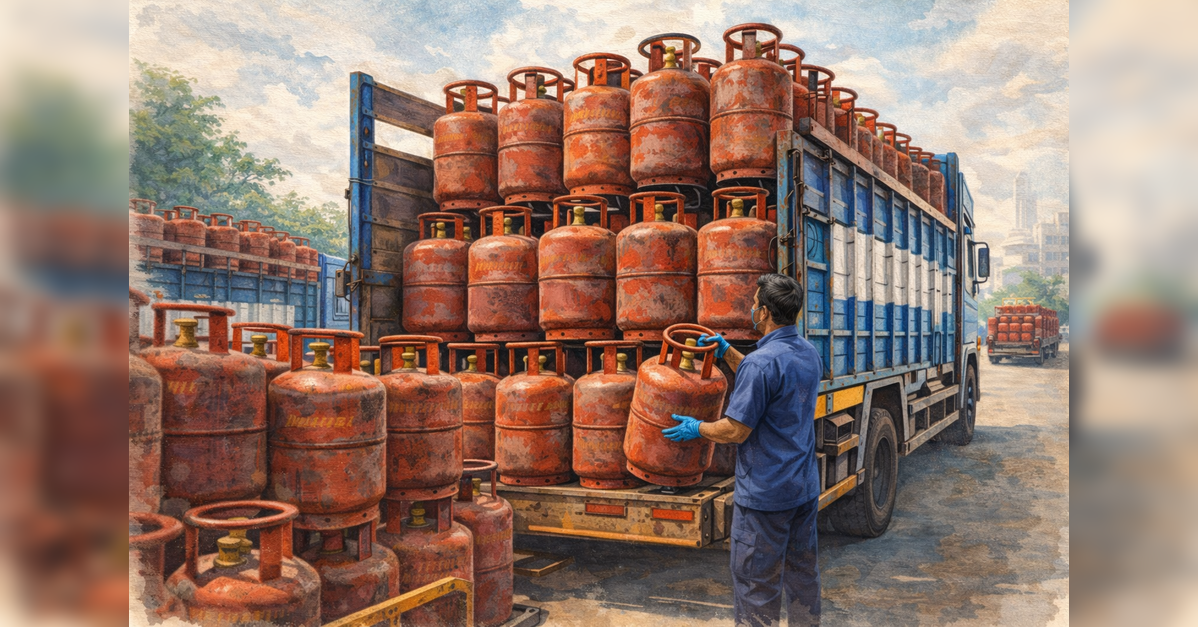
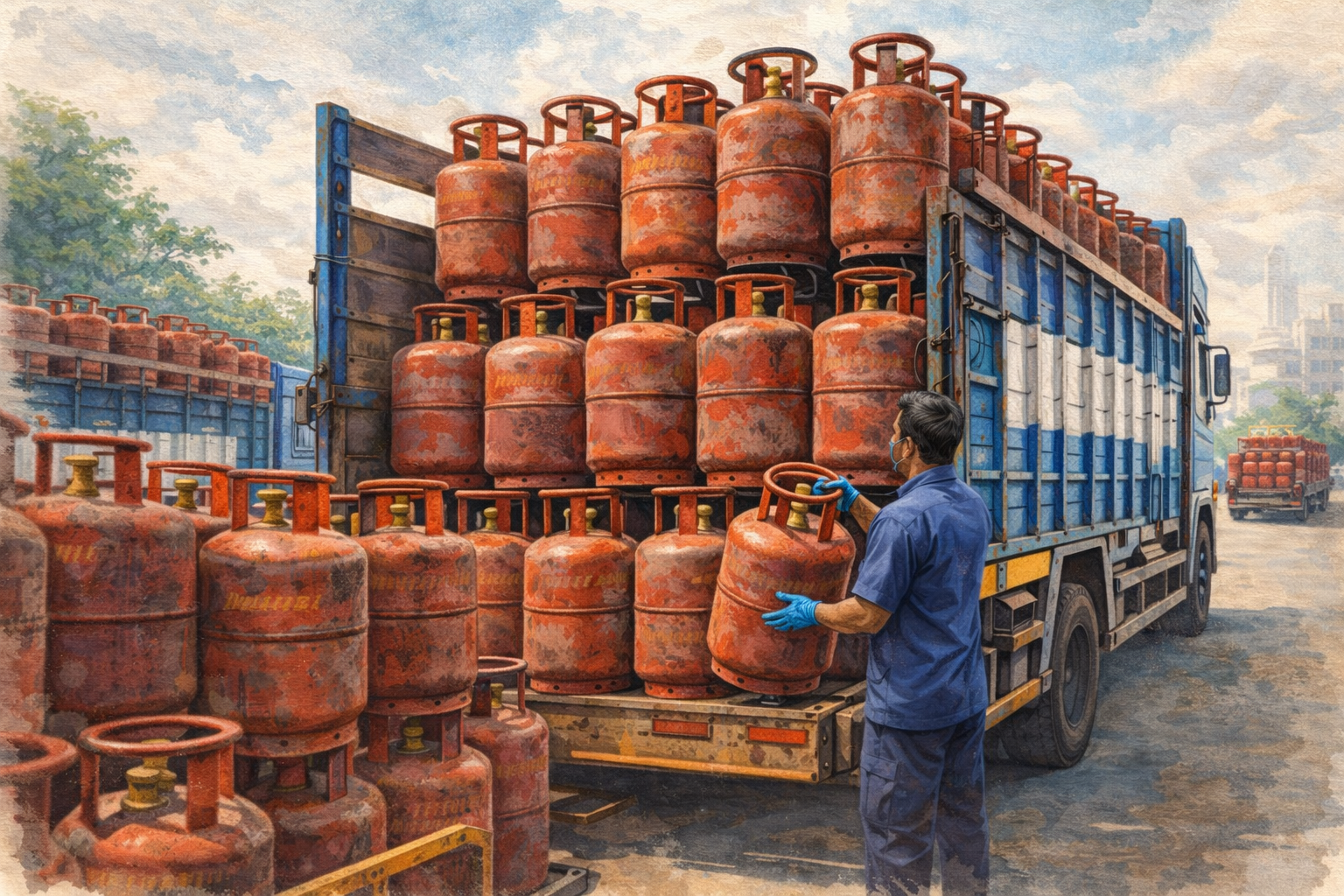
Indian oil marketing companies on Tuesday said that LPG supplies to non-domestic sectors will be prioritised based on merit and product availability as geopolitical disruptions tighten fuel supply chains.
In a joint communication issued by Indian Oil Corporation Ltd (IOCL), Bharat Petroleum Corporation Ltd (BPCL) and Hindustan Petroleum Corporation Ltd (HPCL), the companies said that steps have been taken to increase LPG production and secure supplies for domestic consumers in light of constraints arising from the current geopolitical situation.
While domestic LPG supply will be ensured for household consumers, essential non-domestic sectors such as hospitals and educational institutions will continue to receive supplies based on requirement, the companies said.
For other non-domestic sectors, a committee comprising three Executive Directors from state-run oil marketing companies has been constituted to review requests and prioritise LPG allocation.
The committee includes K Sailendra of Indian Oil Corporation Ltd, T V Pandiyan of Bharat Petroleum Corporation Ltd and Dhruv Kapil of Hindustan Petroleum Corporation Ltd.
Entities seeking LPG supply for essential activities in non-domestic sectors can submit representations to the committee through designated email channels, the joint statement read.
The companies noted that LPG supply to non-domestic segments depends largely on the availability of imported products, and allocation decisions will be made accordingly after reviewing each case.
Earlier in the day, the government issued the Natural Gas (Supply Regulation) Order, 2026, under the Essential Commodities Act (ECA), mandating pro rata allocation of gas supply based on six-month historical averages amid supply risks from West Asia amid US-Israel-Iran tensions.
This official Gazette notification mandates equitable rationing of natural gas (including regasified LNG) based on six-month average consumption: 100 per cent for domestic PNG, transport CNG, LPG production, and pipeline operations (Tier I); 70 per cent for fertiliser plants (Tier II); 80 per cent for tea/manufacturing on the national grid and CGD industrial users (Tiers III-IV).