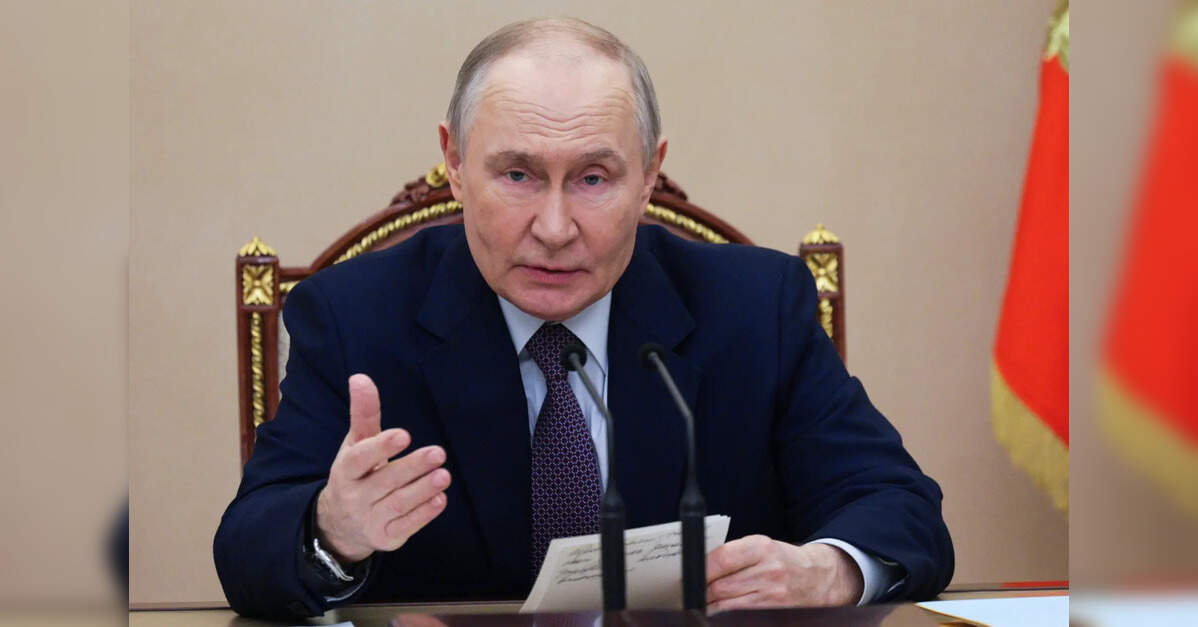
The global energy landscape is once again gripped by heightened geopolitical tension, as warnings emerge regarding the critical Strait of Hormuz. Recent rhetoric from Russian President Vladimir Putin has amplified concerns over the US-Israeli discord with Iran, suggesting a potential complete halt of oil flow through this vital chokepoint within a month. For energy investors, understanding the nuanced interplay between escalating geopolitical risks, immediate market reactions, and upcoming data catalysts is paramount. While initial alarms pushed crude benchmarks significantly higher, our proprietary data reveals a more complex, and perhaps cautious, market response.
The Strait of Hormuz: A Geopolitical Fusebox
The Strait of Hormuz, a narrow waterway connecting the Persian Gulf with the Arabian Sea, remains an unparalleled artery for global energy trade. Roughly one-fifth of the world’s total oil and liquefied natural gas (LNG) flows through this strategic passage daily. Russian President Vladimir Putin’s stark warning that oil production reliant on the Strait of Hormuz could cease completely within the next month underscores the severity of the current situation. He noted that flows have already begun to decline, with regional storage facilities filling up as transport becomes increasingly difficult or prohibitively expensive. This isn’t just a theoretical risk; it represents a tangible threat to the foundational supply chains underpinning the global economy. The escalating conflict involving the US, Israel, and Iran creates an environment where a miscalculation or escalation could have immediate and devastating consequences for energy markets, translating directly into heightened volatility for oil and gas equities.
Market Snapshot: Navigating Volatility Amidst Geopolitical Jitters
While the geopolitical rhetoric suggests an imminent energy crisis, the immediate market reaction, as reflected in our live proprietary data, paints a picture of underlying caution and perhaps a recalibration of initial fears. Following the initial surge that saw crude prices breach the $100 per barrel mark, the market has pulled back. As of today, Brent Crude trades at $92.89, reflecting a modest decline of 0.38% within its daily range of $92.57-$94.21. Similarly, WTI Crude stands at $89.51, down 0.18% for the day, trading between $88.76 and $90.71. This represents a significant retreat from the $101.16 observed for Brent on April 1st, marking a 7% decline over the last two weeks alone. This recent price action directly addresses the core question many investors are asking: “Is WTI going up or down?” The immediate trend shows a downward correction from peak tensions. While the threat to Hormuz is undeniable, the market appears to be weighing the probability and immediacy of a full closure against existing supply levels and potential demand destruction. This suggests that while the risk premium is elevated, it has not yet translated into sustained, runaway price increases, indicating a more nuanced assessment by traders.
Upcoming Catalysts and Investor Outlook
In this period of elevated uncertainty, the market will be keenly focused on upcoming data releases to better gauge the fundamental supply-demand picture. Our calendar of upcoming energy events highlights several key reports that will provide critical insights. The EIA Weekly Petroleum Status Reports, scheduled for April 22nd, April 29th, and May 6th, will offer crucial updates on U.S. crude oil and product inventories, refinery activity, and demand indicators. These reports will be complemented by the API Weekly Crude Inventory data on April 28th and May 5th, providing an early look at inventory shifts. Furthermore, the Baker Hughes Rig Count on April 24th and May 1st will shed light on North American drilling activity, an important indicator of future supply. Perhaps most critically, the EIA Short-Term Energy Outlook on May 2nd will provide a comprehensive forecast for global supply and demand, directly impacting investor predictions for the “price of oil per barrel by end of 2026.” These data points will be instrumental in calibrating investor sentiment against the backdrop of geopolitical risks, helping to answer long-term price questions and inform investment strategies for companies like Repsol, which will be heavily influenced by overall market conditions through April 2026 and beyond.
Russia’s Shifting Energy Strategy and Global Repercussions
Amidst the Middle East tensions, Russia’s strategic maneuvering adds another layer of complexity to the global energy market. President Putin reiterated Russia’s readiness to re-engage with European customers for long-term cooperation, despite Western powers having significantly reduced their reliance on Russian oil and gas over the past four years due to sanctions and the conflict in Ukraine. While Russia, as the world’s second-largest oil exporter and holder of the largest natural gas reserves, seeks to regain lost market share, Europe’s commitment to diversifying its energy sources remains firm, with a complete ban on Russian fossil fuels by the EU looming. Putin’s instruction to his government to consider switching remaining Russian oil and gas flows away from Europe highlights Moscow’s pivot towards Asian markets, often at steep discounts. This ongoing re-alignment of global energy trade routes, driven by both geopolitical strife and sanctions, implies structural shifts that will continue to influence pricing dynamics, shipping costs, and regional energy security for years to come. While Putin suggested the current price spike might be temporary, the long-term re-engineering of global energy flows could create sustained advantages or disadvantages for various players.
Investment Implications in an Unstable Market
The confluence of a high-stakes geopolitical standoff in the Middle East and the evolving dynamics of Russian energy exports creates a volatile, yet potentially opportunity-rich, environment for oil and gas investors. The threat to the Strait of Hormuz introduces an undeniable supply-side risk that could, if realized, send prices soaring beyond recent highs. However, the market’s current pullback from the $100 mark suggests a cautious assessment of the immediate probability of such a catastrophic event, or perhaps a belief in the capacity of alternative supplies and strategic reserves. Investors must remain highly vigilant, monitoring not only the geopolitical rhetoric but also the tangible impacts reflected in inventory reports and demand forecasts. Companies with diversified assets, strong balance sheets, and robust operational resilience will be best positioned to navigate these turbulent waters. The coming weeks, punctuated by critical data releases, will offer further clarity on whether the current market lull is a temporary reprieve or a more fundamental re-evaluation of the risks at hand.


