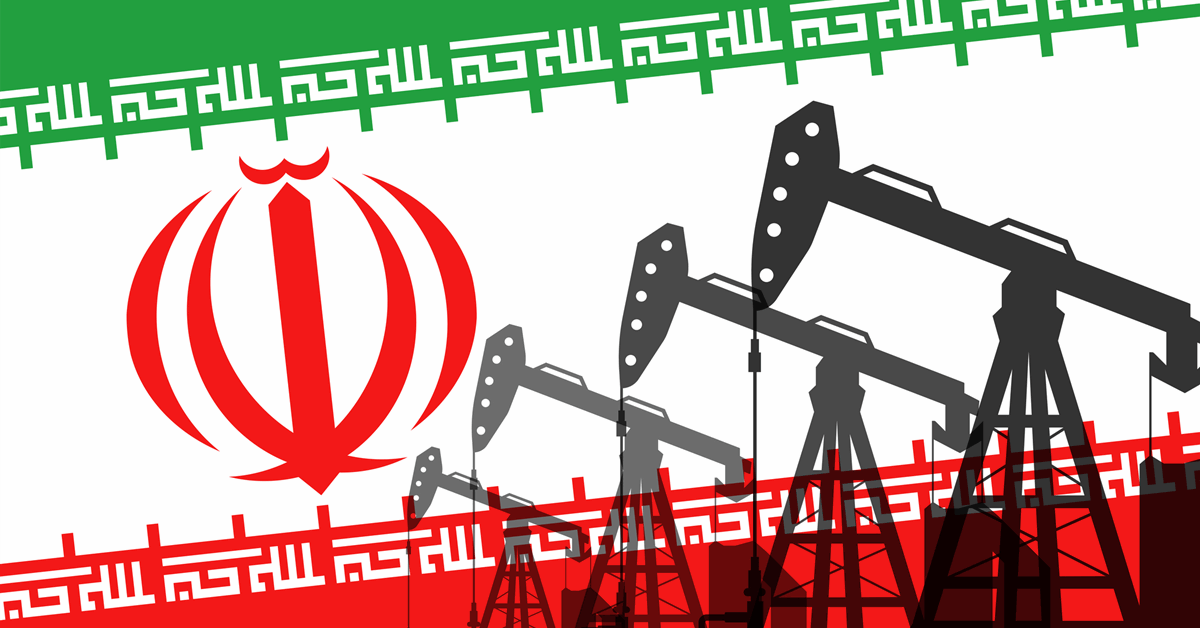
The strategic importance of Kharg Island has once again captured the attention of global energy markets and investors. Recent discussions concerning this pivotal Iranian oil export terminal underscore its critical role in international crude supply dynamics. As the primary conduit for Iranian crude, any disruption to Kharg Island would send immediate and profound ripples through the global oil market, impacting everything from benchmark prices to long-term supply stability. Understanding the operational significance, historical resilience, and potential vulnerabilities of Kharg Island is crucial for any investor navigating the complex landscape of oil and gas.
Kharg Island: Iran’s Indispensable Export Hub and Current Market Signals
Kharg Island is not merely an export terminal; it is the linchpin of Iran’s crude oil export system, handling approximately 90 percent of the nation’s crude shipments. This makes it an irreplaceable cornerstone of Iran’s economy and a major source of revenue. The operational scale is immense: with Iran’s production near 3.3 million barrels per day and exports around 1.5 million barrels per day, a sustained disruption at Kharg Island could jeopardize as much as half of national output. Crucially, the island also provides a vital storage buffer, which would vanish immediately if the hub were to go offline, rapidly triggering upstream shut-ins across major southwest fields.
As of today, Brent Crude trades at $92.61, experiencing a slight dip of 0.68% within a day range of $92.57-$94.21. WTI Crude mirrors this sentiment, sitting at $89.26, down 0.46%. This current market snapshot reveals a relatively calm immediate reaction, which might seem counterintuitive given the magnitude of the Kharg Island risk. However, zooming out, the 14-day Brent trend shows a more significant decline, falling from $101.16 on April 1st to $94.09 by April 21st, a $7.07 (7%) drop. This broader market bearishness, perhaps driven by other supply-demand fundamentals or easing geopolitical tensions elsewhere, suggests that the market is not yet fully pricing in the potential premium associated with a Kharg disruption. This creates a scenario where a sudden escalation could lead to an outsized price reaction, given the underlying geopolitical risk remains unaddressed in current valuations.
Historical Resilience and Geopolitical Red Lines
The question of Kharg Island’s stability is not new, yet it remains largely untouched in modern conflicts. Historically, the island has been viewed as a critical vulnerability but rarely directly targeted due to the severe geopolitical and economic repercussions such an attack would unleash. During the 1979 Iran hostage crisis, advisors considered seizing Kharg Island as leverage, but President Carter ultimately opted for sanctions. Similarly, during the 1980s Iran-Iraq Tanker War, despite Iraqi forces striking other terminals and tankers, Kharg remained largely operational. Damage was typically repaired quickly, underscoring that any attempt to disable it would necessitate sustained, large-scale attacks – a move that would almost certainly trigger immediate and severe retaliation in the Strait of Hormuz or against regional energy infrastructure.
This historical context is vital for investors asking about long-term oil price predictions. While a direct strike on Kharg Island remains a high-risk, low-probability event given the mutual assured destruction implications, the very discussion of such a possibility adds a persistent geopolitical risk premium to the market. The resilience demonstrated in past conflicts suggests a high bar for disruption, which generally lends stability to long-term forecasts. However, the potential for a non-linear impact – a small probability of a massive supply shock – means this risk must always be factored into strategic portfolio positioning, particularly for those looking at where the price of oil per barrel might settle by the end of 2026.
Investor Horizon: Forward-Looking Analysis and Calendar Events
For investors keenly asking “is WTI going up or down?” or seeking predictions for oil prices by the end of 2026, the Kharg Island scenario presents a significant, albeit latent, upside risk. Current forecasts suggest that if Kharg Island were to be offline for an extended period, it could add an additional $10 to $15 per barrel to existing Brent crude price projections. If we consider baseline 2026 Brent forecasts, this implies a potential jump to the $73-$78 per barrel range under a severe disruption scenario, significantly altering investment theses.
Monitoring upcoming energy events is critical to understanding the underlying market fundamentals against which any Kharg-related shock would play out. The next two weeks are packed with key data releases. Investors should pay close attention to the EIA Weekly Petroleum Status Reports on April 24th, April 29th, and May 6th, as well as the API Weekly Crude Inventory reports on April 28th and May 5th. These reports will provide crucial insights into U.S. crude inventories, refinery activity, and demand, establishing the baseline supply-demand picture. Furthermore, the Baker Hughes Rig Count on April 24th and May 1st will offer an indication of North American production trends, while the EIA Short-Term Energy Outlook on May 2nd will provide a broader perspective on supply and demand forecasts. Any significant development concerning Kharg Island would interact with these fundamental data points, potentially amplifying price movements if baseline supply is already tight or demand is robust. Proactive monitoring of these scheduled events allows investors to better gauge market resilience in the face of sudden geopolitical shifts.
Strategic Implications for Energy Portfolios
The discussions surrounding Kharg Island serve as a stark reminder of the fragile nature of global oil supply chains and the concentrated risks within key geopolitical choke points. The island’s dual role as a major export terminal and a source of revenue for the Iranian Revolutionary Guard makes it a highly sensitive asset. Iran’s historical tendency to strategically ramp up exports from Kharg Island prior to anticipated geopolitical tensions further underscores its operational and strategic significance. For investors, this means that while the immediate market (as reflected by today’s Brent and WTI prices) might appear to be shrugging off the risk, the underlying potential for a rapid and substantial supply shock remains. This non-linear risk profile demands careful consideration in portfolio construction. Diversification across energy assets, coupled with strategic hedging, could prove prudent in mitigating the impact of an event that, while unlikely, carries immense price implications. The stability of Kharg Island is not just an Iranian issue; it is a critical component of global oil market stability, and its ongoing security will continue to be a primary focus for energy investors.


