The geopolitical landscape of the Middle East remains a primary driver of global energy markets, with the Strait of Hormuz consistently at the forefront of investor concerns. This critical maritime choke point, through which approximately 20 million barrels per day of crude and refined products traverse – representing about a fifth of global consumption – represents an irreplaceable artery for the world’s energy supply. Recent escalations in regional tensions have once again highlighted the precarious balance, prompting a renewed focus on contingency plans designed to cushion the market from potential disruptions. While discussions around bypass pipelines offer a semblance of security, our analysis reveals these solutions are temporary at best, merely buying time in a volatile environment rather than offering a long-term fix. For energy investors, understanding the capabilities and limitations of these alternative routes, alongside broader market dynamics, is crucial for navigating the inherent risks and opportunities.
The Hormuz Chokepoint and Alternative Capacities
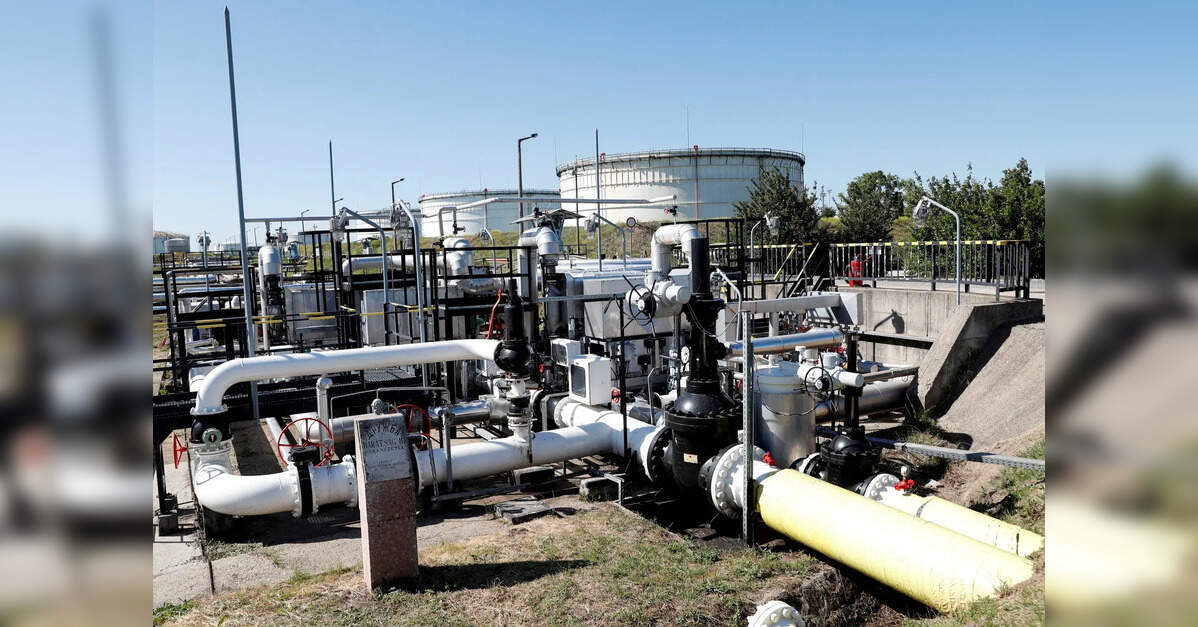
The strategic importance of the Strait of Hormuz cannot be overstated. Its potential closure, or even significant disruption, presents an existential threat to global oil supply stability. In response to this long-standing risk, key regional producers have invested in alternative infrastructure. Saudi Arabia’s East-West pipeline, a 1,200-kilometer conduit stretching from the Persian Gulf to the Red Sea, stands as the most significant bypass. This pipeline boasts a capacity to reroute up to 5 million barrels of oil per day, providing a substantial, though not complete, workaround for Gulf exports. Complementing this is a pipeline owned by the United Arab Emirates, offering an additional bypass option to the Gulf of Oman with a typical capacity of 1.5 million barrels per day, potentially expandable to nearly 2 million barrels in an emergency.
Combined, these pipelines could theoretically divert between 6.5 million and 7 million barrels daily. While this is a considerable volume, it falls short of the full 20 million barrels per day transiting Hormuz. The practical implementation of these bypasses also faces logistical hurdles. The immediate challenge involves diverting supertankers – approximately 25 vessels, each capable of loading around 2 million barrels, have already shifted their routes towards these new pickup points. However, the ability of loading ports at the Red Sea and Gulf of Oman terminals to efficiently handle such an armada of tankers remains a critical question. Any bottlenecks here would diminish the effective bypass capacity, underscoring that these pipelines offer a vital, yet inherently limited, mitigation strategy rather than a comprehensive solution to a full Hormuz closure.
Market Sentiment and Current Price Action
The immediate aftermath of initial conflict escalations typically sees a sharp spike in energy prices, reflecting acute supply fear. Our proprietary data indicates that such an event did indeed propel crude prices significantly, with market speculation pushing values well above $100 per barrel in rapid trading. However, the market has since absorbed some of that initial shock. As of today, Brent Crude is trading at $92.61, experiencing a modest decline of 0.68% within a day range of $92.57 to $94.21. Similarly, WTI Crude stands at $89.26, down 0.46% with a day range of $88.76 to $90.71. Gasoline prices also reflect this slight easing, currently at $3.1, down 0.96%.
Analyzing the 14-day trend for Brent Crude further illustrates this dynamic: prices have moved from $101.16 on April 1st to $94.09 on April 21st, representing a decrease of $7.07 or approximately 7%. This downward trend, even amidst ongoing tensions, suggests that market participants are factoring in the existence of bypass capacity and perhaps anticipating a de-escalation or containment of the conflict. The current pricing indicates a fragile calm, where the perceived ability of Saudi and UAE pipelines to provide a temporary cushion is buying time for political solutions or a resolution to the immediate crisis. However, this stability is highly conditional, susceptible to any news that suggests these bypasses are insufficient or that the conflict is widening.
Investor Concerns and Forward Outlook
Our first-party reader intent data highlights a consistent theme among investors: a desire for clarity on future price trajectories. Questions like “is WTI going up or down” and “what do you predict the price of oil per barrel will be by end of 2026” underscore the uncertainty. While the bypass pipelines offer a buffer, their capacity is finite, and their utility is primarily to delay catastrophic price surges, not prevent them entirely in a prolonged crisis. The market’s current trajectory, as evidenced by the recent Brent price decline from its peak, suggests that the initial fear premium has somewhat dissipated, but significant upside risk remains.
Looking ahead, several key events on the energy calendar will shape investor sentiment and price discovery. Investors will be closely watching the EIA Weekly Petroleum Status Reports on April 22nd, April 29th, and May 6th, as well as the API Weekly Crude Inventory reports on April 28th and May 5th. Significant drawdowns in U.S. crude inventories, especially if global supply routes remain under threat, could quickly reignite bullish pressure. Additionally, the Baker Hughes Rig Count on April 24th and May 1st will offer insights into future production capacity, while the EIA Short-Term Energy Outlook on May 2nd will provide a macro perspective on supply-demand balances. Any data point suggesting tighter supplies or increased demand, particularly against the backdrop of ongoing geopolitical friction, could rapidly shift market sentiment and push crude prices back towards or above the $100 mark. Investors must remain agile, interpreting these data releases through the lens of heightened geopolitical risk.
Strategic Implications for Energy Portfolios
Given the volatile geopolitical landscape and the inherent limitations of current bypass infrastructure, energy investors must adopt a robust, risk-adjusted strategy. The immediate cushion provided by the Saudi and UAE pipelines, while significant, is a short-term tactical advantage rather than a long-term strategic solution to a persistent Hormuz disruption. This implies that while the worst-case scenario of a complete and sustained global supply shock might be delayed, it is not entirely averted. Investors should consider the implications for both upstream and midstream assets. Companies with diversified logistical routes, or those less reliant on the Strait of Hormuz, may present more resilient investment opportunities.
Furthermore, the recurring nature of these geopolitical flashpoints underscores the importance of portfolio diversification beyond traditional crude producers. Investments in natural gas, renewable energy, and even strategic energy storage solutions could offer hedges against oil price volatility. For those with direct exposure to crude oil, monitoring the effectiveness and utilization rates of the bypass pipelines, along with the speed of tanker diversions, will be key indicators of market stability. Ultimately, the market is currently priced for a degree of managed risk and contingency, but any breakdown in these temporary measures or a significant escalation of regional conflict would necessitate a rapid re-evaluation of positions, potentially driving crude prices significantly higher by year-end.


