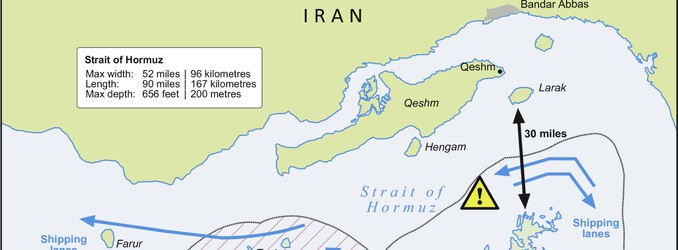
The Strait of Hormuz, a critical maritime chokepoint for global energy flows, has witnessed an unprecedented disruption over the past seven days. Commercial vessel traffic, excluding those with direct links to Iran, has ground to a near standstill, marking a significant escalation in regional instability. The last non-Iranian associated commercial ship, a Chinese-owned bulk carrier, completed its transit a week ago. This sustained halt, driven by ongoing missile and drone activity posing severe risks to shipping, is creating immediate logistical challenges for Gulf producers and injecting a fresh wave of uncertainty into the global oil and gas investment landscape. For astute investors, understanding the multifaceted implications of this bottleneck, from immediate supply chain pressures to broader market sentiment and upcoming data catalysts, is paramount for navigating the weeks ahead.
The Unprecedented Standstill: Logistics Under Severe Strain
For seven consecutive days, the flow of commercial shipping through the Strait of Hormuz has been severely impaired, with only vessels demonstrably linked to Iran observed making the passage. This effective blockade has immediate and profound consequences for the Persian Gulf’s vast crude oil export infrastructure. With tankers unable to safely enter or exit the Gulf, storage tanks across the region are rapidly nearing capacity. Major producers like Iraq, Kuwait, and the United Arab Emirates have already been compelled to scale back their production rates, a direct response to the lack of viable export routes. While Saudi Arabia has attempted to mitigate some impact by significantly boosting shipments from its Red Sea terminals, this alternative route has limitations and cannot fully compensate for the choked Strait. Adding to the logistical nightmare, vessel-tracking data revealed only nine empty supertankers remained available in the Gulf by the end of last week, underscoring the severe strain on the region’s ability to clear its accumulating crude. Compounding the challenge, widespread signal interference and the deliberate disabling of automatic identification system (AIS) transponders by some vessels further obscure the true extent of movements and risks, making real-time assessment incredibly difficult for market participants.
Navigating Market Realities: Price Action Amidst Geopolitical Volatility
Despite the severe and ongoing disruption in the Strait of Hormuz, the immediate reaction in crude oil benchmarks has been nuanced, prompting investors to question the market’s seemingly muted response. As of today, Brent crude trades at $92.78 per barrel, reflecting a slight dip of 0.49% within the day’s range of $92.57 to $94.21. Similarly, WTI crude is priced at $89.40, down 0.3% from its daily high, fluctuating between $88.76 and $90.71. This minor daily decline stands in stark contrast to the severity of the geopolitical risk unfolding. It’s also important to note that Brent has actually trended down by approximately 7% ($7.07) over the past two weeks, moving from $101.16 to its current level. This raises a critical question for investors: why isn’t oil spiking given such a significant chokepoint disruption? The market appears to be weighing several factors: perhaps an expectation of a relatively swift resolution, the potential for alternative supply routes to be fully leveraged, or broader concerns about global demand dynamics that are tempering any immediate supply shock premium. The International Energy Agency’s recent stance, indicating no immediate need to release emergency oil reserves, further signals a perception that current global inventories and alternative supplies can absorb some of the immediate pressure, at least for now. However, the sustained nature of the Hormuz disruption means this delicate balance could shift rapidly, keeping investors on edge regarding future price direction.
Beyond the Strait: Forward-Looking Catalysts for Oil Investors
While the Strait of Hormuz remains a focal point, prudent investors must look beyond the immediate crisis to upcoming energy events that will provide crucial context and potential catalysts for future oil price movements. The next 14 days are packed with critical data releases that will offer insights into the broader supply-demand picture, influencing investor sentiment and price forecasts. For instance, the EIA Weekly Petroleum Status Reports, scheduled for April 22nd, April 29th, and May 6th, will be closely watched for U.S. crude inventories, refinery utilization rates, and production figures. If U.S. inventories continue to build, it could partially offset the supply concerns emanating from the Gulf, dampening upward price pressure. Similarly, the API Weekly Crude Inventory reports on April 28th and May 5th will serve as leading indicators for the official EIA data. Investors are also keenly awaiting the Baker Hughes Rig Count reports on April 24th and May 1st to gauge the trajectory of North American production capacity, which could provide a longer-term supply buffer. Perhaps most anticipated is the EIA Short-Term Energy Outlook on May 2nd, which will offer comprehensive projections for global supply, demand, and prices, helping to inform the market’s view on where oil might settle by the end of 2026, a question many of our readers are actively asking. These data points, combined with any developments in the Hormuz situation, will be instrumental in shaping the market’s forward price curve and informing strategic investment decisions.
Investor Focus: Identifying Opportunity Amidst Uncertainty
The current market environment, characterized by geopolitical volatility and supply chain disruptions, naturally leads to investor questions about the resilience and future performance of energy investments. Our proprietary reader intent data reveals a strong interest in the overall direction of crude prices and the performance of specific energy companies. For investors grappling with the “up or down” question for WTI and the long-term outlook for oil prices, the key lies in a nuanced understanding of company-specific exposure and operational flexibility. Companies with significant assets in the Persian Gulf, particularly those heavily reliant on Strait of Hormuz transit, face elevated operational risks and potential revenue impacts from reduced production and disrupted exports. Conversely, firms with robust infrastructure for Red Sea exports, diversified production bases outside the Gulf, or strong domestic refining capabilities might prove more resilient. Investors are also evaluating how individual energy companies, like Repsol mentioned by one of our readers, are positioned to adapt to such crises. This includes assessing their balance sheets, hedging strategies, and their ability to pivot supply chains or leverage alternative assets. The situation underscores the importance of a diversified portfolio and a focus on companies with strong risk management frameworks and strategic optionality. As the situation evolves, tracking these companies’ quarterly earnings calls and operational updates will be crucial for discerning their specific vulnerabilities and strengths in this challenging landscape.