Navigating the Volatility: Middle East Tensions Point Towards Renewed Triple-Digit Oil Pressures
The global oil market stands at a critical juncture, with escalating geopolitical tensions in the Middle East threatening to fundamentally redraw the supply landscape. As major producers in the region begin to curtail output and vital shipping lanes face unprecedented disruption, the specter of $100-a-barrel crude is no longer a distant forecast but an increasingly imminent reality. While recent market movements suggest a slight breather, the underlying fundamentals, driven by a confluence of conflict and constrained supply, strongly indicate that energy investors must prepare for sustained upward price momentum. Our proprietary data pipelines highlight the immediate volatility and the longer-term structural shifts that are poised to define oil’s trajectory through the coming months.
Geopolitical Realignment and the Squeeze on Supply
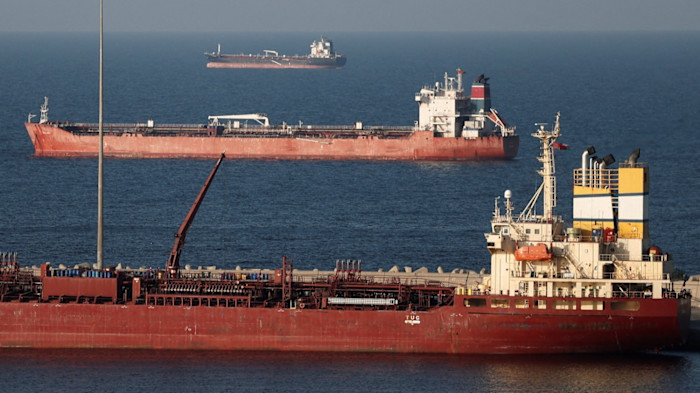
The ongoing US-Iran confrontation has created a chokehold on a critical artery of global energy supply: the Strait of Hormuz. This vital chokepoint, which typically facilitates the transit of at least one-fifth of the world’s crude oil and liquefied natural gas, is now a high-risk zone for tankers. Consequently, major Middle Eastern producers, including Saudi Arabia, the UAE, Iraq, Kuwait, and Iran, are reportedly either scaling back production or halting field operations entirely. This unprecedented situation stems from the risk of storage tanks overflowing as crude accumulates in the Gulf, unable to be shipped safely. Further exacerbating these concerns, recent weekends have seen direct attacks on crucial energy infrastructure, including Saudi Arabia’s 1-million-barrel-a-day Shaybah oilfield and the Berri field, which underscore the physical threat to production capacity. Satellite monitoring confirms that Saudi Arabia has already reduced output as it grapples with these logistical and security challenges, signaling a significant tightening of global crude availability.
Current Market Dynamics: A Brief Reprieve Amidst Bullish Undercurrents
While the narrative strongly points towards higher prices, our live market snapshot reveals a nuanced picture. As of today, Brent Crude trades at $92.78, reflecting a modest daily dip of 0.49% within a range of $92.57-$94.21. West Texas Intermediate (WTI) Crude follows a similar pattern, currently at $89.40, down 0.3% for the day. This current pricing represents a slight pullback from earlier peaks, notably from $101.16 recorded on April 1st, marking a 7% decline over the past three weeks. This recent consolidation, however, should not be mistaken for a softening of the underlying bullish sentiment. Rather, it appears to be a temporary pause after a period of intense upward pressure, with market participants recalibrating amidst the escalating tensions. Refined products, often a leading indicator, continue to reflect tightness; gasoline, for instance, is currently priced at $3.1 per gallon. Influential voices in commodity markets, including major investment banks, have unequivocally warned that crude and refined product prices could reach historical highs if the flow disruptions through the Strait of Hormuz persist throughout March and beyond, echoing the extreme levels seen when Brent crude hit $147.50 in 2008, which, adjusted for inflation, would equate to $218 today.
Forward-Looking Analysis: Key Events and Investor Scrutiny
The critical question on many investors’ minds, as reflected in our reader intent data, is precisely “which way is WTI going?” and “what will the price of oil per barrel be by the end of 2026?” Answering these necessitates a keen eye on upcoming market catalysts and the evolving geopolitical landscape. Over the next two weeks, several pivotal data releases will offer crucial insights. The EIA Weekly Petroleum Status Reports, scheduled for April 22nd, April 29th, and May 6th, will provide critical updates on crude oil inventories and refinery activity. With Middle Eastern producers facing storage constraints, any significant drawdowns or unexpected builds in these reports could either alleviate or intensify supply fears. Similarly, the API Weekly Crude Inventory reports on April 28th and May 5th will offer an early indication of these trends. Furthermore, the Baker Hughes Rig Count on April 24th and May 1st will shed light on North American drilling activity, influencing longer-term supply expectations. Finally, the EIA Short-Term Energy Outlook on May 2nd will present the market with an updated official forecast, which could significantly influence sentiment regarding price trajectories for the remainder of 2026. Investors are clearly seeking clarity on these forward indicators to position themselves effectively in a highly volatile market.
Investment Implications in a Geopolitically Charged Market
The current environment demands a strategic and agile approach from energy investors. The immediate threat of supply disruption, particularly from the Strait of Hormuz and direct attacks on production facilities, creates a high probability of sharp price spikes. While current prices have eased slightly from their April 1st peak, the fundamental drivers for triple-digit oil remain firmly in place. Companies with robust balance sheets, diversified asset bases, and resilient supply chains are better positioned to navigate this period of heightened risk and capitalize on potential price increases. Exploration and production (E&P) companies, especially those with exposure outside of the immediate conflict zones, could see significant upside. However, the risk of demand destruction from persistently high prices, coupled with potential diplomatic breakthroughs, always looms. For investors pondering the long-term outlook, the geopolitical re-calibration of global energy flows suggests a structural shift towards a more expensive and potentially more volatile oil market for the foreseeable future, making strategic allocations and careful risk management paramount.