The global oil market is grappling with a profound shift, moving beyond speculative geopolitical risk to face tangible operational disruptions in critical supply arteries. Kuwait’s recent announcement of reduced oil production and refining output, a direct consequence of escalating tensions in the Persian Gulf, underscores the severity of this predicament. Tankers are avoiding the vital Strait of Hormuz, a choke point through which approximately 20% of global oil consumption is exported, fundamentally altering the calculus for producers and investors alike. This escalating crisis is not merely about potential future supply shocks; it represents an immediate challenge to the physical flow of oil, forcing Gulf Arab nations to confront rapidly diminishing storage capacity and, consequently, implement production cuts. For investors, understanding these dynamics is paramount to navigating an increasingly volatile and tight energy market.
Escalating Supply Disruptions and Market Dynamics
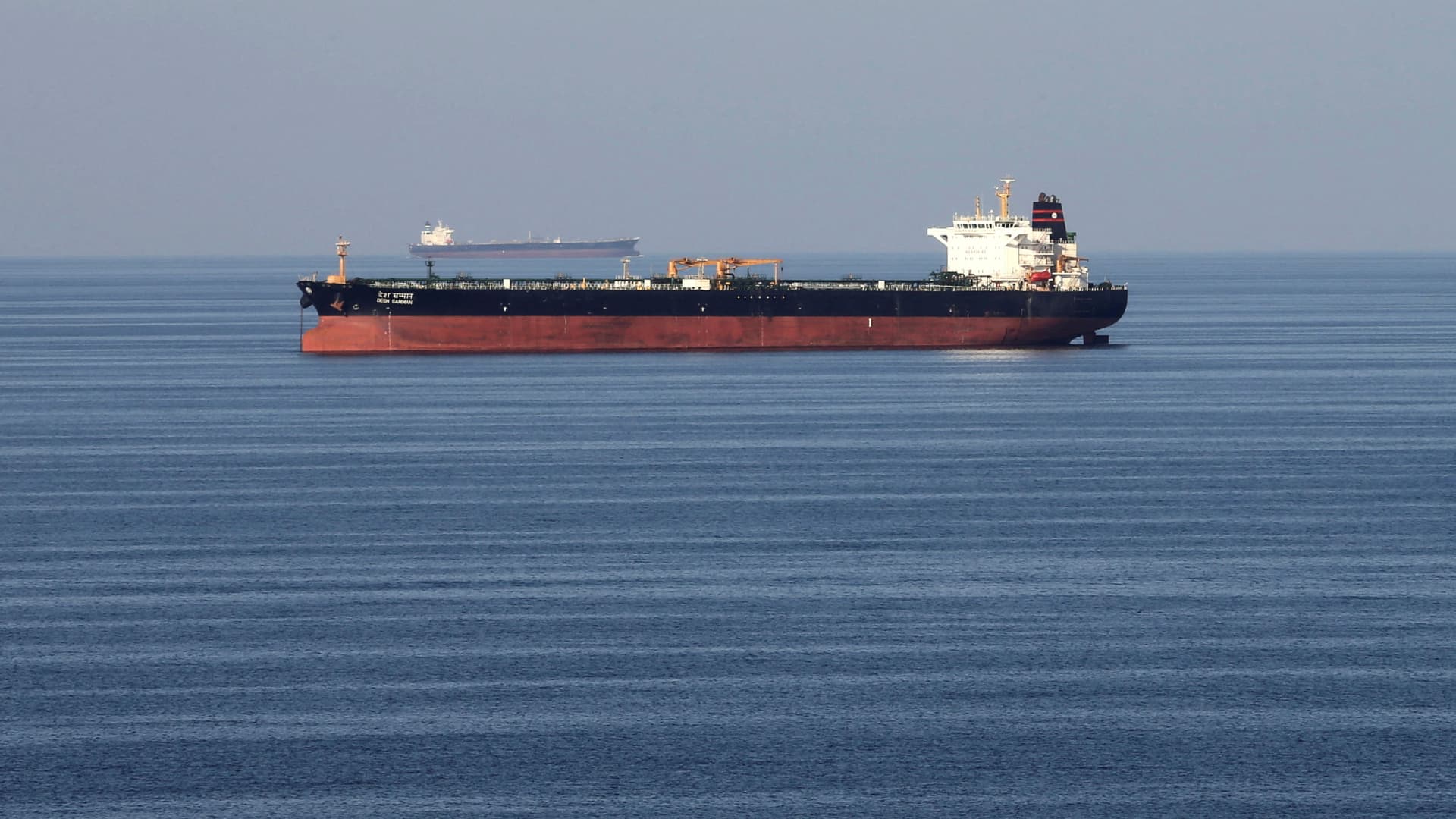
Kuwait, the fifth-largest oil producer within OPEC, which produced approximately 2.6 million barrels per day in January, has confirmed it has cut output due to the inability of tankers to safely transit the Persian Gulf. While the specific volume of Kuwait’s reduction remains undisclosed, the state-owned Kuwait Petroleum Corporation emphasized its readiness to restore levels once conditions permit. This action follows similar precautionary measures, notably from Iraq, which has already cut 1.5 million barrels per day as its storage facilities approach maximum capacity. The core issue is stark: oil barrels are accumulating in the Middle East with no viable route to market, compelling producers to reduce output when storage is exhausted. This immediate operational reality marks a significant evolution from pure geopolitical speculation to concrete supply constraint.
The market’s reaction has been pronounced. While the initial surge in oil prices saw crude logging its biggest weekly gain in futures trading history, recent movements suggest a period of consolidation, albeit at elevated levels. As of today, Brent Crude trades at $92.77, reflecting a -0.5% shift within a day range of $92.57-$94.21. Similarly, WTI Crude stands at $89.24, down -0.48% for the day, with a range of $88.76-$90.71. This slight daily pullback comes after a significant run-up, yet it’s worth noting the 14-day trend for Brent Crude, which saw prices decline from $101.16 on April 1st to $94.09 on April 21st, before settling at current levels. This indicates that while the immediate crisis has driven prices up, the market is continually re-evaluating the duration and severity of the disruption, with traders actively trying to price in both the immediate impact and potential, albeit limited, alternative scenarios.
Storage Constraints and the Horizon of Deeper Cuts
The critical bottleneck remains the Strait of Hormuz. With approximately 20% of global oil consumption passing through this narrow waterway, its effective closure to commercial tanker traffic creates an unprecedented logistical challenge. The immediate consequence is the rapid filling of storage tanks across Gulf Arab nations. Industry analysts, including experts from JPMorgan, warn that if the U.S.-Iran conflict continues to impede transit through the Strait for more than three weeks, these countries could exhaust their storage capacity, necessitating further, more substantial production shutdowns. Such a scenario could lead to global production cuts exceeding 4 million barrels per day, potentially driving benchmark Brent oil prices above $100 per barrel.
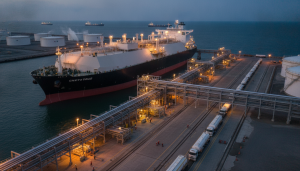
The ripple effects extend beyond crude oil. Qatar, a major global supplier, has already shut down liquefied natural gas (LNG) production due to related attacks, impacting approximately 20% of the world’s LNG exports. This dual disruption in both crude and natural gas supplies underscores the fragility of global energy infrastructure in the face of sustained regional conflict. Investors must recognize that these are not hypothetical scenarios but unfolding operational realities, with direct and immediate impacts on supply volumes and, consequently, global energy prices.
Investor Focus: Navigating Volatility and Future Outlook
The current market environment presents significant challenges and opportunities for investors, as evidenced by the questions our proprietary reader intent data highlights. Many investors are keenly focused on price direction, with a frequent query being ‘is WTI going up or down?’ This reflects the underlying anxiety and uncertainty, as well as the desire for actionable insights in a rapidly changing landscape. While short-term fluctuations are inevitable, the fundamental drivers point towards continued tightness. The market is clearly wrestling with the immediate operational disruption, rather than just abstract geopolitical risk, which means supply-side shocks are likely to persist as long as the Strait remains compromised.
For those holding energy assets, the focus should be on companies with diversified supply chains or those less reliant on direct Persian Gulf exports. Companies with strong refining margins or robust upstream assets in less volatile regions may offer some insulation. Furthermore, the disruption in natural gas markets, particularly LNG, could create opportunities in alternative gas supply regions or domestic gas producers, as global demand for heating and electricity remains constant. The prediction for oil prices by the end of 2026, another common investor question, is increasingly tied to the resolution of this conflict and the long-term stability of Middle Eastern shipping lanes. Sustained disruption would undoubtedly keep prices elevated, potentially well above current levels, while a swift resolution could see a tempering of the extreme risk premium.
Key Events to Monitor for Strategic Positioning
In this heightened state of market tension, investors must closely monitor a series of critical data releases in the coming weeks to gauge the true impact of these supply disruptions and storage challenges. The upcoming EIA Weekly Petroleum Status Reports, scheduled for April 22nd, April 29th, and May 6th, will provide crucial insights into U.S. crude oil and refined product inventories, as well as refinery utilization rates. Given the global storage squeeze, any build-up or draw-down in U.S. stocks will be closely scrutinized for signs of market rebalancing or further strain.
Complementing these, the API Weekly Crude Inventory reports on April 28th and May 5th offer additional, often leading, indicators of U.S. storage dynamics. Furthermore, the Baker Hughes Rig Count on April 24th and May 1st will shed light on North American drilling activity. While new production cannot immediately offset a major Strait of Hormuz closure, shifts in rig counts can signal longer-term supply responses. Finally, the EIA Short-Term Energy Outlook, due on May 2nd, will offer official forecasts and analyses that will be vital in shaping market expectations and investor strategies amidst such profound uncertainty. These events will provide critical data points for investors seeking to refine their positions in a fundamentally altered oil market.