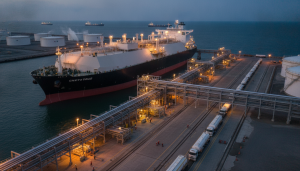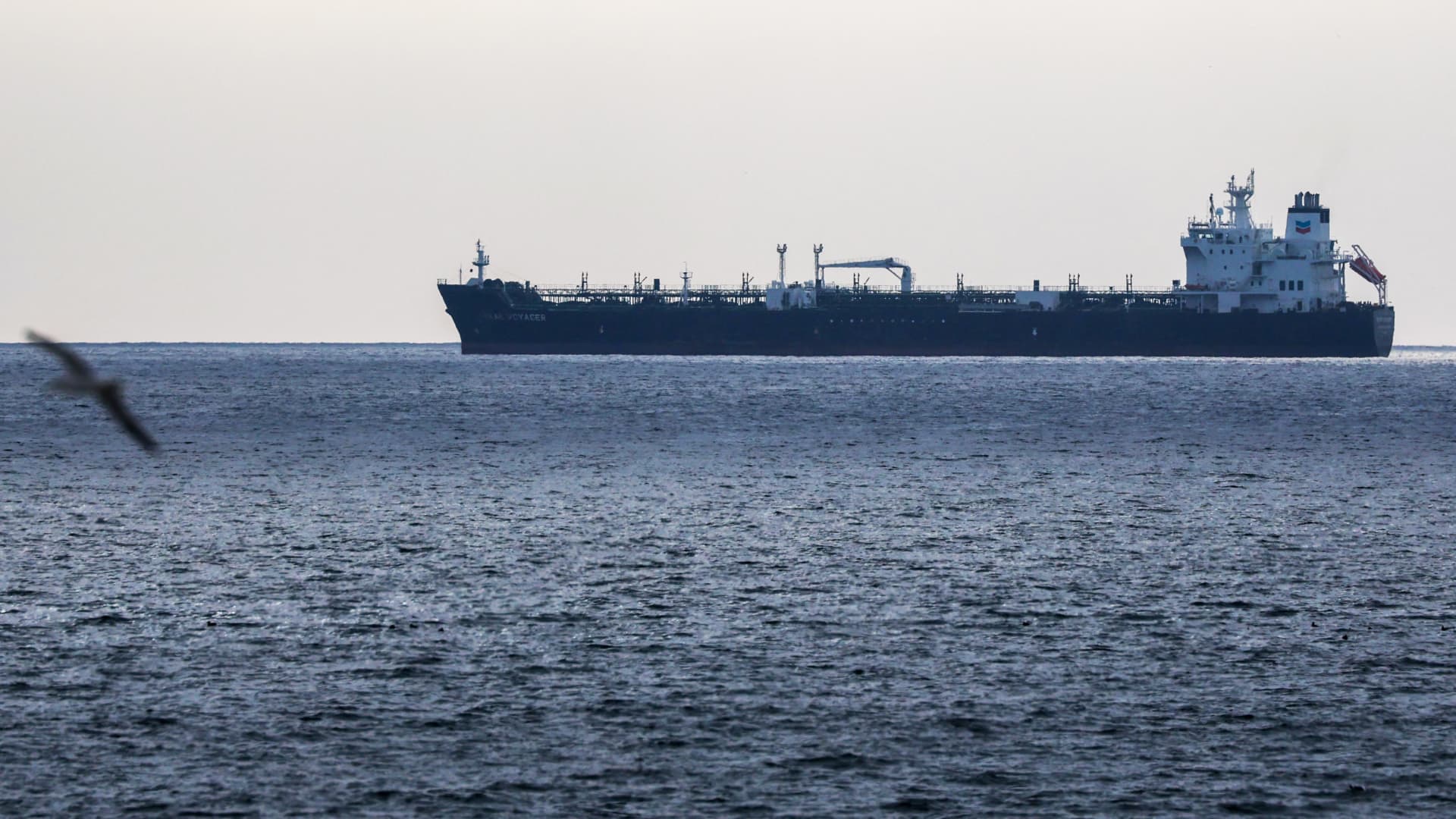
The geopolitical landscape surrounding the Strait of Hormuz continues to exert a profound influence on global energy markets, prompting a recent intervention from the U.S. government. A new $20 billion reinsurance program, spearheaded by the U.S. International Development Finance Corporation (DFC), aims to underwrite maritime losses and restore confidence in shipping through this critical chokepoint. While the headline suggests a direct solution to stalled tanker traffic, our proprietary data and deeper analysis reveal a more nuanced picture for investors. The effectiveness of this financial lifeline hinges not just on mitigating monetary risk, but on addressing the underlying physical security concerns that truly dictate the movement of vital crude, LNG, and refined products.
Deconstructing the Reinsurance Gambit
The DFC’s $20 billion reinsurance program is an ambitious attempt to restore stability to a volatile shipping corridor. Designed to cover losses on a rolling basis, the initiative seeks to get oil, gasoline, liquefied natural gas (LNG), jet fuel, and even fertilizer flowing again through the Strait of Hormuz. This narrow waterway is undeniably the world’s most significant chokepoint for crude oil, facilitating approximately 20% of global consumption exports, alongside a similar proportion of worldwide LNG exports. The U.S. administration, in cooperation with the Treasury Department and U.S. Central Command, intends for this program to signal robust support for commercial vessels, even offering U.S. Navy escorts where necessary.
However, an essential analytical distinction must be made: while insurance addresses financial risk, it does not inherently resolve physical security threats. Our intelligence suggests that current tanker paralysis stems less from the cost of insurance and more from the tangible danger of transit following recent attacks on vessels. Operators are prioritizing the safety of their crews and assets over merely being reimbursed for a loss. Until there is a demonstrable reduction in the regional conflict and a renewed confidence in the security of passage, the DFC’s financial backstop, while significant, may serve primarily as a political statement rather than an immediate operational panacea. Investors should view this program as a necessary, but perhaps insufficient, step towards de-risking the region.
Market Reaction and Underlying Realities
Initial reports indicated a significant surge in U.S. crude prices, topping $90 per barrel, following the initial disruptions in the Persian Gulf. However, our real-time market data paints a more current and complex picture. As of today, Brent Crude trades at $92.77, marking a -0.5% dip within a day range of $92.57 to $94.21. Similarly, WTI Crude stands at $89.24, down -0.48% for the day, fluctuating between $88.76 and $90.71. Gasoline prices have also seen a slight decline, trading at $3.1, down -0.96%.
This recent price softening, despite the ongoing geopolitical tensions and the DFC announcement, suggests that the market is already digesting the immediate implications and perhaps finding alternative supply routes or assessing the longer-term efficacy of the reinsurance. Looking at the broader trend, our proprietary 14-day Brent data shows a notable retreat from $101.16 on April 1st to $94.09 on April 21st, representing a significant $7.07 or 7% decline. This downward trajectory indicates that the market’s initial panic has subsided, replaced by a more sober evaluation of global supply dynamics and the potential for a protracted, yet contained, regional conflict. For investors asking about WTI’s direction or overall oil price trends, the current data suggests a volatile environment where immediate geopolitical shocks can be quickly overshadowed by broader supply/demand fundamentals and the market’s capacity to adapt.
The Strait of Hormuz: A Chokepoint’s Enduring Pressure
The strategic importance of the Strait of Hormuz cannot be overstated. Its narrow confines are indispensable for global energy flows, directly impacting crude oil, LNG, and a range of refined products. The current standstill in tanker traffic, directly attributed to the Iran war and subsequent attacks, has already forced some Gulf nations to reduce crude production simply because they lack the means to export. This physical constraint on supply, irrespective of insurance coverage, presents a tangible risk to global energy security and prices. It underscores the fragility of a system heavily reliant on a single, politically charged maritime passage.
Beyond the immediate disruption, the prolonged instability in the Strait could prompt a re-evaluation of long-term energy infrastructure and supply chain resilience. While the DFC program aims to provide a safety net, the deeper issue for investors is the potential for sustained interruptions and the subsequent inflationary pressures on energy commodities. The risk premium associated with Middle Eastern crude and LNG could remain elevated for the foreseeable future, making investments in alternative supply regions or energy diversification increasingly attractive.
Forward-Looking Market Dynamics and Key Events
For investors navigating this complex environment, forward-looking analysis tied to upcoming energy events will be crucial in assessing market sentiment and potential price movements. The DFC’s reinsurance program, while a significant policy move, will be weighed against tangible supply-demand indicators and geopolitical developments. Investors should pay close attention to the following dates:
- April 29th and May 6th (Wednesdays): EIA Weekly Petroleum Status Reports. These reports will provide critical insights into U.S. crude oil and product inventories, refining activity, and demand. Any unexpected builds in crude inventories could suggest a successful rerouting of supply or a slowdown in global demand, potentially easing price pressures despite the Strait issues. Conversely, significant draws could signal tightening markets.
- May 1st (Friday): Baker Hughes Rig Count. This report offers a glimpse into U.S. drilling activity and future production capacity. A stable or increasing rig count could reassure the market of long-term supply resilience, offsetting some of the anxieties from the Persian Gulf.
- May 2nd (Saturday): EIA Short-Term Energy Outlook. This comprehensive forecast will be particularly influential, as it will likely incorporate the latest geopolitical developments and their potential impact on global supply, demand, and price projections through the end of 2026. Investors asking about year-end oil price predictions will find crucial guidance here.
These upcoming data points, alongside any further developments in the Iran conflict and the actual implementation of DFC-backed shipping, will collectively shape the market’s perception of risk and supply adequacy. The interplay between geopolitical volatility and fundamental market data will determine whether the current price plateau holds or if new catalysts emerge to push oil prices in either direction.