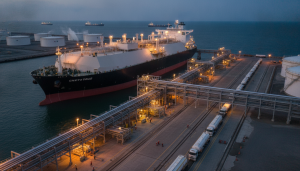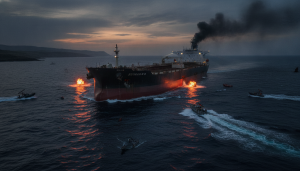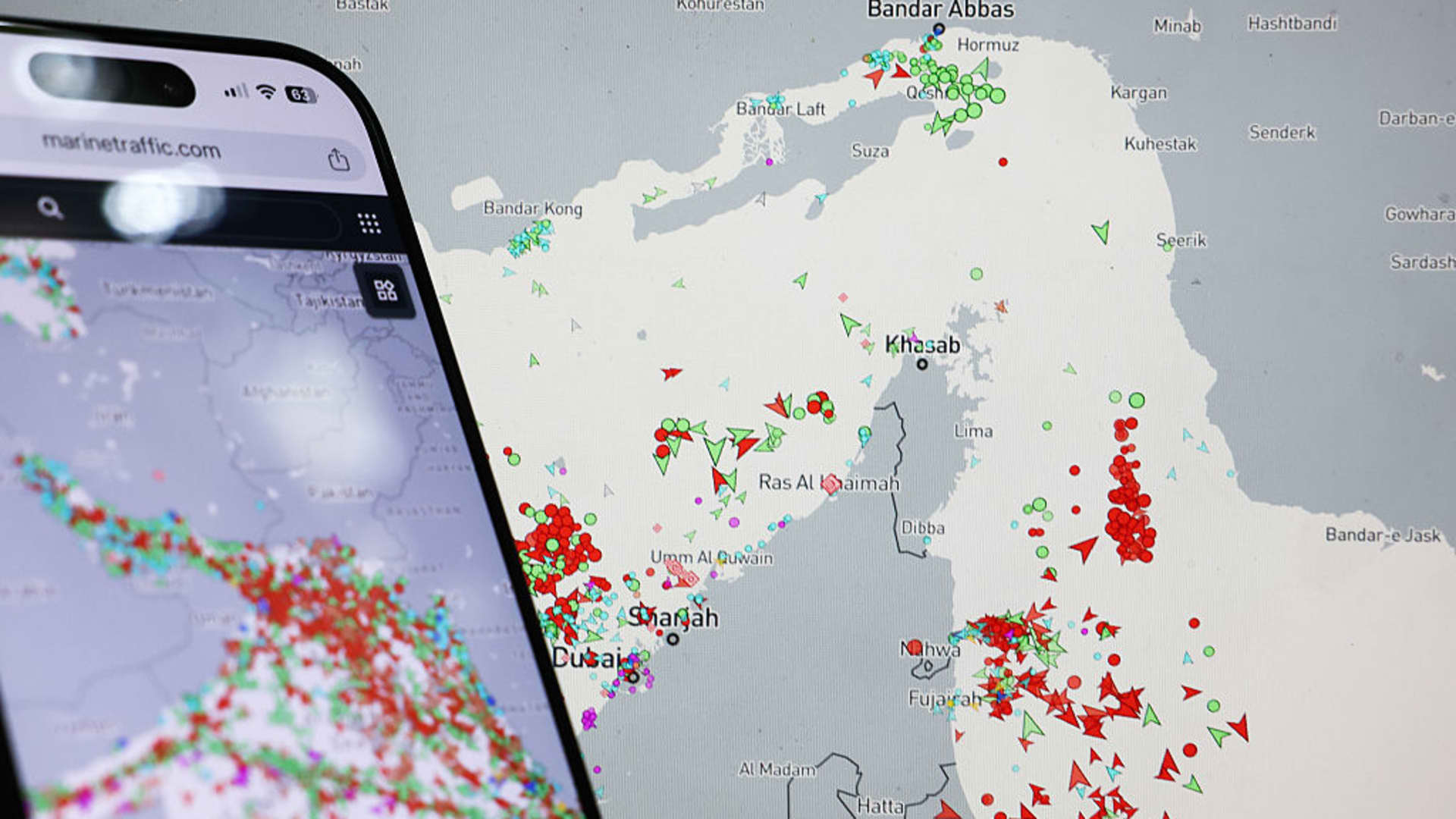
The Strait of Hormuz, a critical maritime chokepoint, finds itself once again at the epicenter of geopolitical tension, casting a long shadow over global oil supply security. With Iran reportedly escalating attacks on commercial tankers, the viability of shipping through this vital waterway is under severe scrutiny. While the prospect of U.S. naval escorts offers a glimmer of hope, our proprietary data and market insights suggest the challenge of securing this immense volume of traffic is far more complex than a simple military intervention. Investors are grappling with the inherent volatility, as the stakes extend beyond immediate supply disruptions to the potential for a global economic downturn. As of today, Brent Crude trades at $93.31 per barrel, marking a modest +0.08% increase for the day, while WTI Crude stands at $89.7, up +0.03%.
The Strait’s Strategic Imperative and Nuanced Market Reaction
The Strait of Hormuz is not merely a shipping lane; it is the artery pumping approximately 14 million barrels of crude oil per day into the global economy, representing roughly one-third of all seaborne oil exports. Any sustained disruption here sends immediate shockwaves through the market. While initial reports highlighted significant price surges, OilMarketCap’s proprietary 14-day Brent trend data reveals a more nuanced picture. Brent crude has actually pulled back from a high of $101.16 on April 1st to $94.09 by April 21st, representing a 7% decline. This suggests that while geopolitical risk has certainly injected a premium, the market is not yet pricing in a full-scale, prolonged closure. The initial calming effect of promises for naval escorts and political risk insurance likely contributed to this moderation, even as subsequent attacks demonstrate the enduring threat. However, with an estimated 400 tankers currently stuck in the Gulf, unable to transit, the underlying physical supply constraint remains acute, threatening to trigger a sharp reversal if confidence isn’t restored.
Naval Escorts: A Logistical Labyrinth
The idea of U.S. Navy escorts for tankers through the Strait, reminiscent of operations in 1987, faces formidable practical hurdles. Under normal conditions, approximately 100 tankers and cargo vessels navigate the Strait daily. The sheer volume of traffic, coupled with the hundreds of vessels currently stranded in the Mideast Gulf, presents a logistical nightmare for any escort operation. Analysts familiar with naval operations emphasize that providing safe passage to even a fraction of these vessels would consume an “inordinate amount of time” and resources. A key strategic question for investors is whether the U.S. Navy possesses sufficient assets to both conduct escort missions and simultaneously maintain effective operations against Iranian targets. Furthermore, the core issue for ship owners is not primarily insurance coverage, but rather the physical security of their assets and crews. They require a demonstrable, sustained period without attacks to feel confident enough to resume transit, acknowledging that the sophistication of Iranian military capabilities far surpasses that of other regional actors like Houthi militants. Escorts, while helpful, are seen by many as addressing the problem “at the margin” rather than offering a comprehensive solution.
Beyond Immediate Intervention: The Path to Sustainable Security
Re-establishing consistent, secure oil flows through the Strait of Hormuz will demand more than just a temporary naval presence. The consensus among security analysts points to the necessity of systematically degrading Iran’s military capabilities, a process that inherently “takes time.” This implies that investors should brace for an extended period of heightened geopolitical risk and potential volatility in crude oil prices. The market’s current pricing of Brent at $93.31 indicates a significant risk premium, but it falls short of the $100+ per barrel level that Wall Street analysts project for a prolonged closure. The duration of this uncertainty is critical. While the geopolitical situation dominates headlines, investors will also be closely monitoring broader supply-demand fundamentals. Our upcoming event calendar highlights key data releases that will shape market sentiment: the EIA Weekly Petroleum Status Reports on April 24th and May 1st, and API Weekly Crude Inventory data on April 28th and May 5th. Any unexpected drawdowns in U.S. crude inventories, for instance, would significantly amplify market sensitivity to the Strait’s instability, as available buffers against a supply shock would appear even thinner.
Investor Sentiment and the 2026 Outlook
Our proprietary reader intent data reveals a clear sentiment among investors: a desire for clarity on future oil price direction. Questions like “is WTI going up or down?” and “what do you predict the price of oil per barrel will be by end of 2026?” underscore the prevailing uncertainty. For investors, the immediate focus is on whether the current $93.31 Brent price can hold, or if the situation in the Strait will push it past the critical $100 threshold, potentially tipping the global economy into recession. While a full and prolonged closure remains a tail risk, the sustained threat of disruption means that a significant geopolitical risk premium will likely remain embedded in crude prices for the foreseeable future. The effectiveness and timeline of efforts to diminish Iran’s capabilities will be the primary determinant of whether this premium eases or intensifies. Further insights into the broader market outlook will come from the EIA Short-Term Energy Outlook scheduled for May 2nd, which will offer updated projections for 2026 and beyond. In this environment, active portfolio management, focusing on companies with robust balance sheets and diversified production assets, becomes paramount.