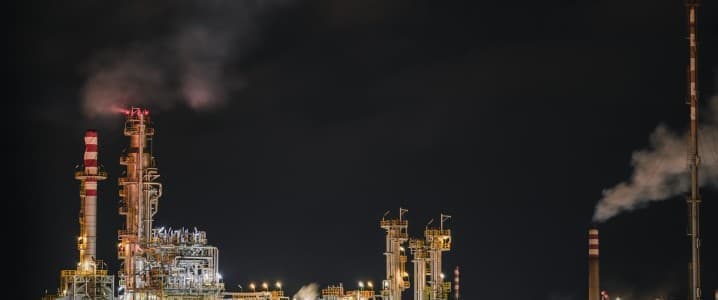
While the broader crude market has seen a recent recalibration, a critical bottleneck in the Middle East is creating an asymmetric opportunity for refiners, particularly across Asia. The de facto disruption of crude flows through the Strait of Hormuz has ignited Asian refining margins to levels not seen in four years, signaling a significant profit tailwind for downstream operators amidst an increasingly complex supply landscape. This dynamic highlights how localized geopolitical events can profoundly reshape profitability within specific segments of the energy value chain, even as headline crude prices experience their own fluctuations.
Current Market Dynamics & Asia’s Margin Surge
As of today, Brent Crude trades at $92.64 per barrel, reflecting a slight dip of 0.64% within a day range of $92.57-$94.21. Similarly, WTI Crude stands at $89.03, down 0.71%. This recent softening in benchmark crude prices, following a notable 7% decline in Brent over the past two weeks from $101.16 on April 1st, might suggest a more relaxed market sentiment. However, this masks a stark divergence in the refining sector. Proprietary data indicates that Singapore complex refining margins, a robust proxy for Asian refining profitability, have recently soared to nearly $30 per barrel. This remarkable surge marks the highest point for these margins since 2022, demonstrating that regional supply dislocations can create intense, localized scarcity for refined products, allowing refiners to command a significant premium over their crude input costs. This dynamic is particularly potent when refiners are simultaneously forced to reduce processing rates due to delayed crude deliveries, effectively tightening product markets from both the supply and demand sides. The disconnect is clear: while upstream producers face price headwinds, downstream players are benefiting from a regional scarcity of refined products, turning what might otherwise be a challenging crude environment into a substantial margin expansion opportunity.
Supply Chain Under Duress: The Hormuz Bottleneck Escalates
The primary catalyst for this margin expansion is the severe impediment to crude shipments through the Strait of Hormuz. Escalating regional tensions have profoundly impacted this vital chokepoint, through which a significant portion of the world’s seaborne oil passes. Currently, dozens of tankers laden with millions of barrels of crude are effectively stuck, unable to transit. This unprecedented de facto closure is not merely a delay; it’s a structural impediment forcing Asian refiners to fundamentally rethink their operations. Major players in critical markets like China and Japan are actively considering reducing their crude run rates by up to 30%. Such cuts would dramatically shrink the available supply of refined products across a region that is a global engine of demand. Further tightening the market, Beijing’s directive to its energy companies to halt new fuel export contracts and even cancel existing shipments signals a strategic move to prioritize domestic supply in the face of global tightening. This coincides with the operational shutdown of Saudi Arabia’s 550,000 barrels per day Ras Tanura refinery following drone attacks, removing a substantial volume of refined product from the market. The combined effect has been particularly severe for middle distillates. Our proprietary insights confirm that diesel, essential for transportation and industrial sectors, faces the most acute physical pressure, with its limited near-term alternatives making its supply risk even more critical than that for crude oil or jet fuel.
Investor Focus: Navigating Volatility and Opportunities
Our first-party reader intent data reveals a clear and immediate focus from investors on price direction, with frequent queries about the immediate trajectory of WTI and a desire for long-term price predictions for oil barrels by year-end. This short-term volatility and longer-term uncertainty make the current refining margin surge a particularly intriguing development. While overall crude prices have softened, as reflected by Brent’s 7% decline over the past two weeks, the ability of refiners to capture nearly $30 per barrel in margins fundamentally shifts the earnings outlook for downstream players. For investors, this environment creates a compelling, albeit nuanced, opportunity. Companies with robust crude sourcing flexibility, diversified refining assets, or those that managed to build product inventories before the crisis are best positioned. The question of how long integrated energy companies with significant refining operations might perform well in this environment is directly tied to the duration of these disruptions. To gauge the market’s underlying health and potential rebalancing, investors will be closely watching upcoming data releases. The EIA Weekly Petroleum Status Reports on April 29th and May 6th, along with the API Weekly Crude Inventory data on April 28th and May 5th, will be crucial. We will be analyzing these reports for signs of inventory builds or draws, particularly in refined products like diesel and jet fuel, which will indicate the extent to which the current supply dislocations are impacting global stockpiles and supporting these elevated margins.
The Diesel Dilemma and Broader Market Implications
The acute pressure on diesel supply, underscored by the significant margin expansion for middle distillates, presents a critical challenge for the global economy. Diesel is the backbone of global trade and logistics, and its sustained scarcity or high pricing can have inflationary effects across various sectors. The limited global spare refining capacity to quickly pivot and increase diesel output means that the impact of the Hormuz disruption is not easily mitigated. While the Baker Hughes Rig Count reports on April 24th and May 1st offer valuable insights into upstream drilling activity, they provide little immediate relief for the downstream product crunch. Instead, attention will turn to the EIA Short-Term Energy Outlook on May 2nd, which will offer a broader forecast for global supply and demand, potentially highlighting the long-term implications of these current disruptions. For investors, the current landscape demands a highly selective approach. While crude prices have seen a recent downtrend, the geopolitical risk premium and specific product market tightness mean that the energy sector remains ripe with opportunities for those who can differentiate between upstream and downstream dynamics. The current environment strongly favors refiners capable of securing alternative crude supplies or those with existing product inventories, allowing them to capitalize on the widening spread between crude inputs and refined product outputs. This scenario underscores that even as overall energy markets evolve, localized geopolitical events can create powerful, immediate profit centers within specific segments, warranting a nuanced and informed investment strategy.


