Global financial markets are navigating a complex landscape where geopolitical turmoil in the Middle East continues to cast a long shadow over energy markets, even as some Asian equity indices show signs of a tentative rebound. While regional stocks clawed back some losses following a recent rout, the specter of an extended conflict in the Gulf ensures that crude oil prices remain a critical, volatile component of the investment thesis. This persistent tension presents a unique challenge for investors seeking clarity amidst conflicting market signals, underscoring the necessity for deep, data-driven analysis to inform strategic decisions in the oil and gas sector.
Geopolitical Flashpoints and Shifting Oil Dynamics
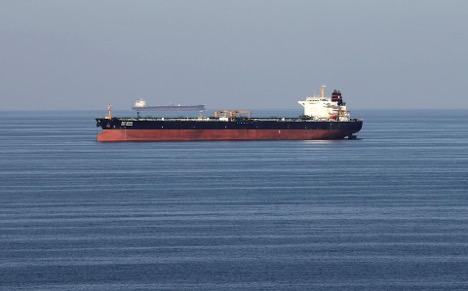
The recent escalation of hostilities in the Middle East has profoundly impacted global energy markets. The United States and Israel initiated strikes against Iran last Saturday, leading to the reported killing of Supreme Leader Ayatollah Ali Khamenei and triggering a wave of retaliatory actions across the Gulf region. Critically, Tehran responded by effectively shutting down the Strait of Hormuz, a choke point through which approximately a fifth of the world’s crude oil and a substantial portion of liquefied natural gas (LNG) supplies transit. This immediate and severe disruption to a vital global energy artery sent shockwaves through the market, driving significant price increases.
Indeed, market sentiment rapidly factored in the elevated risk. Reports indicated that both main oil contracts had surged by nearly 20% since Friday, reflecting the market’s swift repricing of supply disruption risk. However, as of today, Brent Crude trades at $92.64 per barrel, exhibiting a marginal daily decline of 0.64% within a day range of $92.57 to $94.21. Similarly, West Texas Intermediate (WTI) Crude stands at $89.03 per barrel, down 0.71% with its daily range between $88.76 and $90.71. This immediate market snapshot suggests a slight correction or consolidation after the initial, sharp upward movement. Our proprietary 14-day trend data for Brent illustrates this dynamic, showing a peak of $101.16 on April 1st before settling to $94.09 on April 21st, indicating that while prices have pulled back from recent highs, they remain significantly elevated compared to pre-crisis levels. This pricing trajectory highlights the market’s initial overreaction to severe supply shock fears, followed by a more measured assessment of sustained, yet still substantial, geopolitical risk.
Beyond crude, the impact extends to refined products. Gasoline prices are currently at $3.1 per gallon, down 0.96% today, but still at a level that signals inflationary pressure for consumers. The sustained elevation in crude prices, despite today’s minor dip, significantly increases the probability of a fresh spike in global inflation, which could further complicate central banks’ efforts to control rising costs and delay any anticipated interest rate reductions, thereby impacting broader economic recovery prospects.
Asia’s Equity Rebound Under the Shadow of Energy Costs
While oil markets grapple with geopolitical premiums, Asian equity markets experienced a notable rebound, following a three-day rout that saw significant losses. Seoul’s Kospi, for instance, soared at one point, with the index recovering 9.6% on Thursday after shedding nearly 19% earlier in the week. This resurgence positioned the index to claw back a substantial portion of its recent decline, which had brought it perilously close to bear market territory. Other regional markets followed suit, with Tokyo’s Nikkei advancing 1.9% and Taipei jumping over 2%, alongside gains in Hong Kong, Shanghai, Sydney, and Singapore.
This rebound, however, comes with a caveat. Much of the initial sell-off in equities was attributed not only to the Middle East crisis but also to growing skepticism regarding elevated valuations in the tech sector, particularly after an AI-fueled rally that pushed several markets to record highs. As one market observer, Gerald Gan of Reed Capital Partners, noted, “Much of the move reflects technical traders stepping in to buy the dip… It remains unclear whether this marks a genuine inflection point for further upside or simply a bear-market rally.” This sentiment resonates strongly with the questions we are seeing from our readers. Our proprietary reader intent data reveals a keen focus on market direction, with queries such as “nigga is wti going up or down” (sic, reflecting raw, urgent investor sentiment) indicating the broad uncertainty surrounding short-term commodity price movements. Investors are clearly grappling with the short-term volatility and seeking clarity on whether current price movements, both in equities and commodities, represent sustainable trends or merely temporary oscillations.
South Korea’s president, recognizing the market’s fragility, ordered the activation of a $68 billion stabilization fund to mitigate the economic impact of the Middle East crisis. Despite these measures and the broader equity rebound, analysts remain cautious. Stephen Innes of SPI Asset Management succinctly captured the prevailing concern, warning that “The real driver remains the same fuse that lit the selloff in the first place: oil.” This highlights the enduring influence of energy prices on broader economic stability and investor confidence, suggesting that while equities may find temporary relief, the underlying energy-driven risks persist.
Navigating Forward: Key Data Points and Investor Focus
For discerning oil and gas investors, the immediate future demands close attention to both geopolitical developments and critical market data. The threat of an extended conflict in the Middle East and its implications for global supply chains will continue to be a primary driver of volatility. However, several upcoming energy events will offer crucial insights into market fundamentals, providing opportunities for informed strategic positioning.
Over the next two weeks, the market will receive regular updates that could significantly influence price discovery. The EIA Weekly Petroleum Status Reports, scheduled for April 22nd, April 29th, and May 6th, will provide essential data on crude oil, gasoline, and distillate inventories, as well as refinery utilization and demand indicators. These reports will be particularly scrutinized for any signs of sustained supply tightness or demand destruction in response to elevated prices and geopolitical tensions. Complementing these are the API Weekly Crude Inventory reports on April 28th and May 5th, which often serve as an early gauge for the more comprehensive EIA figures.
Furthermore, the Baker Hughes Rig Counts on April 24th and May 1st will offer insights into North American production activity. Investors will be watching for any signs that higher crude prices are incentivizing increased drilling and completion activity, which could eventually contribute to global supply. Finally, the EIA Short-Term Energy Outlook on May 2nd will be a pivotal release, providing the U.S. government’s official forecasts for supply, demand, and prices, offering a valuable medium-term perspective. These data points are critical for investors grappling with questions like “what do you predict the price of oil per barrel will be by end of 2026?” This common query from our readers underscores the demand for forward-looking analysis and the importance of these scheduled reports in shaping longer-term price expectations and investment strategies.
In this dynamic environment, investors are not only asking about the direction of WTI but also seeking guidance on specific company performance, with queries like “How well do you think Repsol will end in April 2026.” This indicates a shift from broad market sentiment to detailed, company-specific analysis, demanding a granular understanding of how individual entities are positioned to navigate both geopolitical risks and evolving energy market fundamentals. Prudent investors will be closely monitoring these data releases, alongside geopolitical headlines, to identify opportunities and manage risks in a market where the energy complex remains the hidden central bank, dictating the tempo for global economic activity.