

(World Oil) – Oil producers across the Middle East face a tense countdown as the Iran war blocks the region’s main export artery, filling the countries’ storage tanks and threatening output cuts if the situation persists.
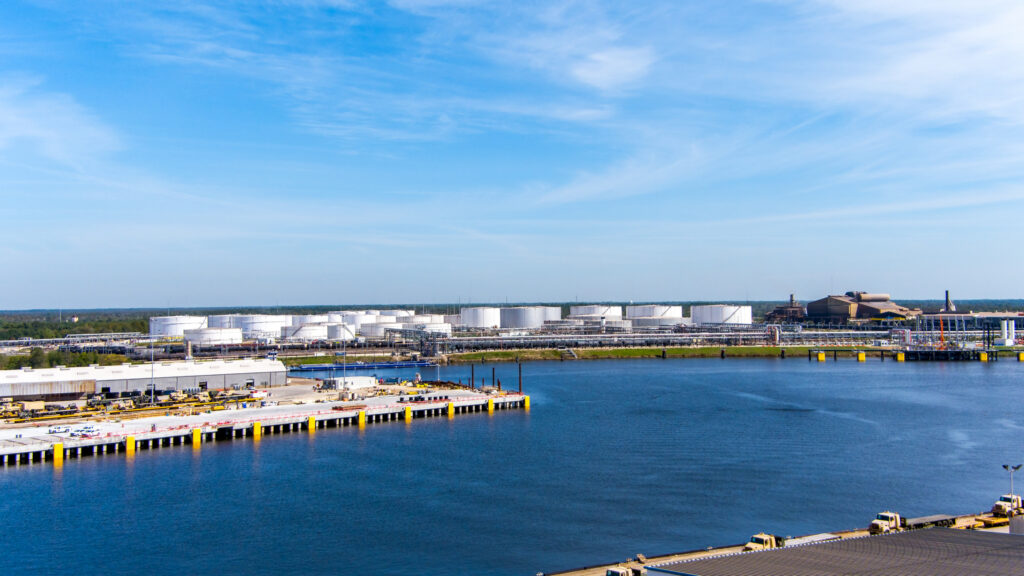
With shipping through the Strait of Hormuz suspended, Persian Gulf countries are having to stockpile the stranded supplies in storage tanks. Iraq — which has limited storage capacity — has been compelled to begin massive production cuts, and JPMorgan Chase & Co. warns that others like Saudi Arabia and the United Arab Emirates may need to follow suit within weeks.
The joint U.S.-Israeli military campaign has already propelled oil futures to a 19-month high above $85 a barrel in London. Deeper production losses would likely intensify the rally and add inflationary pressures for the global economy. Crude pared some gains to trade near $82 on Wednesday on reports that some Iranian officials had sought peace terms with Washington.
While President Donald Trump said the U.S. will provide naval escorts and insurance guarantees to ensure safe passage of oil from the Middle East and prevent an energy crisis, the shipping industry views these assurances as a partial solution at best.
“If oil producers reach ‘tank tops’ for lack of export outlets, then they have to curtail output,” Antoine Halff, co-founder and chief analyst of geospatial analytics company Kayrros, said in a post on LinkedIn.
In theory, the Arab producers around the Persian Gulf — including Saudi Arabia, the United Arab Emirates, Kuwait, and Iraq — collectively have just over 100 MMbbl of storage capacity left, or about a third of their total, Halff said.
But the effective level will in practice be lower, and in any case operational usage rarely exceeds 80% of nameplate levels, he cautioned.
“Not all capacity is equal,” said Halff. “Some tanks matter more than others by virtue of their location relative to oil fields or loading facilities. All storage facilities are not interconnected so there is a lot of inefficiency in the system.”
Even in Saudi Arabia, the Ju’aymah terminal on the country’s east coast “was quickly running out of spare capacity” as of March 1, Halff added. Four of the six tanks at the Ras Tanura refinery — halted after attacks by Iran this week — were full, he said.
Some Persian Gulf producers may exhaust their crude storage in just over three weeks, according to Natasha Kaneva, head of commodity markets strategy at JPMorgan, said in a note. If the Saudis and UAE can divert supplies on alternative routes, their deadline would be extended by a week.
