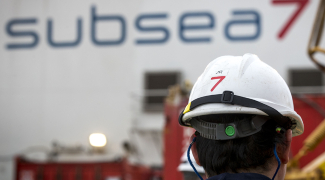
The global oil and gas services sector is bracing for a significant strategic shift as Subsea7, a titan in offshore project delivery, prepares for a crucial leadership transition amidst its proposed merger with Saipem. John Evans, Subsea7’s seasoned Chief Executive Officer, will retire on June 30, 2026, after an impressive four-decade career with the company. His successor, Stuart Fitzgerald, currently CEO of Subsea7’s offshore wind installation business, Seaway7, will assume the CEO role on July 1, 2026. This carefully orchestrated handover is not merely a changing of the guard; it’s a pivotal move designed to position the combined Subsea7-Saipem entity, provisionally dubbed ‘Saipem7,’ for long-term growth and market dominance in an evolving energy landscape.
Strategic Leadership for a Combined Offshore Powerhouse
John Evans’ tenure as CEO since 2020, following 14 years as Chief Operating Officer, saw Subsea7 navigate complex market dynamics and consolidate its position. His deep operational understanding and strategic vision have been instrumental in the company’s performance. The selection of Stuart Fitzgerald as his successor speaks volumes about the strategic direction of the future ‘Saipem7.’ Fitzgerald, who joined Subsea7 in 1998, brings a diverse background, having held senior roles including Executive Vice President of Commercial and Executive Vice President of Strategy and Alliances. Critically, his leadership of Seaway7 since 2022 has been credited with improving its performance, demonstrating his capability to drive results in a high-growth, technically demanding segment like offshore wind. The board’s unanimous support for Fitzgerald underscores their confidence in his ability to lead the integration of two major industry players and steer the combined entity towards capitalizing on both traditional oil and gas and renewable energy opportunities.
Navigating Market Volatility and Investor Sentiment
This leadership transition occurs against a backdrop of considerable market volatility, a factor our proprietary reader intent data indicates is top of mind for investors. Queries such as “Is WTI going up or down?” and “What do you predict the price of oil per barrel will be by end of 2026?” reflect a palpable sense of uncertainty regarding future crude price trajectories. As of today, Brent crude trades at $90.38 per barrel, marking a significant decline from its $112.78 high just under three weeks ago, representing a nearly 20% drop. WTI crude mirrors this sentiment, currently at $82.59. Such sharp fluctuations directly impact the capital expenditure decisions of energy producers, which in turn dictate the demand for subsea engineering, construction, and installation services. In this environment, a stable, forward-looking leadership team capable of articulating a clear strategy for the combined Saipem7 entity is paramount. Investors are seeking assurances that the new leadership can effectively manage project backlogs, optimize operational efficiencies, and identify growth vectors resilient to commodity price swings.
Upcoming Catalysts and the Path Forward for Saipem7
The strategic timing of Fitzgerald’s appointment, set to precede his expected role as CEO of the combined Saipem7 entity upon merger completion, highlights the critical importance of a seamless transition. The success of this merger hinges not only on financial synergies but also on the effective integration of operations, cultures, and strategic visions. The broader energy market will continue to present both challenges and opportunities that will directly influence the combined entity’s project pipeline. The upcoming OPEC+ JMMC Meeting on April 20th and the full OPEC+ Ministerial Meeting on April 25th are key events that could reshape production policies and, consequently, global oil supply and price stability. Any decisions made by OPEC+ will reverberate through the market, impacting investment appetite for new offshore developments. Similarly, the weekly API and EIA inventory reports, alongside the Baker Hughes Rig Count, provide granular insights into market health and activity levels. For Saipem7, the ability to rapidly adapt to these market signals, while simultaneously executing on the long-term vision of a merged enterprise, will be a defining factor in its performance.
Implications for Investors in a Transformed Offshore Sector
For investors monitoring the energy services space, the Subsea7 leadership change and impending Saipem merger represent a pivotal moment. The decision to propose John Evans for election as a director at the annual general meeting scheduled for May 12, 2026, suggests a desire to retain his invaluable institutional knowledge and experience, offering a degree of continuity during a period of significant change. Stuart Fitzgerald’s mandate will be complex: to not only integrate two formidable companies but also to drive innovation and capture market share in both traditional oil and gas subsea projects and the rapidly expanding offshore wind sector. His proven track record at Seaway7, Subsea7’s offshore wind arm, positions him well to leverage the combined entity’s capabilities in this high-growth renewable energy segment. Successful integration, coupled with strategic diversification and operational excellence, will be key to unlocking significant shareholder value and establishing Saipem7 as a dominant force in the global offshore energy landscape for years to come.


