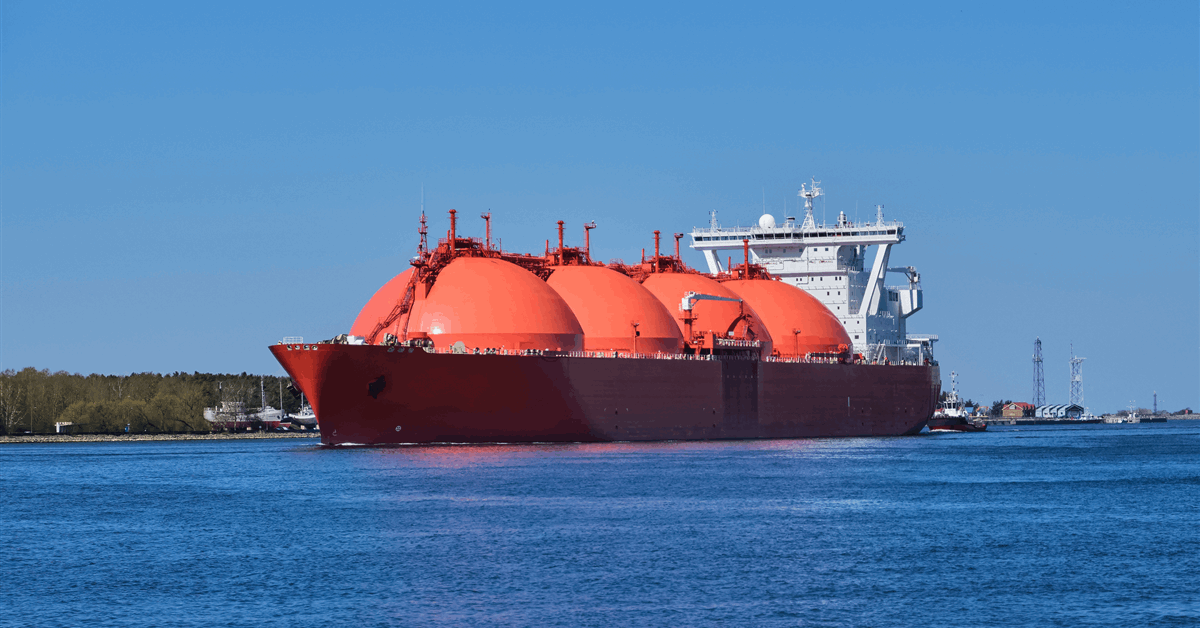
Naftogaz Group’s latest agreement to import US-sourced liquefied natural gas (LNG) into Ukraine via Lithuania’s Klaipeda terminal marks another critical step in strengthening European energy independence and diversifying supply routes. This strategic move, following similar arrangements through Germany and Poland earlier this year, solidifies the growing reliance on American LNG to bolster energy security across the continent. For investors, this trend signifies robust, long-term demand for US export capacity and highlights the increasing importance of resilient energy infrastructure in a volatile geopolitical landscape.
Expanding the European Energy Corridor
The recent deal, brokered with Lithuania’s Ignitis Group, will see a cargo of 90 million cubic meters (3.18 billion cubic feet) of US LNG delivered to Ukraine by March 2026. This cargo will be received at the Klaipeda LNG terminal, operated by AB KN Energies, which utilizes the floating storage and regasification unit (FSRU) Independence. This isn’t an isolated event; it builds upon Naftogaz’s successful initiatives earlier in February, including an inaugural LNG supply via a German terminal from TotalEnergies and a significant 100 million cubic meter delivery of US LNG through Poland’s ORLEN SA. These consecutive agreements underscore a concerted effort to establish multiple, flexible import routes for Ukraine, reducing reliance on any single corridor and significantly enhancing systemic resilience.
Lithuanian Energy Minister Zygimantas Vaiciunas highlighted the Klaipeda terminal’s role as one of Europe’s most active and emphasized plans to transform this into a stable, long-term supply option via the “Amber Gas Corridor.” Launched in November 2025, this corridor leverages existing gas infrastructure to connect the Baltic, Finnish, and Polish gas markets, creating a powerful regional supply network. For investors, this signifies not just short-term demand but also the strategic build-out of a more integrated and secure European gas market, supporting continued investment in associated infrastructure and LNG assets.
Navigating Market Volatility Amidst Strategic Shifts
Understanding the broader market context is crucial for investors evaluating these developments. As of today, Brent crude trades at $93.9 per barrel, showing a modest daily gain of 0.71%, with its trading range holding between $93.52 and $94.21. WTI crude follows a similar trajectory, priced at $90.38 per barrel, up 0.79% on the day. However, these daily movements contrast sharply with the recent 14-day trend for Brent, which has seen a significant drop of nearly 19.8% from $118.35 on March 31st to $94.86 on April 20th. This volatility in crude markets, driven by a complex interplay of supply concerns, global demand forecasts, and geopolitical tensions, underscores the imperative for energy security that these LNG deals address.
Our proprietary reader intent data reveals that investors are keenly monitoring these price dynamics, with frequent queries such as “is WTI going up or down” and “what do you predict the price of oil per barrel will be by end of 2026?” While these questions often focus on crude, the underlying sentiment reflects a broader concern about energy market stability. The commitment to diversified LNG supplies, particularly from the US, provides a counter-narrative to crude market uncertainties, offering a degree of predictability and stability to natural gas prices and demand. This robust demand for US LNG can offer a compelling investment thesis, even as crude markets experience significant swings.
Forward Outlook: Key Events Shaping Energy Investment
The strategic expansion of US LNG exports into Europe and the solidification of regional energy corridors will continue to be influenced by critical upcoming events. Investors should closely monitor the OPEC+ JMMC Meeting scheduled for April 21st. While primarily focused on crude oil production policy, any decisions made here can send ripples throughout the broader energy complex, indirectly affecting natural gas market sentiment and investment flows. Furthermore, the EIA Weekly Petroleum Status Reports on April 22nd and April 29th will provide vital insights into US crude oil and refined product inventories, offering a demand signal that can influence overall energy sector outlooks.
Looking further ahead, the EIA Short-Term Energy Outlook on May 2nd will be particularly influential for natural gas investors. This report will offer updated projections for both crude oil and natural gas production, consumption, and prices, providing a crucial framework for evaluating the long-term viability and growth prospects of US LNG export projects. These events, coupled with ongoing geopolitical developments, will shape the investment landscape for energy companies involved in production, liquefaction, shipping, and regasification, reinforcing the strategic importance of projects like the Amber Gas Corridor for enhancing supply security.
Investment Implications: Beneficiaries and Strategic Positioning
The consistent flow of US LNG to Europe, exemplified by these Naftogaz deals, presents clear investment opportunities. Companies with significant US LNG export capacity stand to benefit from sustained demand and favorable long-term contracts. This includes major US natural gas producers and developers of liquefaction terminals. On the European side, infrastructure operators like Ignitis Group, AB KN Energies (Klaipeda terminal), Deutsche ReGas (Germany), and ORLEN SA (Poland) are strategically positioned to capitalize on increased regasification and pipeline utilization. Their existing assets are becoming increasingly critical nodes in Europe’s diversified energy network.
Investors should also consider the broader implications for energy infrastructure development. The need for robust pipelines and interconnections to efficiently distribute regasified LNG across Europe will drive further capital expenditure in this segment. The emphasis on “reducing dependence on individual routes” and “increasing the flexibility of the system,” as highlighted by Naftogaz, translates directly into a long-term investment thesis for companies contributing to resilient and diversified energy supply chains. For a well-rounded energy portfolio, exposure to US LNG exporters and European energy infrastructure providers offers a strategic hedge against geopolitical risks and crude market volatility, aligning with the growing global demand for secure and reliable energy sources.


