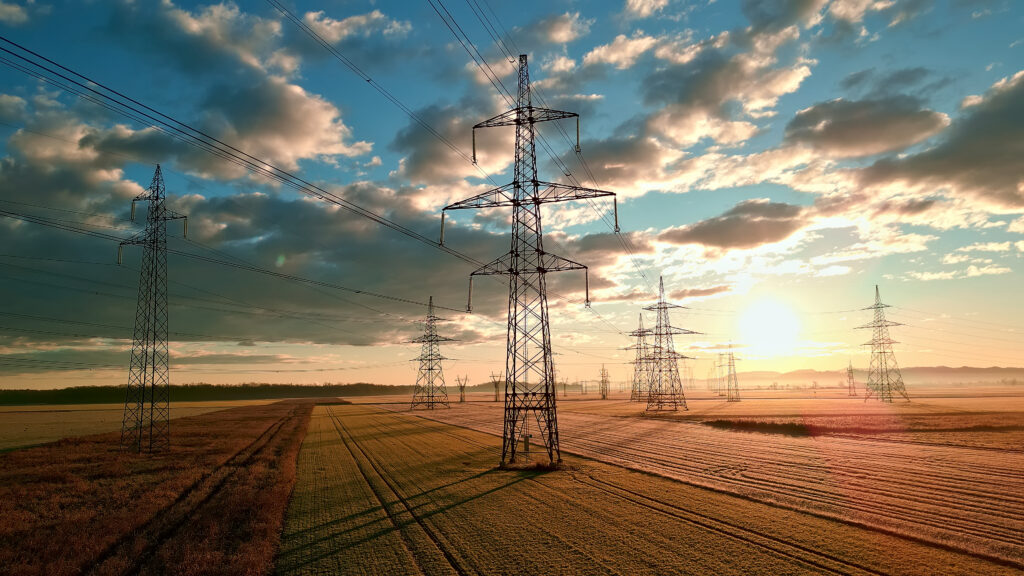
A seismic shift is underway in the energy investment landscape, underscored by the recent blockbuster acquisition of AES Corp. by a consortium spearheaded by BlackRock’s Global Infrastructure Partners (GIP) and U.S. gas giant EQT Corp. This monumental $33.4 billion enterprise value deal, securing AES for $15 per share – a substantial 40% premium – represents far more than just another utility purchase. It signals a strategic “land-grab” for reliable power generation assets, driven by an insatiable demand for electricity from burgeoning data centers, AI infrastructure, and the accelerating electrification of the global economy. For discerning oil and gas investors, understanding this pivot is crucial, as major institutional capital redefines value in a rapidly evolving energy market.
The New Energy Gold Rush: Why Utilities are Hot
The BlackRock-led consortium’s move on AES Corp., involving a $10.7 billion cash equity component, highlights a profound conviction in the long-term stability and growth of the power generation sector. AES, with its regulated businesses in key states like Ohio and Indiana, offers predictable cash flows and a critical role in the foundational energy infrastructure. This acquisition is not an isolated event but rather the latest and largest in a series of significant transactions that collectively paint a clear picture: institutional investors are flocking to power generation assets as a bulwark against market volatility and a direct play on future energy demand.
Consider the recent flurry of activity: Constellation Energy’s $26.6 billion acquisition of Calpine Corporation, creating a powerhouse of clean and reliable electricity from nuclear, natural gas, and geothermal assets. NRG Energy’s $12-13 billion strategic purchase of a 13 GW natural gas power generation portfolio from LS Power, strengthening its position in critical markets like the Northeast and Texas. Even international players are in on the action, with Engie SA’s £10.5 billion ($14.2 billion) agreement to acquire UK Power Networks. Further, Talen Energy’s $3.45 billion Cornerstone portfolio deal and Blackstone’s $11.5 billion acquisition of TXNM Energy underscore a broad, coordinated push into securing diverse, flexible, and modern generation capabilities. This aggressive pursuit of utilities showcases a strategic shift towards assets that provide essential, consistent services, making them highly attractive targets for long-term capital.
Market Realities: Oil Price Volatility Meets Long-Term Infrastructure
The strategic pivot towards stable utility assets by major investors occurs against a backdrop of ongoing commodity market fluctuations. As of today, Brent crude trades at $93.9 per barrel, reflecting a modest +0.71% gain for the day, while WTI sits at $90.38, up +0.79% within a range of $89.71-$90.7. However, this daily stability belies a significant recent shift; our proprietary data shows Brent has plunged nearly 20% over the past fortnight, dropping from $118.35 on March 31st to $94.86 on April 20th. This dramatic $23.49 decline in crude prices in just two weeks underscores the inherent volatility of upstream oil and gas investments.
It’s precisely this unpredictability that drives large institutional investors like BlackRock and natural gas giants like EQT to diversify their energy portfolios with regulated utilities. While EQT remains a significant player in natural gas production, its involvement in the AES acquisition secures long-term demand for its product through a stable, regulated channel. The contrast is stark: speculative bets on crude oil’s daily and weekly movements versus predictable, regulated cash flows from power generation, essential to a modern economy. This influx of capital into infrastructure assets represents a sophisticated strategy to capture value from the broader energy transition and growing demand for power, rather than solely riding the cyclical waves of commodity prices.
What Investors are Asking: Stability vs. Speculation
Our proprietary reader intent data reveals a common thread this week: “Is WTI going up or down?” and “What do you predict the price of oil per barrel will be by end of 2026?” These questions underscore a prevailing focus on short-term commodity price movements and the desire for clear directional guidance in a volatile market. While many investors remain fixated on the daily swings of Brent and WTI, the BlackRock-led consortium’s actions provide a compelling counter-narrative for long-term capital deployment in the energy sector.
For institutional players, the answer to “where to invest in energy” extends beyond merely speculating on crude oil futures. The significant premiums paid for utility assets like AES Corp. demonstrate a clear preference for predictable, regulated returns over the boom-and-bust cycles characteristic of commodity markets. This strategy offers a hedge against the very price volatility our readers are asking about. By investing in power generation and distribution, these groups are betting on the fundamental, ever-increasing demand for electricity, driven by technological advancements and global electrification trends, effectively trading short-term speculation for long-term, stable growth.
Navigating the Future: Upcoming Events and the Power Generation Outlook
The strategic value of these utility acquisitions will continue to be shaped by crucial market events in the coming weeks. Investors should closely monitor key reports and meetings that will offer insights into both commodity markets and the broader energy demand landscape. The EIA Short-Term Energy Outlook, scheduled for release on May 2nd, will be particularly impactful, providing crucial forecasts for natural gas demand and electricity consumption, directly influencing the operational environment and valuations of assets like AES.
Furthermore, regular data releases such as the EIA Weekly Petroleum Status Reports (April 22nd, April 29th) and API Weekly Crude Inventory (April 28th, May 5th) will offer granular views into overall energy supply and demand dynamics, indirectly affecting power generation costs and overall economic activity. The OPEC+ JMMC Meeting on April 21st, while focused on crude oil, can influence global energy market sentiment and potentially the economics of various power generation alternatives. Finally, the Baker Hughes Rig Count (April 24th, May 1st) will provide a pulse on future oil and gas production trends, critical for understanding the long-term supply outlook for natural gas, a primary fuel source for many acquired power assets. These events, taken together, provide a comprehensive mosaic for understanding the evolving energy market and validating the long-term investment thesis behind the current “land-grab” for power infrastructure.