The Eastern Mediterranean’s Volatile Gas Supply Chain: A Recurring Challenge
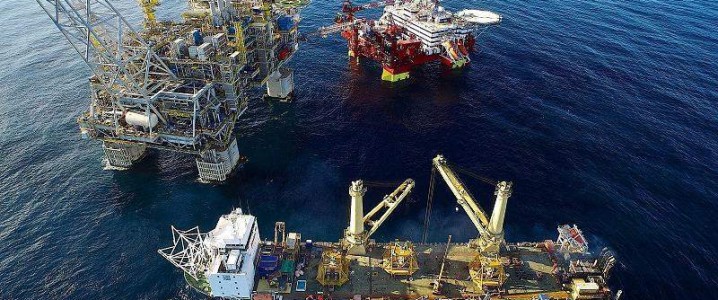
The Eastern Mediterranean energy landscape is once again under the spotlight, as Chevron announced a force majeure declaration at Israel’s Leviathan natural gas field. This move follows a directive from the Israeli government to temporarily suspend production due to escalating security concerns in the region. This is not an isolated incident; it marks the second time in less than a year that geopolitical tensions have directly impacted gas flows from this vital energy hub. Partner NewMed Energy confirmed the suspension, indicating that operational adjustments are being made in line with evolving security conditions. Further compounding the regional supply disruption, Energean has also confirmed a production halt at its Karish field.
Leviathan stands as Israel’s largest gas field, playing a critical role in supplying not only domestic demand but also key regional partners, Egypt and Jordan. In the first nine months of 2025, the field delivered a substantial 8.1 billion cubic meters of gas to these markets, with Egypt alone accounting for more than half at 4.8 Bcm. This latest shutdown, echoing a similar event in June, forces nations like Egypt to re-evaluate their energy security strategies. Analysts anticipate Cairo will likely increase its reliance on LNG imports to compensate for the sudden loss of Israeli volumes, which could have downstream effects on industries such as fertilizer production that depend on consistent gas supply.
The timing of this disruption is particularly poignant. The Leviathan consortium had recently greenlit a significant $2.3 billion first-phase expansion project. This ambitious plan aimed to boost the field’s capacity from approximately 12 Bcm per year to roughly 21 Bcm annually, leveraging Leviathan’s estimated 22.9 trillion cubic feet of recoverable gas. This expansion underpins a long-term $35 billion export deal with Egypt stretching through 2040, highlighting the strategic importance and long-term vision for the field that now faces immediate operational uncertainty.
Market Reaction and Broader Energy Implications
While the immediate impact of the Leviathan and Karish shutdowns is primarily felt in regional gas markets, such geopolitical instability inherently adds a risk premium to the broader energy complex. Investors are keenly watching how these localized disruptions might influence global sentiment, particularly given the already complex interplay of supply and demand dynamics. As of today, Brent crude trades at $93.93 per barrel, registering a modest increase of 0.74% within a day range of $93.52-$94.21. Similarly, WTI crude is priced at $90.35 per barrel, up 0.76% from its daily low of $89.71.
Interestingly, this relative intraday stability for crude prices comes despite the ongoing tensions. Our proprietary data tracking the 14-day Brent trend reveals a more significant narrative: Brent crude has seen a substantial decline from $118.35 on March 31st to $94.86 on April 20th, representing a drop of nearly 20% or $23.49 per barrel. This broader downward trajectory suggests that other macro factors, such as concerns over global demand outlook or overall supply expectations, have exerted more pressure on crude prices than the current regional gas disruptions. However, the repeated nature of these Eastern Mediterranean shutdowns serves as a stark reminder that geopolitical risk remains a persistent, underlying factor that can quickly shift market sentiment, particularly for energy assets tied to volatile regions. While gasoline prices remain stable at $3.13, the potential for increased LNG imports by Egypt could subtly tighten global gas markets, indirectly influencing crude pricing through overall energy commodity sentiment.
Geopolitical Risk Premium: A Recurring Theme for Investors
Our analysis of investor intent reveals a strong focus on price trajectory and market stability, with many asking about the future direction of crude oil prices and specific equities. The question, “what do you predict the price of oil per barrel will be by end of 2026?” underscores the market’s hunger for clarity amidst uncertainty. Events like the Leviathan force majeure are prime examples of how geopolitical risk translates into tangible market impacts, creating significant volatility for investors in the oil and gas sector. This is the second such interruption in less than a year, forcing market participants to recalibrate their understanding of the risk premium associated with Eastern Mediterranean assets and, by extension, the broader energy market.
For shareholders in companies like Chevron and NewMed Energy, these repeated security-driven shutdowns introduce a layer of unpredictability that can complicate long-term investment theses. While the fundamentals of Leviathan’s reserves (22.9 trillion cubic feet) and its long-term export agreements are robust, persistent operational halts can erode confidence and delay returns on significant capital expenditures, such as the recently approved $2.3 billion expansion. Moreover, the domino effect on regional energy security, particularly for Egypt’s industrial sector, highlights the interconnectedness of these supply chains. Investors are increasingly evaluating not just the geological potential of assets, but also the geopolitical resilience of their operating environments, recognizing that even substantial investments can be temporarily sidelined by external events.
Navigating the Near-Term: Key Catalysts and Upcoming Events
While the Eastern Mediterranean situation demands close monitoring, investors must also keep a keen eye on a slate of upcoming global energy events that will undoubtedly shape market dynamics in the coming weeks. Today, April 21st, the OPEC+ Joint Ministerial Monitoring Committee (JMMC) is meeting, a critical gathering that could signal future supply policy and significantly impact crude oil prices. Any indication of production adjustments or adherence to existing cuts will be closely scrutinized by a market eager for direction.
Beyond today’s crucial OPEC+ meeting, the next two weeks are packed with data releases that will provide essential insights into global supply and demand. The U.S. Energy Information Administration (EIA) will release its Weekly Petroleum Status Report on April 22nd and again on April 29th, offering key figures on crude oil, gasoline, and distillate inventories, which are vital indicators of market balance. We also look to the Baker Hughes Rig Count on April 24th and May 1st for signals on North American drilling activity and potential future production. Furthermore, the EIA’s Short-Term Energy Outlook, due on May 2nd, will provide a comprehensive forecast on global energy markets, offering a broader perspective on supply, demand, and price trends. The interplay between these fundamental data points and the unpredictable geopolitical landscape of the Eastern Mediterranean will define the investment environment for the immediate future. Investors should prepare for continued volatility as these various catalysts unfold.


