The global oil market is once again grappling with heightened geopolitical risk following reports of a drone strike impacting Saudi Arabia’s Ras Tanura refinery. This incident, while swiftly addressed, serves as a stark reminder of the fragile stability underpinning global energy supplies. For investors, understanding the immediate market implications, the resilience of infrastructure, and the forward-looking trajectory of crude prices in this volatile environment is paramount. Our analysis leverages OilMarketCap’s proprietary data to cut through the noise, providing a focused perspective on what this means for your energy portfolio.
Geopolitical Tensions Escalate: The Ras Tanura Impact
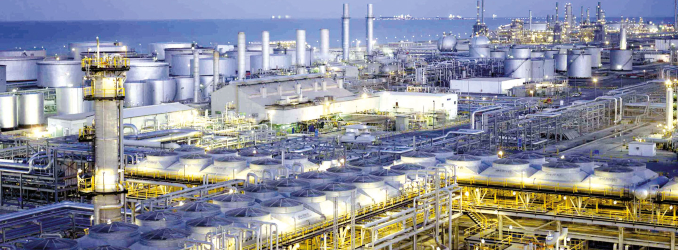
Operations at the critical Ras Tanura refinery, Saudi Arabia’s largest, were temporarily halted earlier this week after a drone strike in the vicinity. This facility, boasting a processing capacity of 550,000 barrels per day, is a cornerstone of global refined product supply, particularly for transport fuels like diesel destined for European markets. Saudi authorities confirmed a limited fire resulted from debris after two drones targeting the complex were intercepted, with the blaze quickly contained. While the immediate operational disruption appears to have been minimal and precautionary, the event underscores a worrying intensification of hostilities across the Middle East. Broader regional attacks have been reported, impacting energy infrastructure in Qatar, including LNG facilities at Ras Laffan and Mesaieed, and even Kuwaiti refineries. The strategic importance of Ras Tanura is further amplified by its proximity to Aramco’s largest crude and oil product export terminal, a crucial artery for global energy flows. Our internal tracking of tanker movements indicates that crude exports from Ras Tanura’s sea island and the nearby Ju’aymah moorings have largely continued unimpeded, with multiple supertankers currently loading, suggesting the export infrastructure remains operational despite the refinery’s temporary precautionary shutdown.
Market Volatility and Investor Sentiment
The immediate aftermath of such geopolitical events often triggers significant market reactions, and this incident was no exception for refined products. While initial reports indicated a sharp surge in gasoil futures, the broader crude market response reflects a more complex picture. As of today, Brent Crude trades at $93.93, showing a modest increase of 0.74% within a daily range of $93.52 to $94.21. Similarly, WTI Crude stands at $90.35, up 0.76% for the day, oscillating between $89.71 and $90.7. Gasoline prices, at $3.13, show no significant change today. This current snapshot provides a contrast to the initial shock, indicating that while refined product markets showed immediate sensitivity, the crude market’s daily movement is relatively contained. However, it’s crucial to place this within a broader context: the 14-day Brent trend reveals a substantial decline from $118.35 on March 31st to $94.86 on April 20th, representing a nearly 20% drop before this latest incident. This underlying downward momentum means that even significant geopolitical shocks are now contending with prevailing market conditions. Our reader intent data highlights that investors are keenly focused on directional movements, with common questions revolving around whether WTI is “going up or down” and predictions for “the price of oil per barrel by end of 2026.” While short-term spikes driven by headlines are possible, the market is continually re-evaluating the sustainability of such price premiums against broader supply-demand fundamentals and the resilience of key infrastructure.
Navigating Supply Dynamics and Upcoming Catalysts
The swift containment of the fire and the apparent continuity of crude exports from Ras Tanura’s associated terminals demonstrate a degree of operational resilience, mitigating immediate fears of a significant supply disruption. However, this event inevitably adds a layer of uncertainty to an already complex supply outlook. Investors should be acutely aware of several upcoming calendar events that will provide crucial data points and policy signals. The OPEC+ Joint Ministerial Monitoring Committee (JMMC) meeting scheduled for tomorrow, April 21st, will be closely watched for any indications of production policy adjustments in light of the heightened regional tensions. Given the current market volatility and the underlying downward trend in Brent prices over the past two weeks, any commentary from OPEC+ members on supply stability or potential responses to geopolitical risk will carry significant weight. Furthermore, the EIA Weekly Petroleum Status Reports on April 22nd and April 29th, alongside the Baker Hughes Rig Count reports on April 24th and May 1st, will offer real-time insights into U.S. inventory levels and drilling activity. Critically, the EIA Short-Term Energy Outlook (STEO) due on May 2nd will provide updated forecasts for global supply and demand, which will likely incorporate the latest geopolitical developments and offer a clearer picture of potential long-term impacts on crude prices. These events will be key for investors seeking to gauge whether the market views the Ras Tanura incident as an isolated event or a harbinger of broader supply instability.
Investment Implications Amidst Heightened Risk
The drone strike on Ras Tanura serves as a potent reminder that geopolitical risk remains an ever-present factor in oil and gas investing. While the immediate physical impact was contained, the psychological impact on market sentiment and the perceived risk premium for energy security are tangible. For investors, this environment necessitates a focus on portfolio resilience and an active approach to monitoring global developments. The “nightmare scenario” of widespread disruption to maritime traffic through the Strait of Hormuz, a critical chokepoint for global oil flows, remains a latent threat that geopolitical flare-ups bring closer to the forefront of market concerns. Companies with diversified asset bases, robust security protocols, and strong logistical capabilities may demonstrate greater resilience in such times. Conversely, those heavily reliant on single points of failure or operating in highly contested regions could face increased scrutiny. Our analysis suggests that while short-term price movements can be erratic, the long-term investment thesis in energy continues to hinge on the interplay of supply chain robustness, strategic reserves, and the ongoing global demand for hydrocarbons. Investors should prioritize assets that can weather increased volatility and offer a hedge against persistent geopolitical instability, constantly re-evaluating their positions as new information emerges from key producer nations and global energy bodies.


