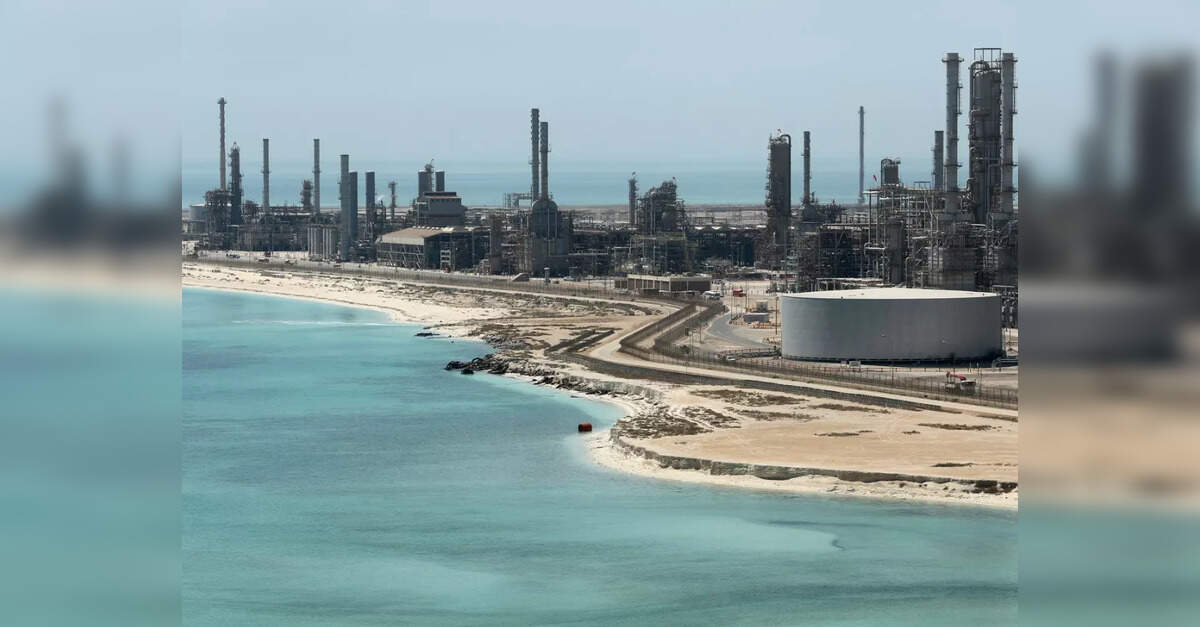
The global oil market is once again grappling with an intensified geopolitical risk premium following a drone attack on Saudi Arabia’s strategically vital Ras Tanura oil refinery. This incident, confirmed by Saudi authorities, represents a significant escalation in regional hostilities involving Iran, its proxies, Israel, and the United States. While the incoming drones were reportedly intercepted before causing critical damage to core infrastructure, the temporary halt in operations and the visible smoke from the site near Dammam underscore the acute vulnerability of crucial energy assets. For investors, this event signals a renewed need to reassess risk exposures and understand the multifaceted drivers influencing crude prices in a rapidly shifting geopolitical landscape.
Geopolitical Escalation Fuels Oil Price Volatility
The drone assault on Ras Tanura, one of the Kingdom’s largest refineries with a daily crude oil production capacity exceeding half a million barrels, did not occur in isolation. It is a direct symptom of a spreading conflict across the Middle East. Recent days have seen a dramatic uptick in aggression, including missiles fired by Iran and its aligned militias targeting Israel and Arab states, reportedly striking the US Embassy compound in Kuwait. In swift retaliation, Israel and the United States launched airstrikes against targets within Iran. Further exacerbating tensions, US President Donald Trump has publicly vowed retribution for American troops killed in Kuwait, signaling a prolonged and determined military engagement until stated objectives are met. This cycle of strike and counter-strike, including the killing of Iranian Supreme Leader Ali Khamenei in a joint American-Israeli operation, has elevated the risk of wider regional instability. The involvement of Hezbollah, firing missiles into Israel from Lebanon, further complicates the security outlook. Such widespread and interconnected conflicts inevitably translate into a higher risk premium for crude oil, reflecting the potential for further supply disruptions from the world’s most critical oil-producing region.
Market Reaction and Shifting Investor Sentiment
The immediate market reaction to these heightened tensions, while complex, reveals underlying investor concerns. As of today, Brent Crude trades at $93.83, marking a modest increase of 0.63% within a day range of $93.52-$94.21. Similarly, WTI Crude stands at $90.43, up 0.85% within its daily range of $89.71-$90.70. While these single-day movements reflect some geopolitical premium, they also follow a significant downward trend over the past two weeks, with Brent having fallen from $118.35 on March 31st to $94.86 on April 20th—a notable decline of nearly 20%. This divergence highlights the battle between immediate supply-side fears and broader macroeconomic concerns or profit-taking that has characterized recent trading. Investors are keenly focused on the direction of key benchmarks, with a dominant question dominating discussions being whether WTI crude, for instance, is set for an upward or downward trajectory. Furthermore, the volatility prompts deeper strategic questions about the longer-term outlook, with many seeking predictions for the price of oil per barrel by the end of 2026. The market is clearly weighing the immediate threat to supply against the backdrop of global demand uncertainty and the potential for a prolonged, albeit contained, regional conflict.
Supply Chain Vulnerability and Strategic Implications
The Ras Tanura incident, even with an intercepted attack, serves as a stark reminder of the inherent vulnerability of critical oil infrastructure. Reports of thick black smoke rising from the site, despite authorities confirming the interception, illustrate that even a partially successful attack or debris from an interception can cause significant operational disruptions and damage. This particular refinery’s substantial capacity means any prolonged outage would have immediate and tangible effects on global crude supply. Beyond Ras Tanura itself, the broader escalation across the region, with missiles reportedly hitting the US Embassy compound in Kuwait and Israeli retaliatory strikes causing casualties in Lebanon, signals an environment where energy infrastructure across the Gulf Arab states faces an elevated threat. The defiant stance of Iranian security official Ali Larijani, stating “we will not negotiate with the United States,” further solidifies the expectation of continued confrontation. For investors, this translates into an increased need to factor in a higher geopolitical risk premium for all assets tied to Middle Eastern energy production and transportation. The potential for disruption extends beyond direct attacks to include shipping lanes and other critical chokepoints, demanding a more robust risk assessment for portfolios exposed to the region.
Navigating Forward: Upcoming Catalysts and Investment Outlook
In this high-stakes environment, upcoming energy events will play a crucial role in shaping market sentiment and price discovery. Investors should mark their calendars for several key dates. On April 21st, the OPEC+ Joint Ministerial Monitoring Committee (JMMC) Meeting will be under intense scrutiny. Given the current geopolitical tensions and recent price volatility, any signals regarding production policy—whether maintaining current cuts or considering adjustments—will have significant repercussions. Following this, the EIA Weekly Petroleum Status Reports on April 22nd and April 29th will provide vital insights into US crude oil and product inventories, offering a counter-narrative to Middle Eastern supply concerns. Similarly, the Baker Hughes Rig Count on April 24th and May 1st will shed light on North American production trends. Perhaps most critically for longer-term outlooks, the EIA Short-Term Energy Outlook on May 2nd will offer official projections that could directly influence investor expectations regarding end-of-year oil prices. These scheduled data releases will provide necessary context for assessing the balance between supply-side risks and potential demand-side adjustments, helping investors refine their strategies in a market heavily influenced by both kinetic events and fundamental data. Successfully navigating the current market will require a keen eye on both the evolving geopolitical landscape and these critical, forward-looking economic indicators.


