The global oil market finds itself at a critical juncture, with escalating geopolitical tensions in the Middle East casting a long shadow over supply stability and economic growth prospects for major importers. The recent surge in hostilities involving Iran, a key OPEC producer, has injected significant uncertainty into an already volatile landscape. For a nation like India, heavily reliant on crude imports to fuel its robust economic engine, these developments are particularly concerning, threatening to amplify its energy import bill, widen its current account deficit, and potentially dampen its impressive growth trajectory. As investors navigate these complex dynamics, understanding the immediate market reactions, the strategic implications of critical chokepoints, and the forward-looking indicators becomes paramount.
Geopolitical Volatility and India’s Acute Vulnerability
The recent escalation of conflict in the Middle East, marked by U.S. and Israeli strikes on Iran and subsequent retaliatory actions by Tehran following the death of its Supreme Leader, has sent shockwaves through energy markets. Iran, the fourth-largest oil producer within OPEC, possesses the capacity to significantly influence global supply, making any disruption or heightened tension in the region a primary concern for oil prices. This geopolitical friction directly impacts nations like India, which imports approximately 85% of its crude oil, equating to roughly 4.2 million barrels per day.
For an economy projected to achieve a 6.4% GDP growth in 2024 and reaching 7% by 2026, according to S&P Global, the sensitivity to oil price fluctuations is exceptionally high. Our analysis indicates that even minor increases in crude prices can materially strain India’s energy economics. A sustained $10 per barrel rise in oil prices, for instance, is estimated to shave 20-30 basis points off Asia’s GDP growth, with India being particularly vulnerable. Moreover, such a price hike could widen India’s current account deficit, which currently stands at 1.2% of GDP, by an additional 50 basis points. This not only burdens the nation’s balance of payments but also exerts downward pressure on the Indian rupee, creating a challenging macroeconomic environment for investors.
The Strait of Hormuz Chokepoint: A Critical Supply Threat
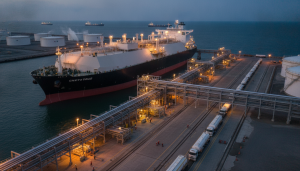
Beyond the direct impact of higher prices, the ongoing conflict has introduced a critical physical supply risk: the disruption of traffic through the Strait of Hormuz. This vital waterway, linking major energy producers like Saudi Arabia, Iran, Iraq, and the United Arab Emirates to global markets, is responsible for the passage of approximately 20% of the world’s total oil supplies. Recent reports confirm that oil traffic through the Strait has been severely hampered due to extremely high insurance rates, a direct consequence of Iran’s attacks on U.S. military bases in Gulf countries.
For India, the implications are profound. Proprietary vessel tracking data reveals that around half of India’s crude oil imports currently transit through the Strait of Hormuz. This direct exposure means that any prolonged disruption or further escalation in the Strait not only drives up global prices but also poses an immediate challenge to India’s ability to physically secure its energy needs. The situation is further complicated by India’s recent shift in sourcing. Until a week ago, India imported 1.16 million barrels per day of Russian oil, a significant reduction from its 2025 average of 1.71 million barrels per day, with Middle Eastern supplies filling the gap. Now, with Middle Eastern routes disrupted, India faces a difficult choice, potentially increasing its reliance on Russian oil, which would undoubtedly place its procurement decisions “under the microscope” internationally.
Navigating the Current Market: Price Action and Investor Sentiment
The market’s reaction to these escalating tensions has been swift and decisive. As of today, Brent Crude trades at $93.83 per barrel, reflecting a 0.63% increase within the day, while WTI Crude stands at $90.43 per barrel, up 0.85%. This current price level is a significant jump from the $79.40 per barrel seen just recently, highlighting the immediate and substantial impact of supply fears. Our 14-day Brent trend data further underscores this volatility, showing a recovery from $94.86 on April 20th after a steep decline from $118.35 on March 31st, indicative of rapid market adjustments to geopolitical shifts.
This environment of heightened uncertainty is clearly reflected in investor sentiment. Our reader intent data indicates a palpable anxiety among investors regarding future price direction, with frequent queries around whether WTI will trend up or down, and predictions for year-end oil prices. This active engagement signifies a deep concern over market stability and the potential for further upside given the supply-side risks. The current gasoline price, holding steady at $3.13 per gallon, offers little relief, suggesting that the elevated crude prices are already filtering through the supply chain. Investors are rightly focused on the durability of these price levels and the potential for a sustained upward trajectory should regional tensions persist or intensify.
Forward Outlook: Key Events Shaping the Next Fortnight
Looking ahead, the next two weeks will be crucial in shaping market sentiment and potentially influencing price action. Investors should closely monitor several key events that could provide further clarity on global supply and demand dynamics. Tomorrow, April 21st, the OPEC+ Joint Ministerial Monitoring Committee (JMMC) meeting is scheduled. Any statements or signals from this meeting regarding production policy could significantly impact market expectations, especially concerning the group’s response to current geopolitical risks and elevated prices.
Further insights into U.S. supply and demand will come from the EIA Weekly Petroleum Status Reports on April 22nd and April 29th, alongside the API Weekly Crude Inventory reports on April 28th and May 5th. These reports offer vital statistics on crude inventories, refinery utilization, and product demand, which are critical for gauging the health of the world’s largest oil consumer. Additionally, the Baker Hughes Rig Count on April 24th and May 1st will provide an indication of future U.S. production activity. Finally, the EIA Short-Term Energy Outlook on May 2nd will offer a comprehensive forecast for global oil markets, providing a broader perspective for investors seeking to position themselves for the remainder of 2026. The confluence of geopolitical risk and these fundamental data releases will dictate the trajectory for oil prices and, by extension, the economic outlook for import-dependent nations like India.