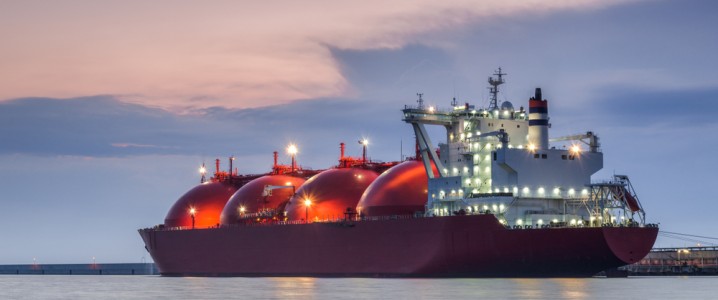
The global energy landscape is once again gripped by geopolitical tensions, with the crucial Strait of Hormuz emerging as a flashpoint threatening to upend the delicate balance of international liquefied natural gas (LNG) markets. While the focus often falls on crude oil flows, the current disruptions in this vital maritime choke point are now directly impacting LNG shipments from key Middle Eastern exporters, setting the stage for potentially dramatic price surges in Asia and Europe. Our analysis, leveraging proprietary market data and forward-looking intelligence, suggests investors must prepare for significant volatility, particularly in natural gas, as supply vulnerabilities collide with persistent demand.
The Strait of Hormuz: A Chokepoint for Global LNG Supply
The escalating conflict in the Middle East, though not formally closing the Strait of Hormuz, has effectively halted LNG shipments through this narrow passage. This artery, through which a fifth of the world’s oil and LNG passes, is now seeing major shipping operators and energy companies diverting vessels. Proprietary vessel-tracking data confirms that numerous tankers have rerouted from the eastern side of the Strait in recent hours, a clear indication of the severe operational risk perceived by the industry. This disruption directly impacts two of the world’s largest LNG exporters, Qatar and the United Arab Emirates (UAE), with Qatar alone accounting for approximately 20% of global supply, all of which transits the Strait of Hormuz.
The implications for global natural gas markets are profound. Should a month-long halt to LNG exports via the Strait of Hormuz materialize, the consequences would be stark. Analysts predict Asia’s spot LNG price could jump by an astonishing 130% to $25 per million British thermal units (MMBtu). This forecast underscores the precarious nature of current gas supply chains and the immense leverage held by transit-dependent exporters. The structural vulnerability of Qatar’s position, coupled with existing disruptions like Israel’s curtailed offshore gas production, paints a clear picture of an increasingly tight and sensitive global gas market.
Navigating Volatility: Current Market Signals and Investor Concerns
While the immediate spotlight is on LNG, the broader energy market is also feeling the tremors of geopolitical uncertainty, albeit with varying degrees of intensity. As of today, Brent Crude trades at $93.83, showing a modest daily gain of 0.63%, with WTI Crude at $90.43, up 0.85%. This relative stability in crude prices today, however, belies a period of significant recent volatility. Our 14-day Brent trend data reveals a substantial decline, with prices falling from $118.35 on March 31st to $94.86 just yesterday, representing a nearly 20% drop. This suggests that while geopolitical risk premiums might be supporting prices today, underlying demand and supply dynamics have been exerting downward pressure on crude.
Our proprietary reader intent data offers a direct window into what investors are currently asking and illustrates this complex market sentiment. A significant portion of our audience is keenly focused on the direction of WTI, with questions like “is wti going up or down” and “what do you predict the price of oil per barrel will be by end of 2026?” dominating queries. These questions highlight a pervasive uncertainty about future oil prices. While these investors are primarily focused on crude, the escalating risks in the LNG market, particularly the potential for a 130% price surge, cannot be ignored. A dramatic spike in natural gas prices could ripple across the entire energy complex, influencing sentiment, redirecting investment flows, and potentially altering the cost structure for energy-intensive industries, ultimately impacting the broader economic outlook that underpins crude demand.
Forward Outlook: Upcoming Catalysts and LNG Supply Dynamics
The coming weeks are packed with critical energy events that will interact with the ongoing geopolitical tensions, further shaping the investment landscape. On April 21st, the OPEC+ JMMC Meeting is scheduled, a key gathering that will provide insights into crude oil production policy. While primarily focused on oil, any decisions from OPEC+ could influence the broader energy risk premium, potentially exacerbating or mitigating the impact of LNG disruptions. Following this, the EIA Weekly Petroleum Status Report on April 22nd and April 29th, alongside the API Weekly Crude Inventory reports on April 28th and May 5th, will offer crucial data on U.S. crude and product inventories. Tighter-than-expected inventories, combined with Middle East supply risks, could provide further upside pressure across the energy complex.
Beyond the immediate data points, the EIA Short-Term Energy Outlook on May 2nd will be particularly relevant. This report will offer updated forecasts for both oil and natural gas markets, providing much-needed guidance amidst the current uncertainty. Investors will be scrutinizing these projections for any revisions linked to the Strait of Hormuz situation and its implications for global gas supply. While there’s a recognized ramp-up in global LNG export capacity, particularly from the United States, this new supply is widely acknowledged to be insufficient to offset potential losses from the Persian Gulf in the short to medium term. This structural lag means that any prolonged disruption to Qatari or UAE LNG exports via the Strait of Hormuz will continue to exert significant upward pressure on spot prices in demand centers like Asia and Europe, making these upcoming data releases and outlooks even more critical for anticipating market movements.


