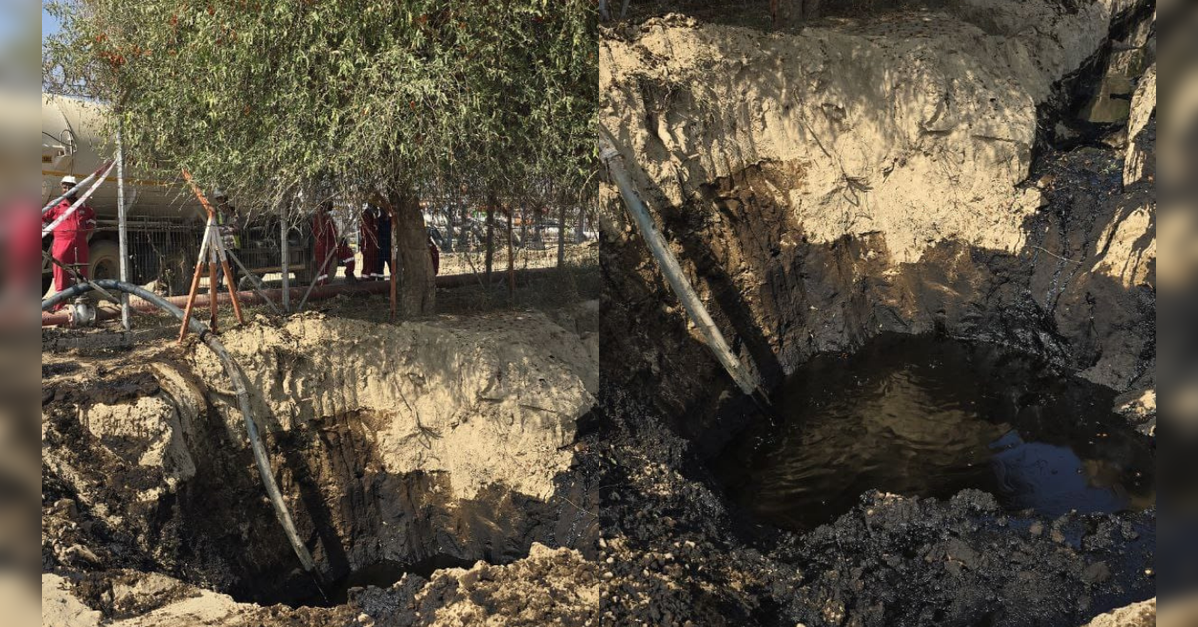
The recent crude oil seep incident near Cairn Oil & Gas’s Aishwarya field in Barmer, India, presents a stark reminder of the inherent operational risks within the upstream oil and gas sector. What began as a localized leak near Aishwarya Well Pad-08 on February 23rd has evolved into a significant environmental and operational challenge for Vedanta Limited’s subsidiary. For investors, this incident transcends a mere news item; it highlights critical considerations regarding environmental liabilities, potential production disruptions, and the broader implications for a company’s social license to operate in key production areas. As we analyze the immediate response and long-term ramifications, it becomes clear that such events, while localized, carry weight in a market sensitive to supply stability and operational integrity.
Operational Headwinds and Environmental Liabilities for Cairn
The incident at Kau Kheda village has seen crude oil actively seeping from the soil for several days, spreading across nearly a bigha of agricultural land. Cairn Oil & Gas has taken immediate, necessary steps, including temporarily halting production and flow in nearby pipelines, isolating the affected area, and initiating extensive liquid evacuation procedures. Reports indicate over 55 tankers have been filled to remove the seeping crude, a testament to the volume involved. Furthermore, the company is removing affected surface soil for specialized disposal and conducting continuous monitoring and remediation. However, the long-term financial and operational costs associated with this incident are still unfolding. Demands for compensation from affected farmers, allegations of flammable gas emissions, and claims of crude oil mixing with groundwater in local tubewells introduce substantial environmental liability risks. Beyond the immediate clean-up, investors must consider potential regulatory fines, legal challenges, and the sustained reputational damage that could impact future expansion or operational efficiency in the Barmer basin. The unknown source of the leak further complicates the situation, signaling a potential systemic issue rather than an isolated accident.
Navigating a Volatile Market: Aishwarya Incident in Context
This operational hiccup for Cairn occurs within a global oil market that has seen considerable volatility and shifting investor sentiment. As of today, Brent Crude trades at $93.81, showing a modest daily gain of 0.61% within a range of $93.52 to $94.21. WTI Crude similarly stands at $90.27, up 0.67%. These figures reflect a slight rebound from a sharper decline observed over the past fortnight, where Brent plummeted from $118.35 on March 31st to $94.86 on April 20th, representing a significant 19.8% contraction. While the Aishwarya field’s production is not globally significant enough to move these market prices directly, the incident underscores the fragility of supply chains and the operational challenges inherent in energy extraction. In a market where prices have recently shed a substantial portion of their value, any disruption, however localized, adds to the narrative of supply insecurity and elevates perceived risk for companies operating in complex geological and social environments. Investors are scrutinizing operational excellence more than ever, especially when commodity prices are not on a clear upward trajectory.
Investor Questions and Forward-Looking Market Signals
Our proprietary reader intent data reveals a consistent theme among investors: a keen focus on price direction, with questions like “is WTI going up or down” and “what do you predict the price of oil per barrel will be by end of 2026?” This week, the Aishwarya incident adds a micro-level risk factor that, when combined with macro-level influences, shapes these predictions. Investors are looking for clarity, and upcoming energy events will provide crucial signals. Today’s OPEC+ Joint Ministerial Monitoring Committee (JMMC) Meeting is paramount, as any indication of supply policy changes could significantly impact price trajectory. Tomorrow, the EIA Weekly Petroleum Status Report will offer insights into U.S. crude inventories, a key barometer for demand and supply balances. Further, the Baker Hughes Rig Count on April 24th and May 1st will indicate drilling activity, while the EIA Short-Term Energy Outlook on May 2nd will provide a broader forward-looking perspective on global supply, demand, and price forecasts. For Cairn and Vedanta investors, these macro events are critical, but so too is the swift and transparent resolution of the Aishwarya seep. Their ability to manage this crisis effectively will be a key determinant of investor confidence in their operational capabilities and long-term value creation in an environment where operational hiccups can be heavily penalized.
Mitigating Risk and Rebuilding Confidence
Cairn’s stated commitment to “continuous monitoring” and remediation “in accordance with applicable environmental norms and standard operating procedures” is a baseline expectation, not a differentiator. For investors, the focus must shift to the long-term efficacy of these measures and the company’s proactive strategies to prevent future occurrences. The unidentified source of the leak and allegations of frequent blasting causing structural damage to local homes suggest deeper investigations are required. Beyond immediate containment, Cairn must demonstrate a robust plan for source identification, permanent repair, and comprehensive environmental impact assessment, including groundwater testing. This will entail not just technical solutions but also effective community engagement and transparent communication to address local concerns and compensation demands. Successful navigation of this crisis will involve not only restoring production at Aishwarya but also rebuilding trust with local communities and regulators. For companies like Vedanta, which rely on stable operations across diverse geographies, such incidents serve as a critical test of their environmental, social, and governance (ESG) commitments, which are increasingly under investor scrutiny. A proactive, transparent, and comprehensive resolution will be essential for maintaining investor confidence and securing the long-term viability of their assets.


