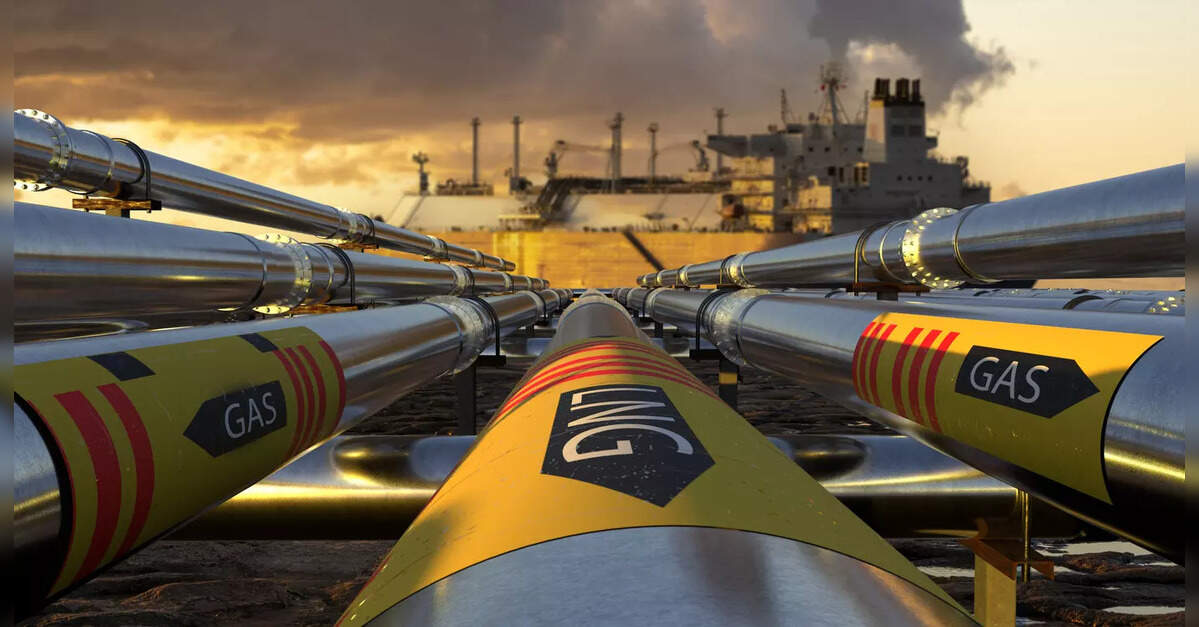
The ambitious expansion trajectory of city gas distribution (CGD) companies appears to be losing significant momentum, casting a shadow over investor outlooks for a sector previously heralded for its robust growth potential. Recent data indicates a widespread slowdown across key operational metrics, including customer additions in industrial and household segments, as well as critical infrastructure build-out for CNG stations and pipeline networks. This deceleration signals a maturing market facing increased competition, regulatory hurdles, and strategic re-evaluation by operators. For investors, understanding the underlying causes and potential future implications is crucial as we navigate this evolving landscape.
The Unexpected Slowdown in CGD Growth Metrics
Detailed analysis reveals a pronounced deceleration across multiple facets of city gas distribution. Industrial customer additions, a significant contributor to CGD volumes, saw a 16% year-on-year decline in the April-December 2025 period, tallying only 912 new connections compared to 1,084 in the prior year. The trend sharpened dramatically in December alone, with CGD companies registering a net loss of 80 industrial customers, a stark reversal from the net addition of 123 seen a year earlier. This shift is particularly impactful given that industrial consumers represent 28% of total gas sales, trailing only CNG’s dominant 63% share.
The household segment, which accounts for 8% of sales, also experienced a downturn. New piped natural gas (PNG) connections to residential consumers decreased to approximately 1.2 million in April-December, down from nearly 1.27 million in the corresponding period. December saw an even sharper 18% decline, with additions falling to around 182,000. The commercial segment, encompassing hotels and restaurants, remained largely stagnant, with new customer additions inching up by a mere 1% to 2,784 in the same nine-month period. Infrastructure development, essential for future growth, also faltered. The commissioning of new CNG stations dropped by 17% to 542, with December experiencing a steeper 31% decline to 82 stations. Both steel and MDPE (plastic) pipeline laying, crucial for high-pressure transmission and low-pressure distribution respectively, saw a 12% reduction each during April-December, with MDPE additions declining a sharper 32% in December.
Macro Energy Prices and Competitive Headwinds
The current macro energy environment plays a pivotal role in the challenges faced by CGD operators, particularly concerning industrial customer acquisition. As of today, Brent crude trades at $93.72, marking a modest daily gain of 0.51% within a range of $93.52-$94.21. WTI crude similarly stands at $90.21, up 0.6% for the day. While these represent slight daily upticks, this stability follows a significant downward trajectory over the past two weeks, with Brent having fallen from $118.35 on March 31st to $94.86 on April 20th – a substantial 19.8% decline. This volatility and downward pressure on crude prices directly impact the competitiveness of natural gas against alternative liquid fuels for industrial users. Lower liquid fuel prices erode the cost advantage of natural gas, leading to a reduced incentive for industries to switch or expand their gas consumption.
The executive insights suggest that the slowdown in industrial additions is primarily driven by this reduced competitiveness. While gasoline prices remain relatively stable at $3.13, the broader energy price dynamics create an unpredictable landscape for CGD companies. For CNG, an industry executive notes that the decline in new stations doesn’t signal demand saturation but rather a strategic moderation of expansion to recover existing investments. Many operators are reportedly well ahead of their licensing targets for CNG station rollouts, suggesting a pivot towards optimizing current assets before embarking on another aggressive expansion phase. This strategic pause, however, must be viewed in the context of persistent energy price competition and the need for CGDs to maintain their relative cost advantage.
Investor Sentiment and Upcoming Market Catalysts
Our proprietary reader intent data reveals a palpable sense of uncertainty among investors regarding the direction of the broader energy market. Common queries such as “is WTI going up or down?” and “what do you predict the price of oil per barrel will be by end of 2026?” underscore the pressing need for clarity on future price trends. This uncertainty directly impacts how investors evaluate the future profitability and growth prospects of CGD companies, whose margins are intrinsically linked to the relative pricing of natural gas versus competing fuels.
Looking ahead, several critical events over the next two weeks could provide significant directional cues for the energy markets and, by extension, the CGD sector. Tomorrow, April 21st, the OPEC+ JMMC Meeting is scheduled. Any decisions regarding production levels from this influential group could trigger substantial shifts in crude oil prices, directly influencing the competitive landscape for industrial gas consumption. Further insights into supply and demand dynamics will come from the EIA Weekly Petroleum Status Reports on April 22nd and April 29th, alongside the API Weekly Crude Inventory reports on April 28th and May 5th. These reports offer vital snapshots of inventory levels and market balances. Additionally, the Baker Hughes Rig Count on April 24th and May 1st will indicate upstream activity, while the EIA Short-Term Energy Outlook on May 2nd will provide official projections that investors will scrutinize for a clearer understanding of future price paths for both crude and natural gas. These events are crucial for investors seeking to recalibrate their models and make informed decisions on CGD operators.
Strategic Outlook and Investor Considerations for CGDs
The current slowdown compels CGD operators to re-evaluate their expansion strategies and focus on operational efficiencies. For investors, this period presents both challenges and opportunities. The declining industrial customer additions highlight the urgent need for CGD companies to enhance the value proposition of natural gas, perhaps through innovative pricing models or superior service, to counter the allure of alternative liquid fuels. The persistent struggle with household connections, largely attributed to the complexities of securing clearances, navigating congested urban areas, and overcoming consumer reliance on subsidized LPG, demands a more proactive and collaborative approach with local authorities and communities.
While the moderation in CNG station expansion is described as a strategic pause for investment recovery, investors should scrutinize whether this is a temporary measure or indicative of deeper challenges in achieving targeted returns. Companies that have already exceeded their licensing targets for CNG stations might be well-positioned to leverage their existing infrastructure, focusing on increasing throughput and optimizing their operational footprint. Moving forward, CGD companies must demonstrate agility in adapting to evolving market dynamics, potentially exploring diversification into renewable natural gas or hydrogen blending to secure long-term growth. For investors, identifying operators with strong balance sheets, efficient cost structures, and a clear, adaptable strategy for navigating competitive pressures and regulatory complexities will be key to unlocking value in this re-calibrating sector.


