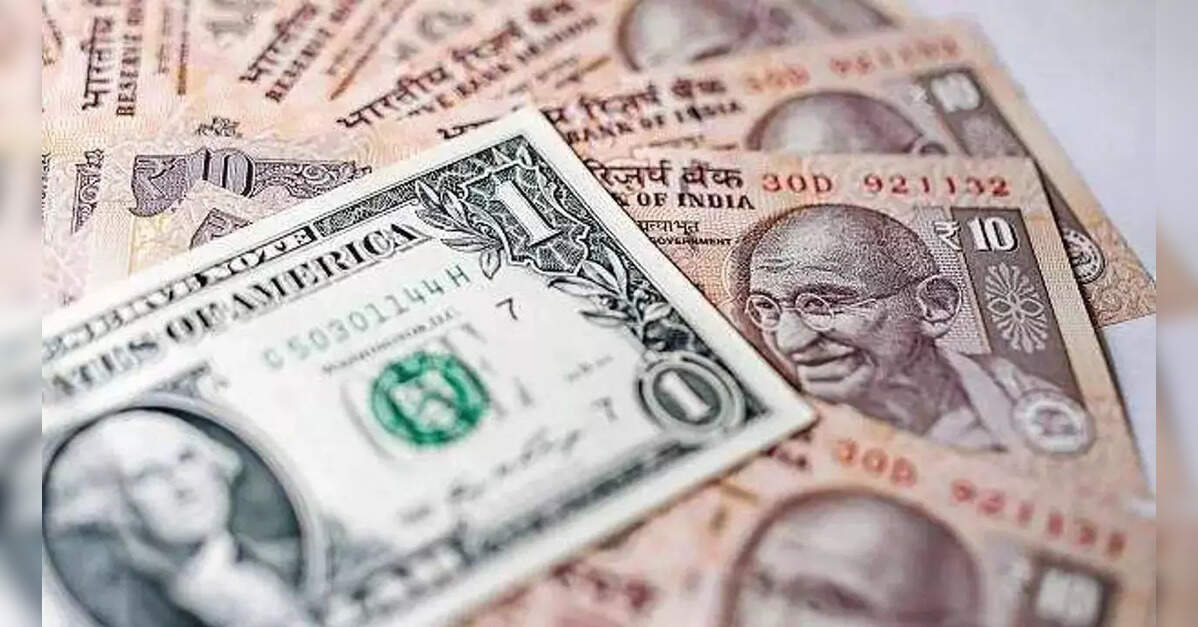
India, a nation critically dependent on oil imports to fuel its rapidly growing economy, consistently faces the dual challenge of volatile global crude prices and fluctuating currency exchange rates. While international geopolitical tensions and supply-side dynamics often dominate headlines, the domestic currency’s strength against the US dollar plays an equally pivotal, albeit often overlooked, role in shaping the nation’s energy import bill. Recently, the Indian Rupee demonstrated notable resilience, strengthening against the greenback, a development with significant implications for India’s energy security and the broader global oil market. For investors tracking the intricate dance between macroeconomic factors and commodity prices, understanding these localized currency shifts is essential for comprehensive market analysis.
The Rupee’s Resilience: A Cushion for India’s Energy Bill
In a recent trading session, the Indian Rupee exhibited a robust performance, appreciating by 6 paise to settle at 90.85 against the US dollar. This upward movement was primarily driven by a weakening greenback across international markets, coupled with substantial inflows from Foreign Institutional Investors (FIIs) into the domestic equity markets. The positive sentiment was further bolstered by a strong start to the local stock exchange sessions, which lent additional support to the local unit. For a nation that imports over 80% of its crude oil requirements, a stronger domestic currency directly translates to a reduced import burden in rupee terms. This not only alleviates inflationary pressures within the economy but also contributes to an improved trade balance, freeing up capital that can be deployed into other critical sectors. The Reserve Bank of India’s strategic interventions, particularly in ensuring the Rupee did not breach the 91.00 level, underscore the nation’s commitment to currency stability, a crucial factor for long-term economic planning and investor confidence.
Navigating Crude Volatility: The Rupee as a Stabilizer
The significance of a stronger Rupee is magnified when viewed against the backdrop of a volatile global crude oil market. As of today, Brent Crude trades at $93.86 per barrel, showing a +0.66% gain within a day range of $89.11 to $95.53. WTI Crude follows suit at $90.22, up +0.61% for the day, trading within a range of $85.50 to $92.23. This current price action, while showing some intra-day stability, comes after a period of significant fluctuation. Over the past two weeks, Brent Crude plummeted by nearly 19.8%, falling from $118.35 on March 31st to $94.86 by April 20th. Such a dramatic price swing highlights the inherent unpredictability of the global oil market, driven by geopolitical events, supply concerns, and demand outlooks. Investors frequently ponder the direction of key benchmarks, with a common query being “is WTI going up or down?” The answer is rarely straightforward, reflecting the complex interplay of forces at play. For India, a stronger Rupee acts as a vital shock absorber, cushioning the impact of either rising or falling crude prices on domestic consumers and industries. When global prices surge, a strong Rupee mitigates the cost increase; when prices fall, as they have recently, the Rupee’s strength amplifies the savings, providing a double benefit to the national exchequer and consumer pockets.
Strategic Implications and Upcoming Market Catalysts
India stands as the world’s third-largest oil consumer and importer, making its energy procurement strategy and cost dynamics highly influential on global demand trends. The current strengthening of the Rupee not only reduces India’s energy import bill but also potentially enhances its purchasing power and strategic leverage in international markets. Looking ahead, investors must closely monitor several key upcoming events that could reshape crude pricing and, consequently, India’s energy cost outlook. The **OPEC+ Joint Ministerial Monitoring Committee (JMMC) Meeting on April 21st** is an immediate and critical event. Any signals regarding production adjustments, whether cuts or increases, could significantly alter market sentiment and price trajectories for crude. Following this, the **EIA Weekly Petroleum Status Reports, scheduled for April 22nd and April 29th**, will provide crucial insights into US crude inventories, refinery activity, and demand indicators, often serving as a bellwether for global supply-demand balances. Further insights into future production capacity will come from the **Baker Hughes Rig Count reports on April 24th and May 1st**. Finally, the **EIA Short-Term Energy Outlook on May 2nd** will offer comprehensive forecasts for crude oil, natural gas, and refined products for the coming months and year. The confluence of these global supply-demand indicators with India’s domestic currency strength will be paramount in defining the nation’s energy security and overall economic stability through 2026.
Investor Perspective: Capitalizing on Currency Dynamics and Demand Signals
For savvy investors in the oil and gas sector, understanding how currency movements interact with commodity prices is crucial. Readers often ask “what do you predict the price of oil per barrel will be by end of 2026?” While a definitive answer remains elusive given the multitude of variables, the Rupee’s current strength provides an interesting lens through which to view demand-side resilience. A lower energy import bill for India doesn’t just save money; it can free up significant capital for other domestic investments, potentially stimulating broader economic growth and, by extension, sustained demand for refined petroleum products. This scenario could indirectly benefit upstream and midstream companies with exposure to the Indian market, as a more economically stable India translates to more consistent and predictable energy consumption. For companies like Repsol, which investors might be tracking for their performance, a stable demand environment from major consumers like India helps balance global supply-side risks. While the Rupee’s strength mitigates risk for India, it does not eliminate the inherent volatility of the global oil market. Therefore, investors should integrate this domestic currency factor into a holistic investment thesis, balancing it against geopolitical uncertainties, OPEC+ decisions, and broader economic indicators to build a robust portfolio in the energy sector.


