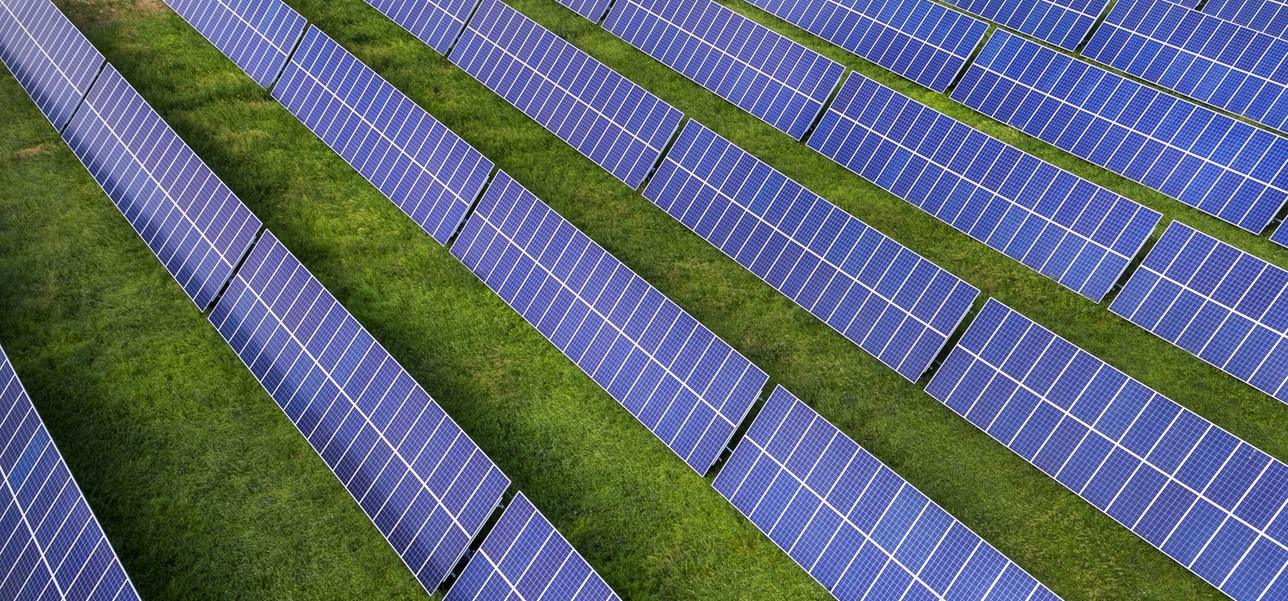
The recent announcement of Meta’s Power Purchase Agreement (PPA) with MN8 Energy for a new 80MW solar project in Pennsylvania might, at first glance, appear to be a story for renewable energy enthusiasts. However, for astute oil and gas investors, this move by one of the world’s largest tech giants is a critical signal, underscoring profound shifts in the global energy mix and the evolving demand landscape. It’s not just about Meta’s net-zero ambitions by 2030; it’s about how the world’s most energy-intensive industries are choosing to power their exponential growth, and the long-term implications for traditional energy sources. This development, far from being an isolated incident, represents a tangible data point for investors assessing the future competitive environment and the strategic imperatives for oil and gas portfolios.
The Megatech Pivot: Redefining Power Demand
Meta, the powerhouse behind Facebook, Instagram, and WhatsApp, is not merely dabbling in green energy; it’s leading the charge. In 2025, the company emerged as the largest corporate clean energy offtaker globally, having signed Power Purchase Agreements totaling over 10 GW. This isn’t a singular effort; Meta, alongside its tech giant peers Amazon, Google, and Microsoft, collectively accounted for nearly half of all corporate clean energy deals last year. This trend indicates a strategic, large-scale pivot by some of the planet’s biggest energy consumers. As demand for data centers and artificial intelligence accelerates, these companies are directly procuring vast amounts of renewable energy to fuel their operations. This has significant implications for the power generation sector, particularly for natural gas, which has historically been the go-to fuel for flexible, grid-scale electricity. The shift signals a long-term erosion of demand growth potential for fossil fuels in the power sector, pushing traditional energy providers to re-evaluate their roles in a decarbonizing grid.
Navigating Crude Volatility Amidst Transition Winds
While the long-term energy transition gathers momentum, the immediate market for crude oil remains a landscape of dynamic forces and investor uncertainty. As of today, Brent crude trades at $93.86 per barrel, showing a modest increase of 0.66% within a daily range of $89.11 to $95.53. WTI crude similarly stands at $90.22, up 0.61% for the day. This relative stability, however, follows a period of significant price correction. Over the past two weeks alone, Brent crude shed nearly 20% of its value, plummeting from $118.35 on March 31st to $94.86 just yesterday. This sharp downturn highlights the extreme sensitivity of crude markets to perceived supply-demand imbalances, geopolitical tensions, and broader economic sentiment. Investors are keenly watching for directional cues, with many asking how these benchmarks will perform in the coming months. The persistent volatility in crude prices, even as structural shifts towards renewables accelerate, underscores the complex environment oil and gas investors must navigate, balancing short-term tactical plays against long-term strategic positioning in a transforming energy landscape.
The AI Power Paradox: New Demand, New Grid Challenges
The aggressive pursuit of renewable energy by Meta and its peers is driven by an unprecedented surge in electricity demand from data centers and artificial intelligence. As Moe Hanifi, SVP at MN8 Energy, aptly noted, “As demand for data centers and artificial intelligence accelerates, access to reliable, domestic energy has never been more critical.” While tech companies are committed to matching their operations with 100% clean energy, the sheer scale and reliability requirements of AI infrastructure present a unique paradox. Renewables are intermittent, necessitating robust energy storage solutions, advanced grid management, and often, reliable backup generation. This creates a significant opportunity for traditional energy players who can innovate beyond conventional fossil fuel production. Investment in grid modernization, large-scale battery storage, hybrid power solutions, and even ‘cleaner’ forms of natural gas power with carbon capture technology could become vital. For oil and gas companies with existing infrastructure and expertise in complex energy projects, this evolving demand for resilient, high-capacity power offers new avenues for diversification and growth, particularly in areas like hydrogen production or advanced energy services.
Short-Term Catalysts vs. Long-Term Trajectories for Investors
For investors charting their course through the energy market, understanding the interplay between immediate catalysts and long-term trends is paramount. While Meta’s solar PPA points to a future energy mix, the near-term volatility and investment decisions in the oil and gas sector will be heavily influenced by a series of upcoming events. Just tomorrow, April 21st, the OPEC+ JMMC Meeting will provide critical insights into potential supply adjustments, directly impacting crude price direction. This will be followed closely by the EIA Weekly Petroleum Status Reports on April 22nd and April 29th, offering key data on U.S. inventory levels, refinery activity, and demand indicators. The Baker Hughes Rig Count on April 24th and May 1st will shed light on North American drilling activity and future production outlooks. Furthermore, the EIA’s Short-Term Energy Outlook on May 2nd will offer updated projections for supply, demand, and prices across various energy commodities, providing crucial context for investors asking about the price of oil per barrel by the end of 2026. These events represent significant inflection points that demand immediate attention, even as the broader energy transition story, exemplified by Meta’s strategic moves, continues to unfold as a powerful underlying current.
In conclusion, Meta’s solar PPA is more than just a corporate sustainability initiative; it’s a tangible manifestation of a global energy transition driven by the most advanced and energy-intensive sectors. For oil and gas investors, this signal necessitates a dual focus: adeptly navigating the immediate market volatility fueled by geopolitical events and supply-demand data, while simultaneously strategizing for a future where major demand centers are increasingly powered by renewables. Success will hinge on adaptability, diversification into adjacent energy services, and a keen understanding of how technological advancements are reshaping the very definition of energy demand.


