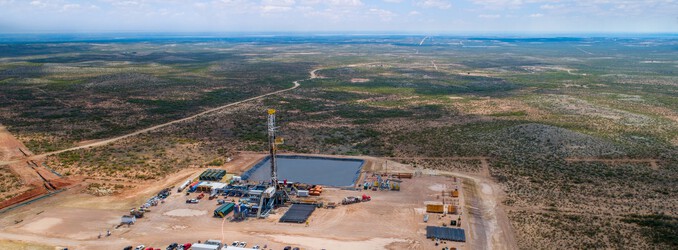
Texas remains the undisputed titan of U.S. energy production, driving global supply narratives and commanding significant investor attention. However, recent actions by the Railroad Commission of Texas (RRC) have cast a spotlight on an often-underestimated factor in the investment calculus: regulatory risk. The RRC’s latest assessment of over $1.27 million in enforcement fines against oil and gas operators signals a firm commitment to compliance. For investors, this isn’t merely a headline about fines; it’s a critical signal regarding the evolving cost of doing business in the Permian Basin and across the Lone Star State, necessitating a re-evaluation of operational risk and potential impacts on shareholder value.
The Rising Cost of Compliance in Texas Operations
The RRC’s recent enforcement round saw a substantial $1,277,320 in penalties levied, a clear demonstration of the state’s intent to uphold its stringent regulatory framework. This total was divided between $367,882 from default orders – where operators failed to engage with proceedings – and $909,438 from agreed orders, which require operators to rectify violations. These figures are more than just line items on an agency report; they represent direct hits to an operator’s bottom line. For smaller, independent producers, such fines can significantly impact quarterly earnings and cash flow, potentially delaying capital expenditure or even threatening solvency. Larger entities, while better equipped to absorb these costs, still face the aggregated expense of enhanced compliance measures, increased monitoring, and potential operational slowdowns as they address deficiencies. Investors must now factor these escalating compliance expenditures into their valuation models, recognizing that a “cheap” asset might carry hidden regulatory baggage.
Navigating Market Volatility and Regulatory Headwinds
The timing of these enforcement actions coincides with a period of notable volatility in the global crude markets, adding another layer of complexity for investors. As of today, Brent Crude trades at $93.86 per barrel, showing a modest 0.66% gain, while WTI Crude stands at $90.22, up 0.61%. These prices suggest a relatively robust environment, potentially giving regulators more leverage to enforce compliance without immediately threatening the economic viability of the industry. However, a deeper look reveals significant recent turbulence: Brent has dropped nearly 20% in just two weeks, falling from $118.35 on March 31st to $94.86 on April 20th. This sharp correction underscores how quickly market conditions can shift. In such an environment, the predictability of operational costs, including regulatory compliance, becomes paramount. Operators facing significant fines or requiring extensive remediation might find their margins squeezed more acutely when crude prices are on a downward trend, directly impacting their attractiveness as an investment.
Investor Focus: Beyond Prices to Operational Resilience
Our proprietary reader intent data reveals a clear preoccupation among investors with price direction (“is wti going up or down,” “what do you predict the price of oil per barrel will be by end of 2026?”). While crude prices undoubtedly drive sentiment, the RRC’s actions highlight that operational resilience and regulatory compliance are equally critical, albeit less discussed, factors influencing investor returns. For companies with significant Texas exposure, the capacity to navigate a tightening regulatory landscape will increasingly differentiate winners from laggards. Questions about “how well do you think Repsol will end in April 2026” (while not directly related to Texas operators) underscore a broader investor focus on individual company performance metrics. Regulatory compliance directly impacts these metrics, influencing everything from production uptime to environmental, social, and governance (ESG) ratings. Investors should scrutinize company disclosures on past violations and future compliance strategies, recognizing that strong governance in this area can mitigate financial and reputational risks.
Forward Outlook: Regulatory Impact on Future Production and Investment
The implications of sustained regulatory pressure from the RRC extend beyond immediate fines, potentially influencing future drilling activity and overall supply dynamics. Investors should closely monitor upcoming events for signals on how this regulatory environment might evolve. The OPEC+ Joint Ministerial Monitoring Committee (JMMC) Meeting on April 21st will set the tone for global supply policy, while the EIA Weekly Petroleum Status Reports (April 22nd, April 29th) provide crucial insights into U.S. inventory and demand. Critically, the Baker Hughes Rig Count reports on April 24th and May 1st will offer a real-time gauge of drilling activity. If regulatory hurdles and compliance costs become overly burdensome, some operators might scale back expansion plans in Texas, potentially affecting rig counts and, in turn, future production growth. The EIA Short-Term Energy Outlook on May 2nd will provide a broader forecast, and investors should be keen to see if any nuances related to U.S. regulatory environments are factored into their projections. A higher regulatory burden in Texas could implicitly shift investment focus to other, potentially less regulated, basins or even impact overall U.S. crude output forecasts, making the state’s regulatory posture a key variable in the broader energy market equation.