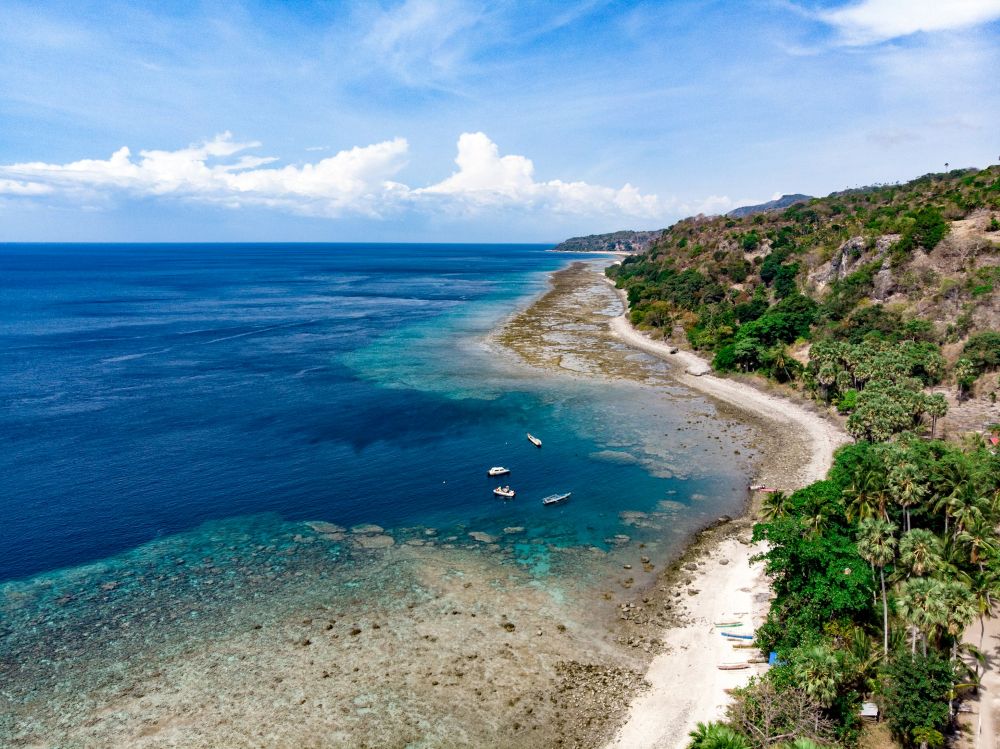
Since gaining independence in 2002, Timor-Leste has worked to move beyond a post-war period toward stability, development, and closer ties with Southeast Asia. As the newest and smallest member of the Association of Southeast Asian Nations (ASEAN), this mountainous island is using tourism to strengthen its regional profile, attract international attention, and signal its readiness to play a more active role in the region.
After CNN named Timor-Leste one of the top destinations to visit in 2026, the country seems to be gaining global attention for its pristine landscapes, rich culture, and untapped adventure opportunities. Indeed, during the recently held ASEAN Tourism Forum in Cebu, the Philippines, the island of around 1.3 million people caught the eye of travel industry professionals, journalists, and regional tourism officials.
The event appeared to be a historic milestone for Timor-Leste, as it marked the state’s first participation as a full ASEAN member rather than an observer. Through ASEAN membership, the oil- and gas-rich nation now has access to established marketing channels, joint promotional campaigns, and co-branding opportunities that would have taken years to develop independently.

“More importantly, ASEAN affiliation strengthens international confidence in our destination, as it allows us to position Timor-Leste not as an emerging or isolated market, but as the newest chapter in Southeast Asia’s dynamic tourism story,” Antonio da Silva, the Director General of Tourism at the Ministry of Tourism and Environment in Timor-Leste told The Geopolitics in an interview.
As he explains, the tropical island is leveraging ASEAN membership and regional partnerships to boost tourism and develop sustainable travel initiatives. The aim is to position Timor-Leste as an authentic and high-value destination in Southeast Asia. In da Silva’s view, joining ASEAN in October 2025 was a big step in that direction, and tourism provides a visible way to show the country is ready to engage more actively in the region.
“Tourism enhances Timor-Leste’s diplomatic presence by creating platforms for engagement, partnership, and cooperation. Participation in ASEAN tourism meetings and regional forums enables regular dialogue with regional counterparts and strengthens institutional integration,” da Silva explains, pointing out that the nation’s geographic position allows it to serve as a bridge between Southeast Asia and the Pacific, particularly in collaboration with Australia and neighbouring countries.
The problem, however, is that ASEAN members increasingly compete for similar tourist markets in Southeast Asia. What strategies is Timor-Leste using to differentiate itself from neighbouring destinations?
“Our aim is not to compete directly with destinations such as Bali or Phuket, but to complement them by offering experienced Southeast Asian travelers a new and authentic destination within the region. By aligning with ASEAN standards and regional economic frameworks, we ensure quality and accessibility while maintaining our distinct identity,” da Silva stressed.
Unlike all other ASEAN members, Timor-Leste is not pursuing high-volume mass tourism. Instead, as the island’s top tourism official underscores, it is focusing on high-value, low-impact visitation that prioritizes sustainability, environmental preservation, and cultural integrity.
“We are targeting what I would describe as conscious and experience-driven travelers. These include eco-adventure visitors drawn to marine biodiversity, trekking, and wildlife encounters, as well as cultural immersion visitors interested in genuine community experiences. Regionally, we aim to attract guests from ASEAN nations, Australian, and other Asia-Pacific tourists who have already visited mainstream Southeast Asian destinations and are now looking for new discoveries,” da Silva highlighted.
Geography undoubtedly plays a key role in Timor-Leste’s tourism strategy. Located within the Coral Triangle, its waters host some of the highest levels of marine biodiversity in the world, attracting divers and marine enthusiasts seeking pristine conditions. On land, its mountainous landscapes, national parks, and rich biodiversity provide opportunities for trekking and eco-adventure in relatively untouched environments.
But for European and other long-haul travelers, local authorities promote Timor-Leste as an authentic Southeast Asian destination, preserving the region’s traditional appeal while building modern infrastructure, upgraded airports, and high-quality accommodations.
“We are building our tourism sector from the outset with sustainability principles in place, rather than retrofitting them after large-scale development. By aligning with ASEAN standards and regional economic frameworks, we ensure quality and accessibility while maintaining our distinct identity,” da Silva said.
But in what way can tourism serve as a tool for Timor-Leste to enhance its diplomatic presence and foster strategic partnerships in the Asia-Pacific region?
As the nation’s Director General of Tourism stressed, diplomatically, tourism builds people-to-people connections and enhances understanding between Timor-Leste and international partners. Economically, it contributes to diversification beyond petroleum resources, enhancing resilience and long-term stability. Socially, community-based tourism ensures that economic benefits are distributed locally, strengthening cohesion and inclusive development.
“Cultural tourism also contributes to soft power by showcasing Timor-Leste’s unique heritage and identity. Ultimately, tourism is not viewed solely as an economic sector but as a strategic instrument supporting regional integration, sustainable development, and constructive international engagement across the Asia-Pacific region,” da Silva emphasized, adding that the country’s goal is for Timor-Leste to be recognized not just as ASEAN’s newest member, but as a “constructive partner contributing to regional prosperity, environmental stewardship, and people-to-people understanding.”
Tourism, he concludes, provides the pathways to achieve that recognition.
[Photo by Tanushree Rao on Unsplash]
The views and opinions expressed in this article are those of the author.

The author is a Serbian freelance journalist. He writes for several publications such as CGTN, Geopolitical Monitor, Global Security Review, International Policy Digest and Global Comment. Nikola also regularly contributes for YouTube geopolitical channel KJ Vids. He covers mostly Russia, Belarus and Ukraine.