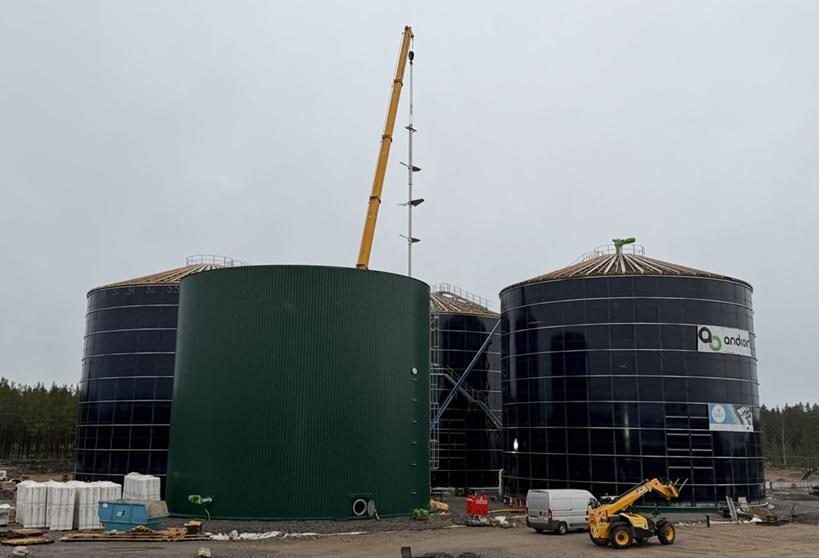
The energy investment landscape is in constant flux, but recent activity signals a clear directional shift for sophisticated capital. Goldman Sachs Alternatives’ private credit arm has committed €67 million (approximately $79 million USD) to Andion CH4, a Luxembourg-based developer specializing in converting organic waste into biogas and biomethane. This substantial financing, aimed at accelerating Andion’s project pipeline across Italy and the Nordic region, is not merely a transaction; it represents a powerful endorsement from a major financial institution for the long-term viability and growth potential of renewable natural gas (RNG) infrastructure. For investors navigating complex energy markets, this move offers critical insights into where smart money is positioning itself amid ongoing volatility in traditional fossil fuels and ambitious global decarbonization targets.
Biomethane: A Resilient Asset Class Attracting Institutional Capital
Andion CH4’s success in securing significant private credit, complemented by an equity injection from existing shareholders led by infrastructure investor Equitix, underscores a growing conviction in biomethane as a robust, long-term investment. This isn’t just about environmental altruism; it’s a strategic play for resilient returns. Biomethane projects convert diverse organic waste streams—from food waste to agricultural residues and wastewater sludge—into usable renewable energy. This process addresses multiple challenges simultaneously: waste management, energy security, and greenhouse gas emissions reduction. Institutional investors like Goldman Sachs are drawn to the predictable, utility-like cash flows these assets can generate, often underpinned by long-term contracts and supportive regulatory frameworks in regions like Europe. The deal validates Andion’s mission to become a dominant European biomethane operator, highlighting how engineered biogas assets are emerging as a compelling alternative or complement to traditional energy portfolios.
Navigating Crude Volatility: Where Smart Money Sees Stability
Many investors are perpetually focused on the gyrations of the crude market, with pressing questions like “will WTI go up or down?” and “what will be the price of oil per barrel by end of 2026?” This week alone illustrates the inherent volatility in traditional oil. As of today, Brent Crude trades at $93.86, showing a notable +3.79% increase within the day’s range of $89.11-$95.53. However, a broader look reveals a significant downturn, with Brent having shed nearly 20% of its value—a drop of $23.49—from $118.35 on March 31st to $94.86 on April 20th. This 14-day trend highlights the unpredictable nature of global oil markets, driven by geopolitical tensions, supply-demand imbalances, and macroeconomic shifts. In contrast, investments in biomethane infrastructure offer a different risk-reward profile. While not entirely immune to market forces, these assets often provide greater stability and insulation from the wild swings seen in crude. For investors seeking diversification and a hedge against the inherent unpredictability of fossil fuels, the Andion deal signals a strategic pivot towards assets with more stable, policy-backed growth trajectories.
Europe’s Energy Transition: Tailwinds for Biomethane Expansion
Andion’s focus on Italy and the Nordic region is no accident; these markets are at the forefront of Europe’s aggressive energy transition agenda. The continent’s RePowerEU objectives, designed to rapidly reduce dependence on Russian fossil fuels and accelerate green energy deployment, along with its FitFor55 climate targets, create an exceptionally favorable environment for biomethane development. These policy mandates translate into tangible incentives, subsidies, and regulatory support that de-risk projects and enhance their financial attractiveness for investors. The “tailored financing” provided by Goldman Sachs speaks to the complexity and bespoke nature of these infrastructure deals, but also to the perceived security of the underlying investment within a supportive policy landscape. The strategic importance of converting organic waste into a reliable, domestically produced energy source cannot be overstated for European nations aiming for both energy security and ambitious decarbonization, making Andion’s expansion a direct beneficiary of these macro trends.
Upcoming Events and the Broader Energy Outlook
While the spotlight shines on renewable infrastructure, the broader energy market remains dynamic, with several key events on the horizon that could influence investor sentiment across the spectrum. The OPEC+ JMMC Meeting today, April 21st, will be closely watched for any signals regarding production policy, which could directly impact crude prices like Brent and WTI. Further insights into traditional energy supply and demand will come from the EIA Weekly Petroleum Status Reports on April 22nd and April 29th, alongside the Baker Hughes Rig Count on April 24th and May 1st, and API Weekly Crude Inventory reports on April 28th and May 5th. Critically, the EIA Short-Term Energy Outlook on May 2nd will offer a comprehensive forecast that could reshape expectations for oil, natural gas, and even implicitly, the competitive landscape for renewables. These events provide a constant backdrop of market intelligence. For savvy investors, understanding these traditional energy market catalysts is crucial, even when focusing on renewables like biomethane. Price volatility in crude can, at times, accelerate the shift towards more stable green alternatives, making deals like Goldman Sachs’ investment in Andion even more compelling as a strategic long-term play in a transitioning global energy economy.


