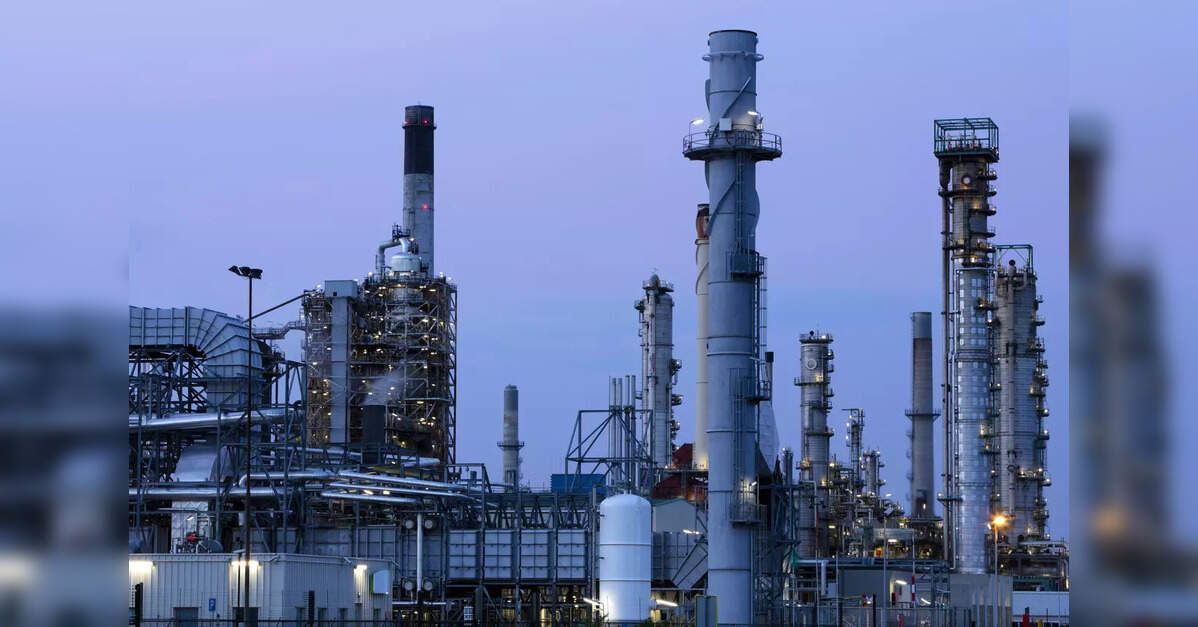
The Numaligarh Refinery Expansion Project (NREP) in India, a cornerstone of the region’s energy infrastructure development, is facing a significant budgetary overhaul. The project’s estimated cost has surged by approximately ₹5,900 crore, pushing the total proposed expenditure to around ₹34,000 crore. This substantial increase, now awaiting government approval, presents a critical juncture for investors evaluating the long-term viability and return profile of large-scale refining ventures, especially in today’s dynamic global energy market. Our analysis delves into the implications of this cost escalation, contextualizing it within current market trends and future outlooks.
The Escalating Price Tag on India’s Refining Ambitions
The NREP, a brownfield initiative designed to triple Numaligarh Refinery’s capacity from 3 million metric tonnes per annum (MMTPA) to 9 MMTPA, has seen its budget proposal climb from an initial ₹22,594 crore to a revised ₹28,026 crore, and now a further upward adjustment to ₹33,901 crore. This latest increment, currently under “active consideration” by the Public Investment Board (PIB), represents a considerable jump and reflects a complex interplay of factors. Company officials attribute the cost escalation to initial project delays caused by the COVID-19 pandemic, followed by a rise in procurement costs as vendors increased their rates, and the impact of heavy monsoon seasons in the region. With approximately 85% of the overall work completed and an estimated ₹27,601 crore already spent, the project’s completion is now targeted for December 2026, a significant delay from its initial 2023 aim. Beyond the core refinery expansion, the NREP also encompasses critical associated infrastructure, including a 1,635-km crude oil pipeline from Paradip to Numaligarh, a 610-km product pipeline to Siliguri, and extensive storage facilities at both Paradip and Siliguri. These integrated components underscore the strategic scale of the investment.
Navigating Volatile Markets: NREP’s Cost Against Current Crude Dynamics
The rising expenditure on the NREP project comes at a time when global crude oil markets are exhibiting pronounced volatility, a key concern for any capital-intensive refining operation. As of today, Brent crude trades at $93.86, marking a 3.79% increase, while WTI sits at $90.22, up 3.2%. This daily upward movement contrasts sharply with the broader trend we’ve observed over the past two weeks, where Brent has shed nearly 20% of its value, falling from $118.35 on March 31st to $94.86 on April 20th. Such significant price swings directly impact refinery economics, influencing both the cost of feedstock and the realized prices of refined products. For a project like NREP, which is largely funded through a 70:30 debt-to-equity ratio by a consortium of 12 banks, a higher project cost in a volatile crude environment can compress future profit margins and extend payback periods, thereby affecting the project’s internal rate of return (IRR) and overall attractiveness for investors. The need for efficient project management and cost control becomes even more paramount when facing such unpredictable market conditions.
Investor Focus: Project Timelines, Funding, and Forward-Looking Market Signals
Our proprietary reader intent data reveals investors are keenly focused on market direction, with queries like “is WTI going up or down?” and predictions for oil prices by year-end 2026 dominating discussions. The NREP’s revised completion target of December 2026 places it squarely within this critical timeframe, making its long-term operational viability and profitability highly susceptible to future market conditions. The project’s funding structure, relying heavily on debt, means that rising interest rates or sustained periods of low refining margins could place additional pressure on the company’s financial health. Investors are scrutinizing how these additional costs will be absorbed and what impact they will have on future earnings projections. From a forward-looking perspective, several upcoming energy events will offer crucial signals for the market where NREP will eventually operate. The OPEC+ JMMC Meeting scheduled for tomorrow, April 21st, could provide insights into future supply policies, potentially influencing crude price stability. Furthermore, the EIA Weekly Petroleum Status Reports on April 22nd and April 29th, alongside the Baker Hughes Rig Count on April 24th and May 1st, will offer vital data on inventory levels and drilling activity. These indicators will shape the supply-demand balance and, consequently, the price environment that NREP will navigate upon its full commissioning.
Strategic Imperative Amidst Rising Costs
Despite the significant cost escalations and project delays, the Numaligarh Refinery Expansion Project remains a strategic imperative for India. As a ‘Navaratna’ entity, NRL’s role in bolstering India’s energy security and regional development cannot be overstated. The tripling of refining capacity will significantly enhance the country’s ability to meet its burgeoning demand for petroleum products, reducing reliance on imports and strengthening the supply chain in the Northeast region. The integrated nature of the project, including its extensive pipeline network and storage terminals, is designed to create a robust and efficient system for crude oil procurement and product distribution. While the financial implications of the increased budget are considerable, the long-term strategic benefits of domestic refining capacity expansion, particularly in a rapidly growing economy like India, often outweigh short-to-medium term cost pressures. Investors will be watching closely how the government’s approval process unfolds and what measures are put in place to ensure the project’s financial integrity and operational efficiency moving forward, especially as the global energy transition narrative evolves.


