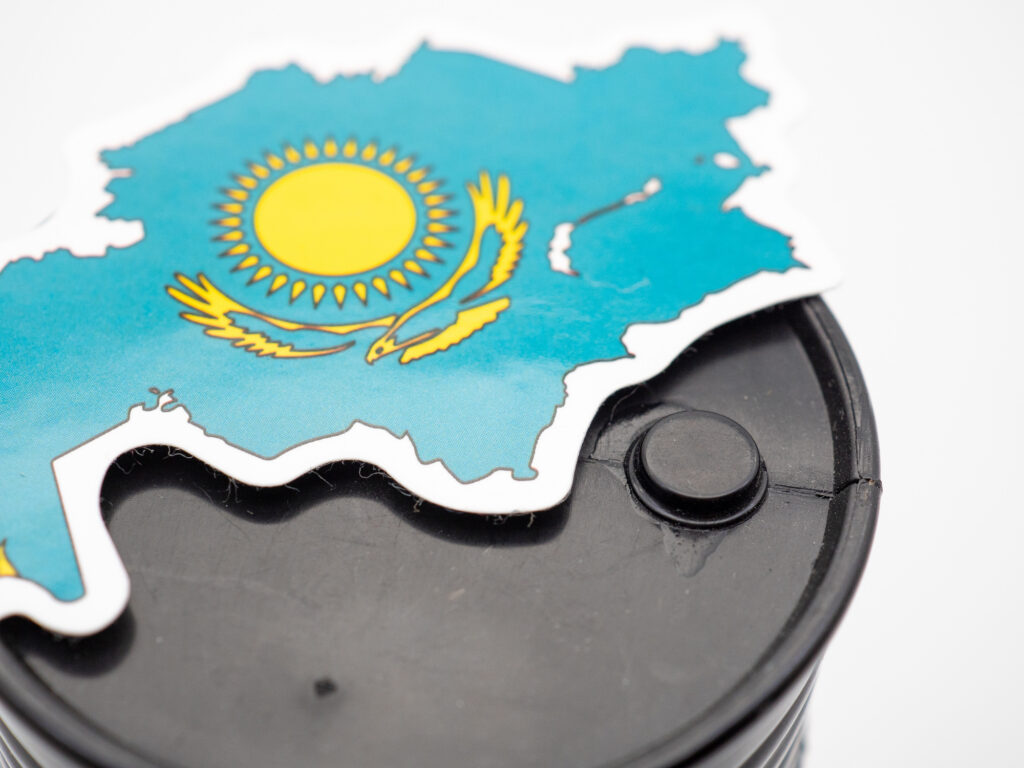
The $5 Billion Kashagan Fine: A Litmus Test for International Energy Investment
The global energy landscape is a complex tapestry woven with threads of geopolitics, market fundamentals, and operational challenges. For investors, navigating this environment requires a keen understanding of both macro trends and specific, high-stakes events. One such event currently commanding attention is the arbitration initiated by international oil companies (IOCs) operating Kazakhstan’s giant Kashagan oilfield. At stake is a staggering $5 billion fine levied by the Kazakh government, ostensibly for exceeding sulfur storage limits. This dispute is more than just a legal battle; it’s a critical barometer for the relationship between host nations and the Big Oil entities that develop their resources, carrying significant implications for future investment in challenging but resource-rich regions.
Kashagan’s Arbitration: Unpacking the $5 Billion Challenge
The Kashagan field is a behemoth, a cornerstone of Kazakhstan’s oil production and a project that has seen billions invested by a consortium of leading international energy players. The current dispute centers on allegations of the consortium exceeding sulfur storage limits at a processing facility, leading to a massive $5 billion fine. The operators, after what they describe as unsuccessful attempts at dialogue, have now formally initiated international arbitration. This move signals a deep disagreement over the validity of the claims and the regulatory environment in which they operate. For investors, this situation highlights the inherent risks of mega-projects in non-OECD countries, where regulatory interpretations can shift, and the specter of resource nationalism often looms. A $5 billion fine, if upheld, would represent a significant blow to the profitability and capital allocation strategies of the companies involved, directly impacting shareholder value and potentially deterring future large-scale investments in similar jurisdictions.
Market Volatility and Geopolitical Overhangs
The news of the Kashagan arbitration comes at a time of heightened volatility in global crude markets. As of today, Brent crude trades at $93.91 per barrel, marking a notable 3.85% gain over the day, with WTI crude following suit at $90.38 per barrel, up 3.39%. This daily uptick, however, contrasts sharply with the broader trend; Brent crude has seen a significant 19.8% decline over the past 14 days, dropping from $118.35 to $94.86. Such price swings underscore the sensitivity of the market to both supply shocks and demand signals. In this context, the Kashagan dispute adds another layer of geopolitical risk premium to an already complex equation. Any potential disruption or slowdown in production from a field as significant as Kashagan, even if merely a theoretical outcome of prolonged legal battles, introduces uncertainty into global supply forecasts. Investors are keenly watching how such localized geopolitical friction could influence global crude prices, particularly given the recent downward pressure on benchmarks.
Investor Concerns: Navigating Resource Nationalism and Operational Risk
Our proprietary data on investor intent reveals a clear focus on price trajectory and long-term market stability. Readers are actively questioning whether WTI is heading up or down, and what the price of oil per barrel might be by the end of 2026. This underscores a pervasive anxiety about market direction and the predictability of future returns. The Kashagan arbitration directly impacts these concerns. Situations where host governments levy substantial fines, especially after project completion, raise red flags about “resource nationalism” – the tendency of states to assert greater control over their natural resources, often through stricter regulations or revised fiscal terms. For investors, this translates into increased operational risk and a potential re-evaluation of the political stability premium associated with investments in these regions. Companies operating in such environments must factor in not just geological and engineering challenges, but also the evolving legal and political frameworks, which can significantly erode projected returns and introduce unforeseen liabilities. This incident serves as a stark reminder that the “social license to operate” is as crucial as technical expertise.
Looking Ahead: Arbitration Timeline and Broader Industry Implications
The initiation of arbitration is merely the first step in what will likely be a protracted legal process. International arbitrations of this scale can span years, creating a lingering cloud of uncertainty over the Kashagan project and the financial outlook for the involved companies. While the arbitration unfolds, investors will be closely monitoring broader energy market dynamics, which will continue to shape the backdrop for this dispute. Key upcoming events include the OPEC+ Joint Ministerial Monitoring Committee (JMMC) meeting today, April 21st, which could signal shifts in production policy. Furthermore, the EIA Weekly Petroleum Status Reports on April 22nd and April 29th, alongside the Baker Hughes Rig Count on April 24th and May 1st, will provide crucial data points on U.S. supply, demand, and drilling activity. These reports, combined with the EIA’s Short-Term Energy Outlook on May 2nd, will offer insights into the fundamental supply-demand balance. The outcome of the Kashagan arbitration, while specific, will set an important precedent for future investment in large-scale energy projects across emerging markets, influencing how international oil companies perceive and price sovereign risk, and ultimately impacting capital flows into the global energy sector.