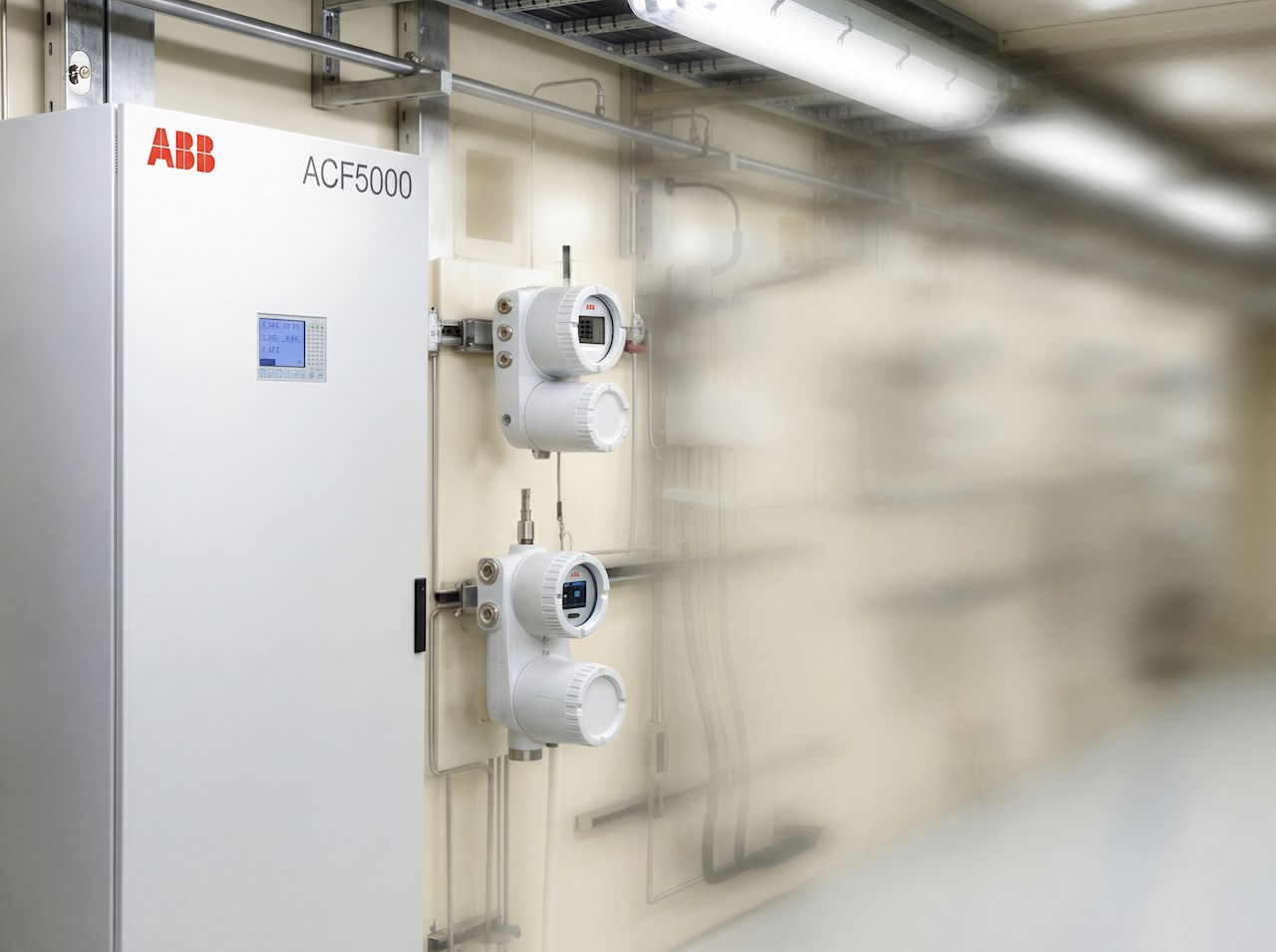
The global energy landscape is undergoing a profound transformation, driven by an accelerating push for decarbonization across industrial sectors. In this dynamic environment, Carbon Capture, Utilization, and Storage (CCUS) has emerged as a critical pathway for hard-to-abate industries to meet stringent emissions targets and maintain operational viability. Against this backdrop, ABB’s recent introduction of its fully integrated gas analyzer package for CCUS applications marks a significant step forward, offering a streamlined, high-precision solution designed to enhance the efficiency and reliability of these complex operations. For investors navigating the complexities of the energy transition, understanding the implications of such technological advancements is paramount, as they directly influence the risk profiles and long-term value propositions of key players in the oil and gas, industrial, and power generation sectors.
Precision Measurement: The Cornerstone of Efficient CCUS Investment
ABB’s new offering is not merely an incremental upgrade; it represents a consolidation of three proven technologies – the Sensi+ CCUS laser gas analyzer, the GCP100 process gas chromatograph, and the ACF5000 CCUS FTIR infrared solution – into a single, comprehensive measurement suite. This integration is crucial for the entire CCUS value chain, from initial capture through transport to secure storage. The core value proposition lies in its ability to provide real-time, high-precision detection of trace impurities such as H2S, moisture, oxygen, and inert gases within the CO2 stream. For investors, this translates directly into reduced operational risk and improved financial performance for CCUS projects. Minor variations in CO2 purity can lead to significant operational consequences, including increased corrosion risks in pipelines, compressibility issues, and even outright pipeline rejection. The financial penalties for non-compliance, forcing operators to return emissions to the stack, can be substantial, eroding project profitability and investor confidence. By simplifying procurement, cutting down on engineering time, and ensuring measurement consistency, ABB’s turnkey solution directly addresses these critical challenges, making CCUS projects more economically viable and less prone to costly disruptions across sectors like cement, LNG, refining, and chemicals.
Navigating Volatility: Oil Prices and the Long-Term Decarbonization Play
The broader market context, particularly oil price volatility, heavily influences investment decisions in both traditional energy and burgeoning clean energy technologies like CCUS. As of today, Brent Crude trades at $93.5, showing a 3.39% increase for the day, while WTI Crude is at $89.86, up 2.79%. This daily rebound comes after a significant downturn over the past two weeks, where Brent experienced a nearly 20% drop from $118.35 on March 31st to $94.86 on April 20th. This kind of price swing, while often driven by geopolitical factors and supply-demand dynamics, underscores the persistent volatility in the fossil fuel market. For investors, this volatility reinforces the strategic importance of diversifying portfolios and investing in solutions that address long-term energy security and environmental mandates. Technologies like ABB’s integrated gas offering become particularly attractive in such a landscape, as they enable existing oil and gas infrastructure to adapt and comply with evolving environmental regulations, mitigating future carbon-related risks. Even as daily crude prices fluctuate, the underlying trend towards decarbonization remains firm, making efficient CCUS solutions a critical component of any forward-looking energy portfolio.
Investor Sentiment: Balancing Short-Term Gains with Long-Term Strategy
Our proprietary reader intent data offers a clear window into current investor concerns, highlighting a sharp focus on immediate market direction and future price predictions. Investors are actively asking “is WTI going up or down” and seeking forecasts for “the price of oil per barrel by end of 2026.” This reflects a natural preoccupation with short-to-medium term returns and the direct impact of crude prices on energy sector equities. However, amidst these immediate concerns, a deeper strategic imperative is at play. While daily price movements dictate trading strategies, long-term investors are increasingly looking at how companies are positioning themselves for a net-zero future. Investments in robust, integrated CCUS solutions like ABB’s are not just about compliance; they are about future-proofing assets and securing social license to operate. Companies that adopt such technologies are demonstrating a commitment to sustainability that can attract a broader investor base, including those focused on ESG criteria. For investors, evaluating the balance sheets and capital expenditure plans of companies within the CCUS value chain – from technology providers to project developers – offers a critical lens through which to identify those best positioned to thrive in an evolving energy market, irrespective of daily crude price fluctuations.
Upcoming Catalysts and the Evolution of Energy Infrastructure
The immediate calendar is packed with events that will shape short-term energy market dynamics, yet the long-term trajectory of energy infrastructure remains firmly set on decarbonization. Today, April 21st, the OPEC+ JMMC Meeting is underway, with markets keenly awaiting any signals regarding production policy that could impact global supply. Following this, the EIA Weekly Petroleum Status Reports on April 22nd and 29th will provide crucial insights into U.S. inventory levels, further influencing crude and product prices. While these events are critical for tactical trading, a broader view reveals the strategic significance of innovations in carbon management. The EIA Short-Term Energy Outlook, slated for release on May 2nd, will offer a longer-range perspective on energy demand and supply, often highlighting the increasing role of cleaner technologies. For instance, the deployment of integrated analyzer systems like ABB’s will be instrumental in enabling large-scale CCUS projects to achieve operational efficiency and meet regulatory requirements, thereby facilitating the decarbonization goals of hard-to-abate sectors. This shift creates new avenues for investment in supporting infrastructure and technology providers, transforming what were once mere compliance costs into strategic competitive advantages in an increasingly carbon-constrained economy. Investors should monitor how these macro events influence not just traditional oil and gas production, but also the accelerating development and adoption of CCUS infrastructure globally.