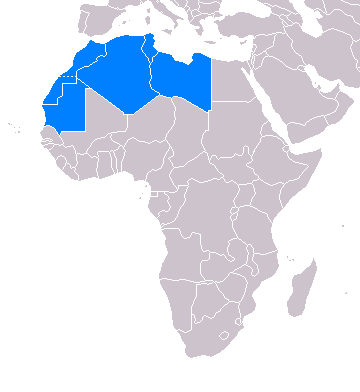
The energy landscape of the Maghreb region is undergoing a profound transformation, moving beyond the long-held perception of Algeria as its unassailable geopolitical and energy bedrock. The meeting held in Madrid on February 8, 2026, served as a stark re-evaluation of this narrative, signaling a formal deconstruction of Algeria’s once-dominant regional influence. While delegations including Morocco, Mauritania, the Polisario Front, and Algeria itself convened under U.S. auspices, the underlying dynamic pointed to a significant shift: the era of Algerian veto power over crucial regional progress is rapidly drawing to a close. For global energy investors, this is not merely a political development but a fundamental recalibration of risk and opportunity across North Africa, impacting everything from natural gas flows to strategic mineral supply chains.
Algeria’s Fading Hegemony and Regional Energy Implications
For decades, Algeria skillfully leveraged its historical credentials and substantial hydrocarbon wealth to position itself as the undisputed arbiter of the Maghreb. This era, however, is now definitively concluding. The nation’s strategic isolation has become increasingly systemic, exacerbated by the recent fall of the Maduro regime in Venezuela, which stripped Algiers of a key ideological partner in the Global South. Concurrently, the increasing pressure on Tehran, Algeria’s primary strategic ally in the Middle East, has further diminished its diplomatic reach. This geopolitical retreat is not just an abstract concept for investors; it directly impacts the perceived stability of its energy exports, particularly natural gas to Europe. As the “Algerian Pillar” crumbles, the continuity and security of these crucial energy arteries become subject to increased scrutiny, forcing investors to re-evaluate long-term supply contracts and infrastructure investments linked to Algerian production.
Market Volatility Amidst Geopolitical Realignment
The shifts unfolding in North Africa contribute to an already complex and volatile global energy market. As of today, Brent Crude trades at $93.5 per barrel, marking a 3.39% gain within the day’s range of $89.11 to $95.53. WTI Crude follows a similar trajectory, currently priced at $89.86, up 2.79% from its daily low of $85.5. While these daily gains might suggest a rebound, a broader perspective reveals significant recent turbulence; Brent, for instance, has shed nearly 20% over the last two weeks, falling from $118.35 on March 31st to $94.86 just yesterday. This pronounced downtrend underscores the market’s sensitivity to a myriad of factors, including supply expectations and global demand signals. The evolving Maghreb dynamic, while not the sole driver, adds another layer of geopolitical risk premium to crude prices. Furthermore, the volatility extends to downstream products, with gasoline currently trading at $3.12, reflecting the broader market uncertainty that regional shifts can amplify. Investors must recognize that declining stability in a key energy-producing and transit region like North Africa, even if localized, inevitably contributes to an elevated risk environment for global energy commodities.
The Ascent of a New Axis: Energy Sovereignty and Strategic Minerals
A pivotal element of the evolving American strategy in the Maghreb is the strategic empowerment of Tunisia, fostering what is emerging as a powerful Tunis-Rabat Axis. This realignment promises to redefine energy pathways and resource control in the region, creating significant new investment opportunities. Washington is actively working to dismantle Algeria’s historical gas monopoly over Tunisia by facilitating access to American LNG and catalyzing substantial investment in solar infrastructure. This initiative is designed to transform Tunisia from an energy-dependent satellite into a sovereign energy player, opening doors for international energy firms specializing in LNG import terminals, regasification facilities, and large-scale renewable projects. Beyond hydrocarbons, the potential Morocco-Tunisia partnership is poised to form a formidable “OPEC of phosphates.” By consolidating control over a significant portion of global phosphate reserves, this new axis would become a crucial cornerstone of global food security and a primary partner for U.S. agriculture, offering a strategic alternative to existing supply chains and creating compelling investment prospects in the agricultural and mining sectors.
Investor Focus and Upcoming Market Catalysts
Our proprietary data indicates that investors are keenly focused on market direction, with common queries revolving around whether WTI prices are trending up or down, and predictions for crude oil prices by the end of 2026. These questions highlight a demand for clear forward-looking analysis in a volatile environment. The ongoing geopolitical shifts in the Maghreb, while not directly tied to immediate crude production quotas, undeniably factor into the broader risk assessment that influences these long-term price outlooks. Several upcoming events on the energy calendar will provide critical catalysts and data points for investors navigating these uncertainties. The OPEC+ Joint Ministerial Monitoring Committee (JMMC) Meeting today, April 21st, is a key near-term event that could immediately impact crude prices based on any output policy signals. This will be followed closely by the EIA Weekly Petroleum Status Reports on April 22nd and April 29th, along with the API Weekly Crude Inventory releases on April 28th and May 5th, all offering crucial insights into U.S. supply and demand dynamics. Furthermore, the Baker Hughes Rig Count on April 24th and May 1st will provide leading indicators for future production. Perhaps most critically for those looking to the “end of 2026” price, the EIA Short-Term Energy Outlook on May 2nd will offer comprehensive projections that could significantly shape market expectations. Investors must integrate these fundamental data points with the evolving geopolitical landscape in North Africa to form robust investment strategies, recognizing that new energy infrastructure and resource partnerships are emerging from the regional power vacuum.