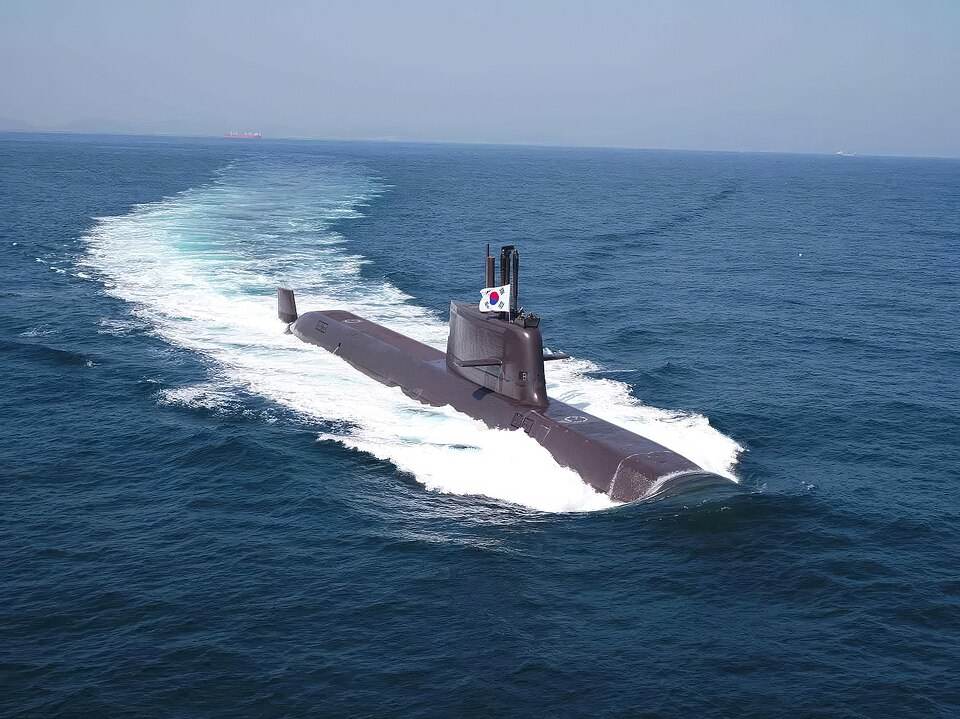
The global energy landscape is inextricably linked to geopolitical stability. As a senior investment analyst at OilMarketCap.com, we constantly monitor the complex interplay between international relations, defense strategies, and their direct impact on commodity markets. South Korea’s evolving undersea strategy, often viewed through a narrow defense lens, in fact offers a potent case study for understanding how regional power dynamics translate into tangible risks and opportunities for oil and gas investors. Seoul’s calculated pivot towards an integrated nuclear-powered submarine (SSN) and unmanned underwater vehicle (UUV) doctrine is not merely about military might; it’s a strategic imperative designed to secure vital maritime trade routes, deter aggression, and ultimately, safeguard the nation’s energy lifelines in an increasingly volatile Western Pacific.
Geopolitical Pressures and Crude’s Volatile Trajectory
The escalating tensions in critical maritime zones, exemplified by the intricate security challenges facing South Korea, are directly contributing to the geopolitical risk premium embedded in global crude prices. As of today, Brent Crude trades at $93.5 per barrel, marking a 3.39% increase within the day’s range of $89.11 to $95.53. This upward movement comes after a significant correction over the past two weeks, where Brent shed nearly 20% of its value, falling from $118.35 on March 31st to $94.86 on April 20th. This volatility underscores the market’s sensitivity to both perceived supply changes and geopolitical flashpoints.
Investors must recognize that even localized naval confrontations or heightened military posturing in strategically crucial shipping lanes can swiftly disrupt global supply chains, affecting tanker movements, insurance costs, and ultimately, the price of oil. The Korean Peninsula and the surrounding Western Pacific region are pivotal for global trade, including a substantial portion of the world’s liquefied natural gas (LNG) and crude oil shipments. South Korea’s defensive posture, therefore, has far-reaching implications for market stability, as any disruption could trigger a rapid re-pricing of energy assets.
Seoul’s Integrated Undersea Doctrine: A Shield for Energy Security
South Korea’s decision to integrate advanced SSNs with UUVs is a direct response to a multifaceted and simultaneous threat environment. This strategic shift moves beyond the outdated notion of optimizing capabilities for a single contingency. Instead, it addresses three critical and mutually reinforcing challenges: North Korea’s persistent pursuit of sea-based nuclear capabilities, the growing probability of a Taiwan contingency that would inevitably strain allied naval assets, and an expanded Russian naval presence in the Western Pacific. Pyongyang’s uneven yet undeniable progress in submarine-launched ballistic missile (SLBM) technology, even if currently immature, forces South Korea and its allies into constant, resource-intensive tracking efforts, compounding crisis management complexity.
Moreover, a serious crisis in the Taiwan Strait would quickly absorb U.S. and Japanese high-end naval assets, particularly those critical for anti-submarine warfare (ASW), intelligence, surveillance, and reconnaissance (ISR), and long-range strike missions. In such a scenario, North Korea wouldn’t need to initiate an all-out war; even limited submarine deployments or SLBM demonstrations could strategically divert allied attention and delay crucial reinforcements. For investors, South Korea’s robust undersea strategy represents an essential investment in national resilience. A nation capable of defending its maritime interests and maintaining regional stability is better positioned to ensure uninterrupted access to vital energy imports, safeguarding its industrial base and economic growth, which in turn supports long-term market confidence.
The Arctic Crossroads and Forward Market Signals
The strategic calculus in the Western Pacific is further complicated by Russia’s expanding Arctic strategy. The gradual opening of the Northern Sea Route (NSR) due to climate change provides Moscow with both economic incentives, such as new trade routes for its vast energy resources, and military advantages, allowing for normalized naval movements between its Northern and Pacific Fleets. While this doesn’t imply an immediate direct threat to South Korea, it does mean a more congested, complex, and strategically ambiguous undersea operational environment in the region. For oil and gas investors, this signifies increased competition for resources, potential new shipping lanes, and an elevated baseline of geopolitical tension in the broader Eurasian theater.
Looking ahead, market participants will be closely watching several key events on our proprietary calendar for clues on supply, demand, and policy shifts. Today, April 21st, the OPEC+ Joint Ministerial Monitoring Committee (JMMC) Meeting is underway. Any statements or indications regarding production quotas will have immediate ramifications for crude prices, especially as geopolitical risks remain high. Further insights will come from the EIA Weekly Petroleum Status Reports on April 22nd and April 29th, providing critical inventory data. However, for a more comprehensive forward-looking perspective, the EIA Short-Term Energy Outlook on May 2nd will be crucial. This report will offer updated forecasts on global supply-demand balances, refining capacity, and price trajectories, which analysts will scrutinize intensely to gauge how the evolving geopolitical landscape, including developments in the Western Pacific and the Arctic, might impact global energy markets through the rest of 2026 and beyond.
Investor Focus: Navigating the Geopolitical Premium and Long-Term Outlook
Our proprietary reader intent data reveals a prevalent theme among investors: a keen interest in the direction of WTI crude and the broader oil price trajectory through the end of 2026. This sentiment reflects the significant uncertainty currently shaping energy markets. While fundamental supply-demand dynamics are always at play, the geopolitical factors we’ve discussed – from South Korea’s strategic positioning to the opening of the NSR and the potential for regional flashpoints – introduce a substantial “risk premium” that can often override conventional market signals.
For investors, understanding South Korea’s undersea strategy isn’t just about defense contractors; it’s about appreciating how nations are actively investing in their foundational energy security in an era of heightened global instability. Such investments, while military in nature, aim to mitigate the extreme tail risks that could severely disrupt global energy flows. While the short-term volatility in crude prices, as evidenced by Brent’s recent swings, is a constant challenge, the long-term outlook for oil and gas will be increasingly shaped by how these complex geopolitical flashpoints are managed. Companies with diversified portfolios, resilient supply chains, and strategic partnerships in stable regions may be better positioned to navigate this environment. Ultimately, the quest for energy security, underpinned by robust defense postures like South Korea’s, remains a paramount driver for both national policy and commodity market direction.