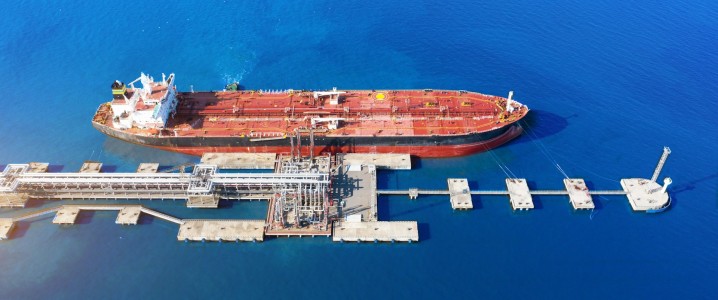
The global oil market, already navigating complex geopolitical currents and supply-demand imbalances, faces a renewed challenge from an unearthed, sophisticated Russian oil smuggling network. Our proprietary data pipelines and market intelligence reveal that this extensive operation, involving nearly fifty seemingly disparate entities, has facilitated the movement of at least $90 billion worth of crude, predominantly from state-controlled Rosneft. This clandestine trade, exposed by a simple IT misstep, underscores a persistent, opaque supply stream that complicates market analysis and elevates investment risk for stakeholders across the energy sector. For investors keenly watching the interplay of sanctions, supply, and price stability, understanding the true scale and implications of this shadow market is paramount.
The $90 Billion Shadow Economy and its Market Ripples
The sheer scale of the Russian oil smuggling operation, conservatively estimated at $90 billion, represents a significant hidden variable in global crude supply. This network, including firms and individuals with documented links to Rosneft, has been actively masking the origin of Russian crude, effectively circumventing international sanctions. Entities like Redwood Global Supply, which emerged as the single largest exporter of Russian crude since the U.S. imposed sanctions on Rosneft in October 2025, illustrate the brazenness and efficiency of these operations. This persistent, unsanctioned supply stream adds a layer of uncertainty to market fundamentals, directly influencing price discovery and volatility. As of today, Brent Crude trades at $93.5, reflecting a notable +3.39% gain on the day, with WTI Crude at $89.86, up +2.79%. This daily rebound follows a significant downturn over the past two weeks, where Brent plummeted from $118.35 on March 31st to $94.86 on April 20th, a nearly 20% drop. The discovery of such a vast shadow market begs the question of how much of this volatility is truly demand-driven versus a reaction to the perceived, rather than actual, supply constraints given the ongoing flow of illicit oil. Investors must consider how this under-the-radar supply impacts the delicate balance between OPEC+ production cuts and global consumption trends.
Sanctions Evasion and Escalating Geopolitical Volatility
The revelation of this sprawling network highlights the persistent challenges in enforcing international sanctions and the lengths to which state-backed entities will go to maintain revenue streams. Despite the U.S. sanctions on Rosneft in October 2025 and subsequent UK sanctions on Redwood Global Supply and 13 other entities in December 2025, these operations have not only continued but intensified. This systemic evasion introduces significant geopolitical volatility into the energy investment landscape. The coordination among 48 identified entities, linked by a single private email server, suggests a highly organized and resilient system designed to circumvent oversight. For investors, this translates into elevated risks associated with compliance, reputational damage, and unpredictable market shifts driven by potential future enforcement actions or escalations. The opaque nature of these transactions means that traditional supply chain analysis may underestimate actual available crude volumes, leading to misjudgments in investment strategies tied to global supply-demand forecasts. As one maritime expert noted, it’s clear that major Russian producers are adapting their marketing and logistics to keep oil flowing, regardless of restrictions.
Forward Outlook: Impact on Upcoming Market Events
The uncovering of this massive smuggling operation arrives at a critical juncture for the energy market, adding another layer of complexity to upcoming events that typically drive price action. With the OPEC+ JMMC Meeting scheduled for today, April 21st, participants will be assessing global supply and demand dynamics. The persistent, undeclared supply from Russia could subtly influence their decisions on production quotas, potentially leading to more cautious approaches if the true extent of available crude is underestimated. Furthermore, the EIA Weekly Petroleum Status Reports on April 22nd and April 29th, along with API Weekly Crude Inventory data on April 28th and May 5th, will provide crucial insights into U.S. crude stocks. However, these reports, while vital, do not account for the shadow trade. Investors must consider that official inventory figures might not fully reflect the global supply picture when a significant portion of Russian crude remains off the traditional radar. The EIA’s Short-Term Energy Outlook, due on May 2nd, will also be closely scrutinized for how it factors in such persistent geopolitical disruptions and their impact on future price trajectories. The consistent Baker Hughes Rig Count reports on April 24th and May 1st, while indicating domestic production trends, will likewise operate within a global market where a substantial, unsanctioned supply source continues to exert pressure.
Navigating Uncertainty: Investor Questions and Strategic Considerations
The market’s reaction to such revelations naturally sparks critical questions for investors, particularly those concerning future price movements and the stability of energy companies. Our reader intent data shows a clear focus on the direction of WTI and Brent, with many asking about the price of oil per barrel by the end of 2026, indicating a strong desire for clarity amidst volatility. The existence of a $90 billion shadow economy fundamentally complicates these forecasts. While it’s impossible to provide definitive price predictions, investors must recognize that persistent sanctions evasion acts as a deflationary force on prices by maintaining supply, yet simultaneously introduces inflationary risk through heightened geopolitical tensions and the potential for new, disruptive enforcement actions. For companies like Repsol, which some of our readers are specifically inquiring about for April 2026 performance, understanding their exposure to geopolitical risk, their supply chain resilience, and their adherence to sanction compliance becomes even more critical. Prudent investment strategies in this environment demand a deep dive into corporate governance, geographical operating risks, and the transparency of a company’s crude sourcing. Diversification, hedging strategies, and a keen eye on macro-geopolitical developments, beyond traditional supply-demand metrics, are essential for navigating an energy market increasingly shaped by both visible and invisible forces.


