The AI-Driven Tax Shift: A New Paradigm for Energy Investment?
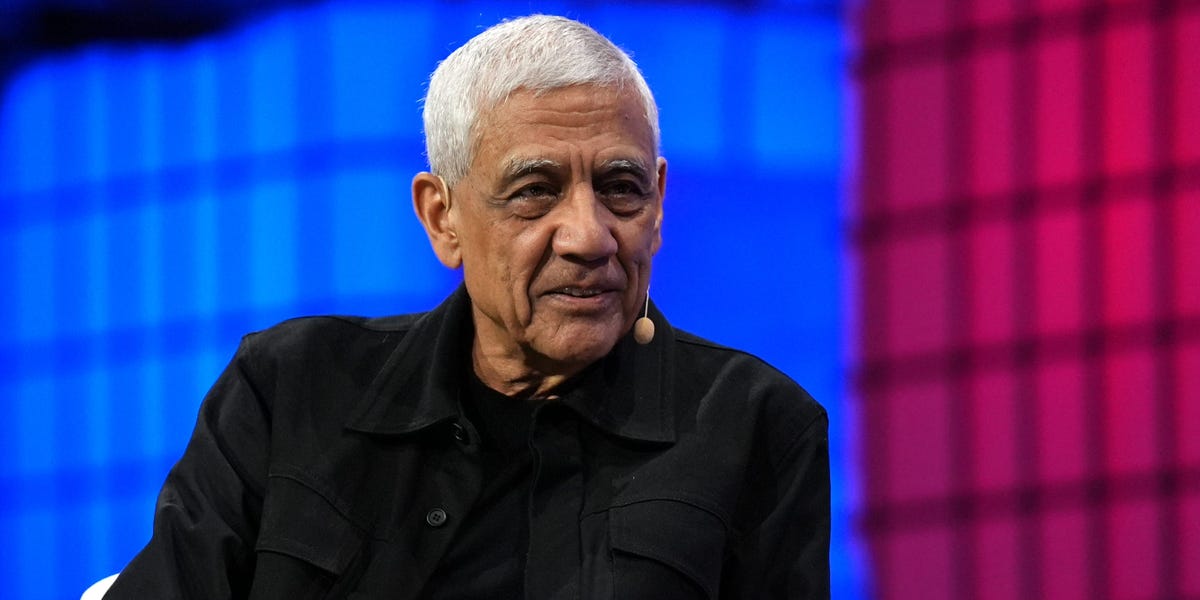
The rise of artificial intelligence is sparking profound discussions that extend far beyond technological innovation, delving into the very structure of our economies and societies. A provocative proposal from venture capitalist Vinod Khosla suggests a radical overhaul of the U.S. tax system: scrap income taxes for most Americans and heavily tax capital instead. Khosla, a co-founder of Sun Microsystems and an early investor in OpenAI, posits that as AI increasingly displaces labor, the economic balance will shift dramatically from labor to capital. This vision, while speculative, carries significant implications for investors in capital-intensive sectors like oil and gas, forcing a re-evaluation of long-term investment strategies and the potential for a fundamental “rethink of capitalism & equity.”
Capital Reallocation: A Direct Hit on Energy Project Economics
Khosla’s argument centers on the premise that AI will diminish the labor component of economic value creation, thereby necessitating a greater taxation of capital assets to maintain fiscal stability and equity. Specifically, he advocates for equalizing capital gains tax rates with ordinary income and eliminating what he terms “special interest goodies” such as carrying over tax losses and tax-free borrowing against unrealized gains. For the energy sector, which is inherently capital-intensive, such a shift could have profound effects. Exploration, development of new fields, construction of midstream infrastructure, and even the transition to renewable energy sources all require massive upfront capital outlays. If the after-tax returns on capital are significantly reduced due to higher capital gains taxation, the hurdle rates for new projects would naturally rise. This could deter investment, slow down project development, and ultimately impact the long-term supply dynamics of crude oil, natural gas, and refined products. Investors must consider how such a potential policy pivot could recalibrate the risk-reward profiles of energy assets, pushing for greater efficiency in capital deployment and potentially favoring projects with quicker returns or lower capital intensity.
Navigating Volatility Amidst Macro-Economic Policy Debates
While discussions about future tax structures might seem distant, they underscore a broader macro-economic uncertainty that already influences energy markets. As of today, Brent crude trades at $92.46 per barrel, reflecting a 2.24% daily increase, with WTI crude standing at $88.78. This daily upward movement contrasts sharply with the recent medium-term trend: Brent crude experienced a significant decline from $118.35 on March 31st to $94.86 by April 20th, representing a nearly 20% contraction in less than three weeks. Such volatility highlights the intricate interplay of geopolitical factors, supply-demand fundamentals, and broader economic sentiment. Khosla’s proposal adds another layer of long-term uncertainty, suggesting that future economic stability might rely on radical fiscal re-engineering. For investors, understanding these macro-level policy debates alongside immediate market movements is crucial. Our proprietary reader intent data shows a consistent investor focus on future price trajectory, with queries such as “is WTI going up or down” and “what do you predict the price of oil per barrel will be by end of 2026?” dominating discussions. These questions demonstrate a clear need for insights that bridge immediate market dynamics with potential long-term shifts in the investment landscape.
Forward Outlook: Operational Drivers and Policy Foresight
The immediate future for crude markets will be shaped by a series of critical events in the coming days. Today, April 21st, the OPEC+ JMMC Meeting is underway, with investors keenly watching for any signals regarding production quotas or strategic shifts that could impact global supply. Following this, the EIA Weekly Petroleum Status Report, due on April 22nd and again on April 29th, will provide vital insights into U.S. crude oil and product inventories, refinery utilization, and demand indicators. These reports are pivotal in gauging the health of the world’s largest consumer market. The Baker Hughes Rig Count, scheduled for April 24th and May 1st, will offer a granular view into drilling activity and potential future production trends in North America. Furthermore, the EIA Short-Term Energy Outlook on May 2nd will provide broader forecasts for supply, demand, and prices across various energy commodities. While these events focus on operational and market fundamentals, their impact must be viewed through the lens of evolving economic thought. If policymakers seriously consider proposals like Khosla’s, which aim to redistribute wealth and tax burdens in an AI-dominated future, the long-term demand growth and the stability of capital flows into the energy sector could face unprecedented challenges. Investors must look beyond immediate data points and consider how potential policy shifts could alter the fundamental economics of energy production and consumption.
Investor Focus: Beyond the Barrel Price
The insights from figures like Khosla serve as a potent reminder that successful energy investing requires a holistic view, extending beyond daily price fluctuations. While our reader data confirms a strong interest in questions like “what do you predict the price of oil per barrel will be by end of 2026?” and even specific company performance, such as “How well do you think Repsol will end in April 2026,” these immediate concerns are nested within a larger, evolving economic framework. Khosla’s critique of “special interest goodies” in the tax code, like tax-free borrowing against unrealized gains, highlights mechanisms that have historically influenced capital formation and investment decisions within the energy sector. Should these be targeted for elimination, the cost of capital, the attractiveness of certain financial structures, and the overall investment appetite for long-cycle, capital-intensive projects could shift dramatically. Smart energy investors must not only track geopolitical developments and inventory levels but also keep a close watch on these deeper, structural discussions about the future of economic policy. The ability to anticipate and adapt to potential paradigm shifts in taxation and capital allocation will be paramount in securing long-term value in a rapidly transforming global economy.


