The strategic Strait of Hormuz, a critical chokepoint for global oil supply, has once again become the epicenter of geopolitical tension, with Iran’s recent military exercises introducing a fresh wave of uncertainty into the energy markets. This development, occurring amidst delicate US-Iran nuclear discussions, forces investors to reassess supply security and recalibrate their risk premiums. As a senior analyst, I see this as a pivotal moment, demanding a granular understanding of both the immediate market reactions and the profound forward-looking implications for oil and gas portfolios.
Hormuz in Focus: The Geopolitical Crucible
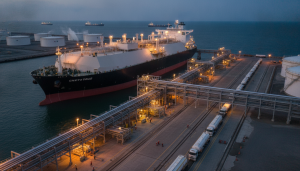
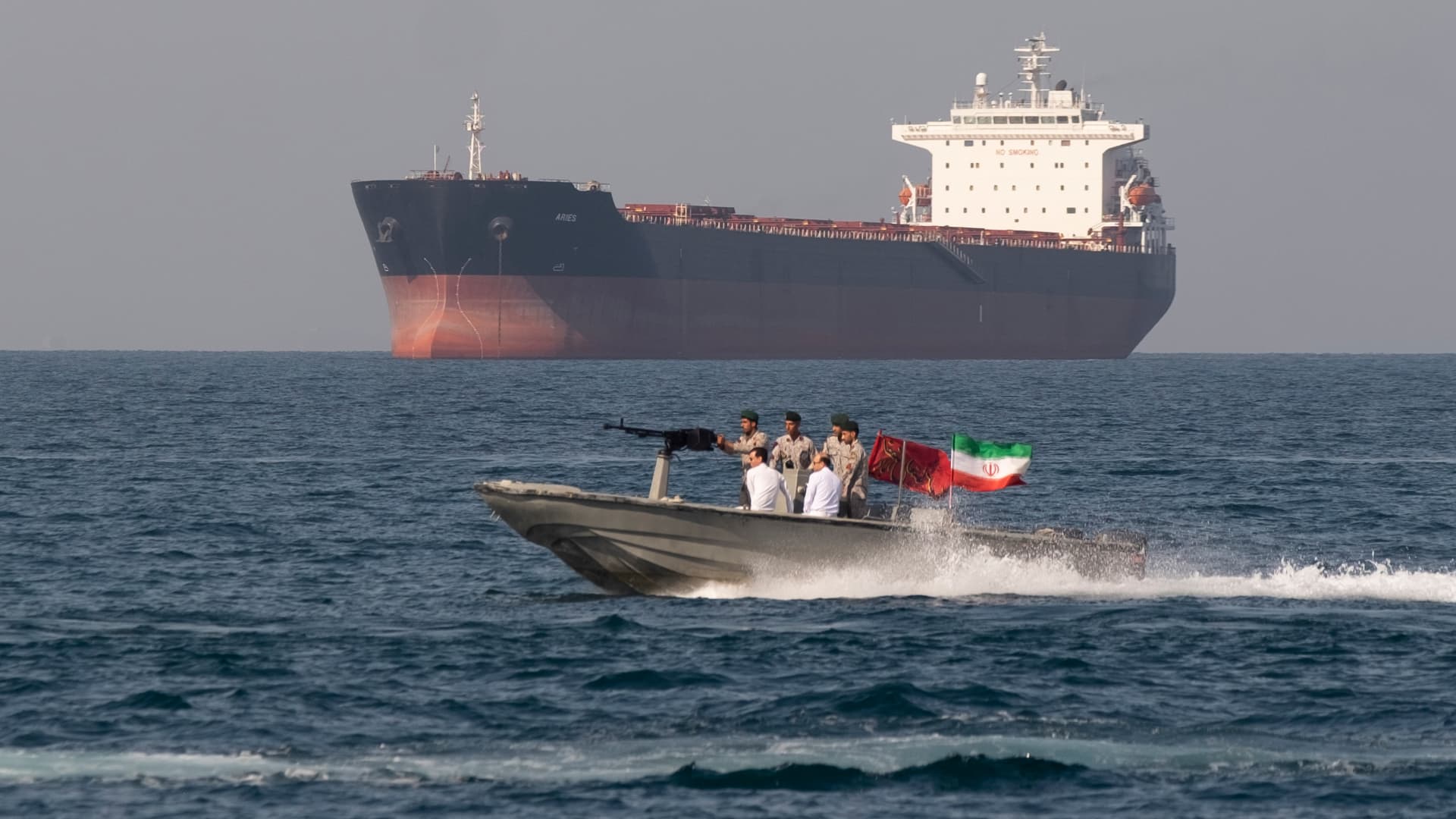
Iran’s Revolutionary Guards recently conducted military drills in the Strait of Hormuz, implementing a partial and temporary closure of this vital waterway. While Iranian state media cited “security precautions” and aimed to enhance “operational readiness” through a “Smart Control of the Strait of Hormuz” exercise, the action itself sent ripples across the global energy landscape. Positioned between Oman and Iran, the Strait is unequivocally one of the world’s most critical oil chokepoints, through which an estimated 13 million barrels per day (bpd) of crude oil transited in 2025. This volume alone accounted for roughly 31% of global seaborne crude flows, underscoring its irreplaceable role in connecting Middle Eastern producers with key international markets.
The timing of these drills is particularly salient, coinciding with ongoing US-Iran talks in Geneva aimed at resolving disputes over Tehran’s nuclear program. While an understanding of “guiding principles” was reportedly reached, the path to a comprehensive agreement remains protracted. This confluence of diplomatic fragility and overt military posturing in a region already marked by increased military presence from both sides elevates the potential for miscalculation. Initial assessments from shipping bodies suggested only “minor nuisance and delays” for inbound vessels. However, for energy investors, the true concern isn’t just about a few hours of disruption; it’s the signaling of heightened risk and the potential for more significant, sustained interference in this indispensable artery of global oil trade.
Market Reaction and Investor Sentiment
The immediate market response to heightened tensions around Hormuz is a clear indicator of growing supply anxiety. As of today, Brent Crude futures are trading at $92.46, marking a robust +2.24% gain for the day, with prices ranging between $89.11 and $94.68. Similarly, WTI Crude futures stand at $88.78, up +1.56%, having moved between $85.5 and $91.45. These upward movements are particularly noteworthy given the broader market context; Brent crude had seen a significant downtrend over the past 14 days, falling from $118.35 on March 31st to $94.86 just yesterday. Today’s sharp rebound suggests that the market is now pricing in a greater geopolitical risk premium, overriding recent bearish pressures. This sentiment is echoed in the questions we see from our readers, who are keenly focused on price direction, with queries like “is WTI going up or down?” dominating investor intent signals this week.
This renewed upward momentum for crude prices reflects a fundamental concern: the vulnerability of global supply chains to regional instability. While the physical impact of a temporary closure might be limited, the psychological impact on traders and the subsequent adjustment of risk models are immediate. Investors are not just reacting to current events but attempting to quantify future uncertainty. The volatility in gasoline prices, currently at $3.11 with a 2.64% increase today, further underscores how quickly supply fears translate into consumer costs and broader economic implications. The market is clearly signaling that the “minor nuisance” of a drill can quickly translate into significant price swings when it occurs in such a strategically vital location, leading many to ask, “what do you predict the price of oil per barrel will be by end of 2026?” This points to a deeper investor worry about sustained supply-side pressures throughout the year.
Navigating the Near-Term: Upcoming Catalyst Watch
For discerning oil and gas investors, the next two weeks present a barrage of critical data points and events that will intersect with the elevated geopolitical risk from Hormuz. Understanding how these catalysts could amplify or mitigate current market sentiment is paramount for strategic positioning. Today, April 21st, the OPEC+ JMMC Meeting is taking place. This gathering is particularly significant; against a backdrop of rising prices driven by supply anxiety, the Joint Ministerial Monitoring Committee’s discussions on market conditions and potential production adjustments could provide crucial guidance. Any rhetoric indicating a willingness to maintain or even tighten supply could send prices further upwards, while signals of increased output could offer some relief.
Beyond OPEC+, we have a steady stream of inventory and production data. The EIA Weekly Petroleum Status Report, due on April 22nd and again on April 29th, will offer vital insights into U.S. crude oil, gasoline, and distillate stockpiles and demand trends. Coupled with the API Weekly Crude Inventory reports on April 28th and May 5th, these data sets will help gauge the health of the world’s largest oil consumer. If U.S. inventories show unexpected draws amidst the Hormuz tensions, it could exacerbate supply fears. Furthermore, the Baker Hughes Rig Count, scheduled for April 24th and May 1st, will provide an update on drilling activity, offering clues about future domestic supply. Finally, the EIA Short-Term Energy Outlook on May 2nd will be a critical forward-looking document, as its updated forecasts will undoubtedly incorporate the latest geopolitical developments and their potential impact on global supply-demand balances for the remainder of 2026. Investors should meticulously track these releases, as they will provide granular detail on the fundamental forces shaping market direction in the shadow of regional instability.
Strategic Implications for Oil & Gas Investors
The current environment, characterized by an oscillating geopolitical risk premium and a volatile price trajectory, necessitates a thoughtful investment approach in the oil and gas sector. The Strait of Hormuz incident serves as a stark reminder of the inherent supply risks in a commodity market heavily reliant on Middle Eastern flows. For investors, this translates into a need to evaluate portfolio resilience against potential supply shocks and sustained periods of elevated prices. Companies with diversified asset bases, particularly those with significant production outside of high-risk regions, may offer a degree of insulation. Furthermore, entities with robust balance sheets and strong free cash flow generation are better positioned to weather price volatility and capitalize on potential market dislocations.
Consider the broader implications for long-term oil price forecasts. While there’s no crystal ball for the price of oil per barrel by the end of 2026, the Hormuz situation adds a persistent upward bias to the risk premium. This means that even if demand moderates, or non-OPEC+ supply increases, geopolitical friction could prevent prices from retreating significantly. Investors should assess energy companies not just on their operational efficiency but also on their strategic hedging capabilities and exposure to different market segments. For those seeking to mitigate risk, exploring inverse ETFs or options strategies might be prudent. Conversely, for those with a higher risk tolerance and a bullish outlook on sustained geopolitical tension, direct investments in upstream producers with significant unhedged exposure could yield substantial returns. The key takeaway is clear: the Strait of Hormuz remains a perennial flashpoint, and its impact on global oil supply security is a factor that must be deeply integrated into every oil and gas investment thesis.