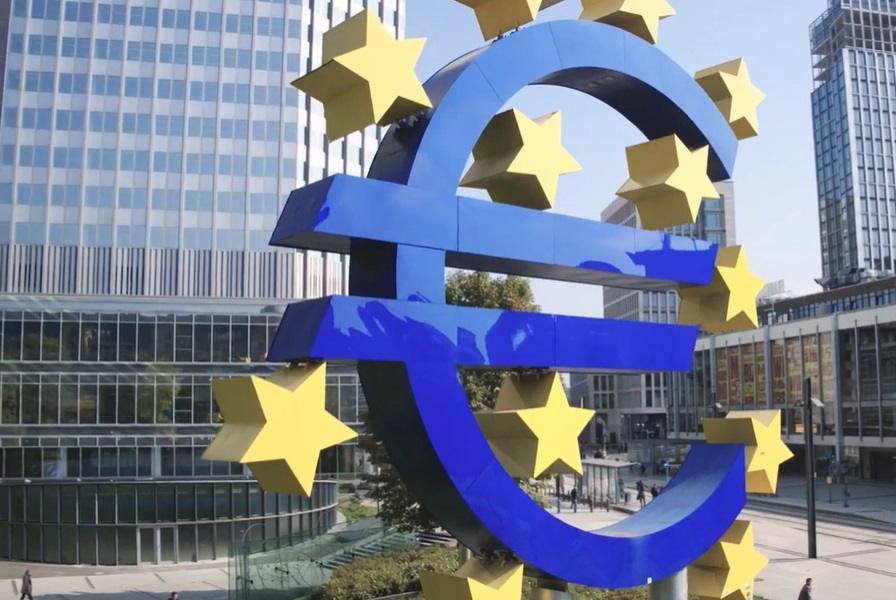
ECB Climate Fines Signal New Era for Oil & Gas Financing
The recent €7.5 million penalty levied by the European Central Bank (ECB) against Paris-based Crédit Agricole serves as a stark warning to the broader financial sector, and by extension, to oil and gas investors. This fine, following a similar €187,650 penalty against Spanish bank ABANCA in November 2025, underscores a deepening regulatory commitment by the ECB to enforce rigorous climate-related and environmental (C&E) risk assessments within banking institutions. For energy companies and their investors, these actions are not mere administrative hurdles for banks; they represent a fundamental shift in capital allocation dynamics, directly influencing the cost and availability of financing for carbon-intensive projects. This analysis delves into how these regulatory pressures are reshaping the investment landscape for crude and natural gas, tying directly into market movements and future outlooks.
Regulatory Scrutiny Intensifies as Energy Markets Fluctuate
The ECB’s proactive stance on climate risk, initiated with its supervisory expectations guide in 2020 and cemented by a comprehensive stress test in 2022, is now yielding tangible enforcement. Crédit Agricole’s fine specifically stemmed from its failure to meet a May 31, 2024 deadline to conduct a materiality assessment of its C&E risks for 75 days. This uncompromising approach signals that compliance with climate risk frameworks is no longer optional, but a prerequisite for financial institutions operating within the EU. The impact on energy financing is profound: as banks face increased pressure and penalties, their risk appetite for projects with significant C&E exposure will naturally diminish, potentially increasing the cost of capital for exploration and production (E&P) companies.
This regulatory tightening coincides with a volatile period in global energy markets. As of today, Brent Crude trades at $92.24, marking a 2% increase, while WTI Crude stands at $88.73, up 1.5%. These recent gains follow a significant downward trend, with Brent having shed nearly 20% from $118.35 on March 31st to $94.86 on April 20th. Gasoline prices also reflect this buoyancy, currently at $3.11, up 2.31%. This market volatility, coupled with stricter financing conditions, creates a challenging environment for oil and gas companies. Investors must now weigh traditional supply-demand dynamics against an evolving regulatory backdrop that can directly influence the financial viability of energy projects, making prudent capital allocation even more critical.
Investor Questions: Price Forecasts and Performance Under Pressure
Our proprietary intent data reveals that investors are keenly focused on forward-looking performance, with questions ranging from “is WTI going up or down?” to “what do you predict the price of oil per barrel will be by end of 2026?” and specific inquiries like “How well do you think Repsol will end in April 2026?” These questions underscore a desire for clarity amidst uncertainty, and the ECB’s actions directly influence these outlooks. While a direct causal link between a bank fine and immediate oil prices is tenuous, the cumulative effect of such regulations is to reshape the long-term supply curve.
Stricter banking regulations on climate risk can constrain investment in new oil and gas production, potentially leading to tighter supply in the medium to long term if demand remains robust, thereby supporting higher prices. Conversely, the increased cost of capital for certain projects might deter investment, causing some companies to pivot faster towards lower-carbon alternatives, impacting their traditional oil and gas revenue streams. For companies like Repsol, which has a significant presence in both traditional energy and renewables, the ability to effectively manage and disclose C&E risks will be paramount. Those with robust transition strategies and strong ESG performance are likely to attract more favorable financing terms, potentially outperforming peers who struggle with these new requirements.
Upcoming Energy Events and the Evolving Risk Landscape
The confluence of regulatory pressure and traditional market drivers demands a nuanced approach from investors. The ECB’s multi-year process, which includes stress tests and direct feedback to banks in November 2022, shows a systematic and escalating commitment. This commitment will continue to influence how financial institutions view and price risk for energy assets. Investors should therefore monitor key upcoming energy events not just for their immediate price impact, but for their implications on longer-term capital availability and company strategy.
For instance, the upcoming OPEC+ JMMC Meeting on April 21st holds immediate sway over global supply expectations, directly influencing revenue projections for E&P companies. The EIA Weekly Petroleum Status Reports (April 22nd and April 29th) provide crucial insights into inventory levels and demand trends, impacting the perceived profitability of new projects. Similarly, the Baker Hughes Rig Count on April 24th and May 1st offers a real-time gauge of drilling activity, which can be affected by financing constraints. Finally, the EIA Short-Term Energy Outlook on May 2nd will offer official projections that banks and investors will integrate into their C&E risk models. These events, viewed through the lens of heightened regulatory scrutiny, help frame the investment thesis for oil and gas in a world increasingly focused on climate financial risk.
Investment Implications: Adapting to a New Financial Paradigm
The ECB’s fines are not isolated incidents; they are part of a broader, systemic effort to embed climate risk into the core of financial decision-making. The central bank’s acknowledgment in July 2025 that EU banks have made “significant progress” in managing climate and nature-related risks implies a continuous, accelerating trend rather than a peak. For oil and gas investors, this signifies a permanent shift in how capital is allocated and priced.
Companies that proactively develop comprehensive C&E risk management frameworks, transparently disclose their emissions (Scope 1, 2, and increasingly 3), and articulate credible energy transition strategies will likely be rewarded with lower costs of capital and greater access to financing. Conversely, those that lag in these areas risk facing higher borrowing costs, restricted access to loans and equity markets, and ultimately, a reduced competitive advantage. Investors must move beyond traditional financial metrics to rigorously evaluate the climate resilience and transition plans of their portfolio companies. The ECB’s penalties serve as a powerful reminder that administrative non-compliance in the realm of climate risk now carries substantial financial consequences, directly impacting the investment viability of energy assets.


