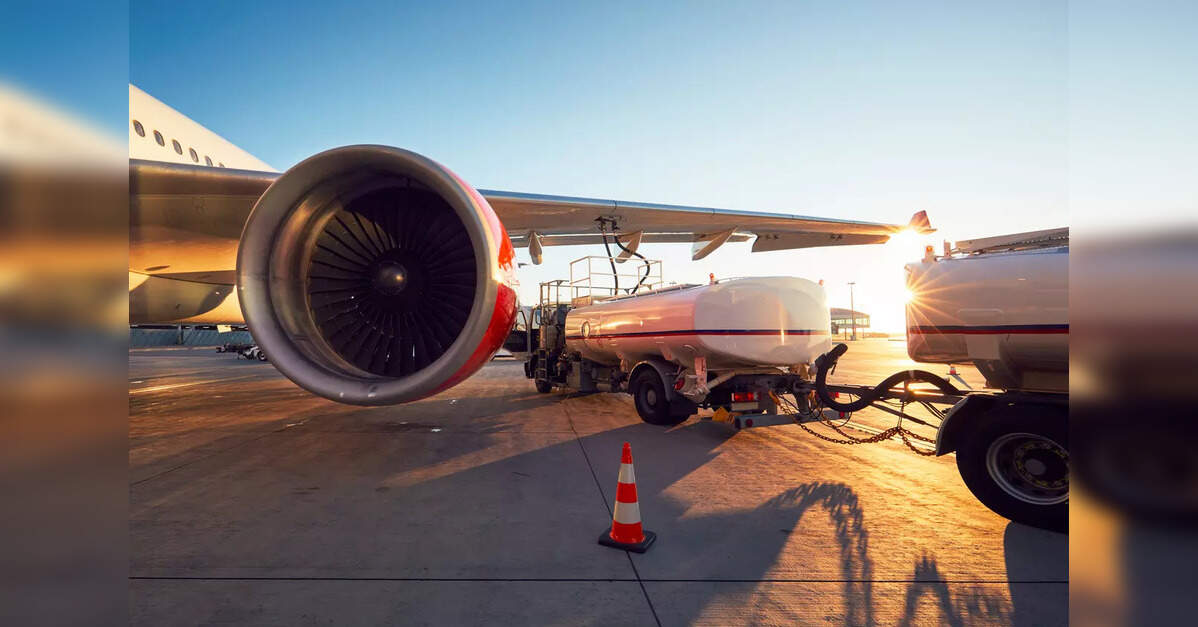
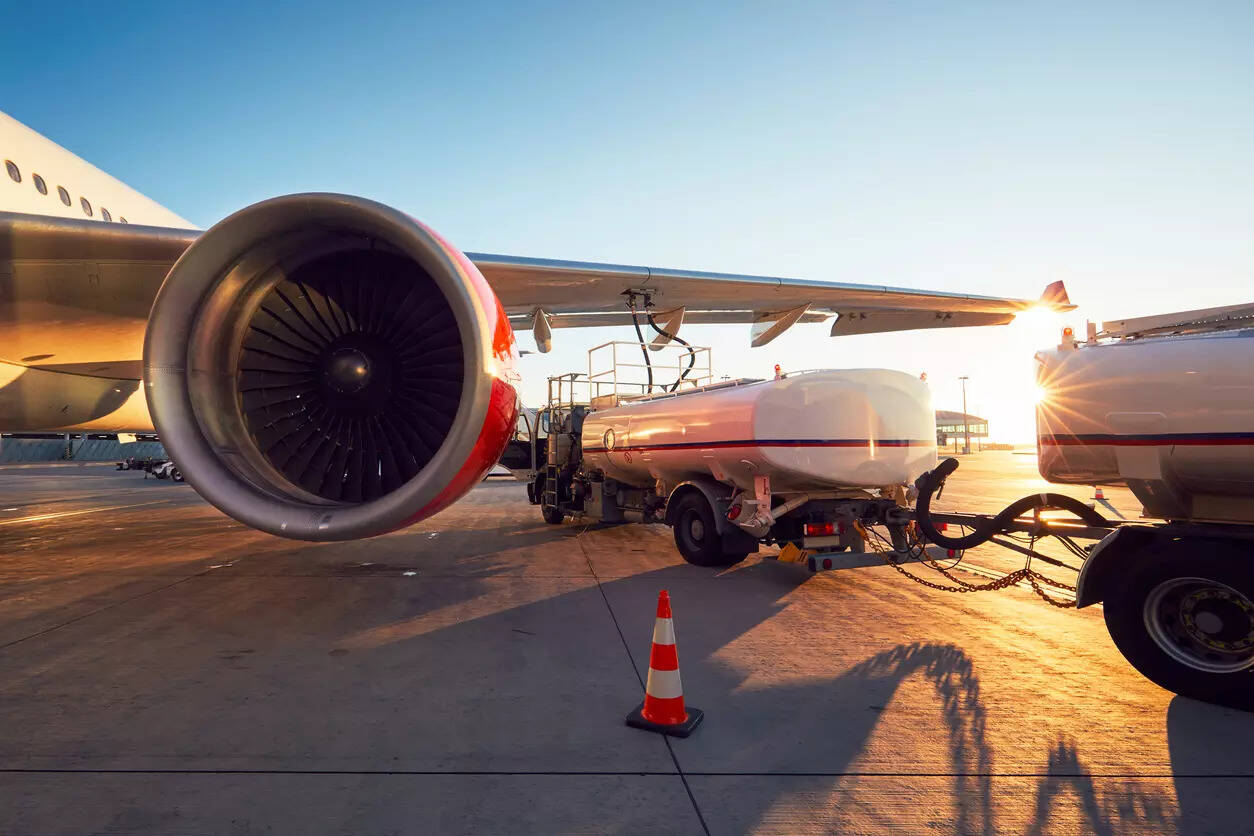
NEW DELHI: Ahead of the implementation of the commercial aviation industry-focused carbon emission reduction norms from January 2027, India is preparing to meet the internationally mandated obligations for adopting Sustainable Aviation Fuel (SAF). While the final modalities are being streamlined, the requisite feedstock and infrastructure is ready, say stakeholders.
According to Deepak Ballani, Director General, Indian Sugar and Bio-Energy Manufacturers Association (ISMA), in order to meet the International Civil Aviation Organisation’s Carbon Offsetting and Reduction Scheme for International Aviation or CORSIA framework and timelines, cumulative SAF requirement for India will be roughly 0.72 billion litres by 2030.
The government has so far unveiled indicative blending targets of 1 per cent by 2027, 2 per cent by 2028, and 5 per cent by 2030 for SAF to be blended with aviation turbine fuel, initially for international flights. India, as a member of ICAO, is obligated to comply with the mandatory phase of CORSIA from 2027.
“India today has one of the most robust biofuel ecosystems globally and has emerged as the third-largest producer of biofuels,” said Ballani to ET Infra, outlining that the success of the Ethanol Blending Programme (EBP) has created strong upstream and downstream capacity, enabling integration of advanced biofuels into transport decarbonisation.
“Even conservatively accounting for conversion ratios in ATJ (Alcohol-to-Jet) technology, the ethanol required to meet this SAF demand would be well within India’s current surplus capacity.
“India has adequate and scalable feedstock availability to support SAF implementation without compromising domestic fuel blending priorities,” added Ballani.
Infrastructure readiness
The country’s major airports operated under the public-private partnership framework as well as the ones operated by state-backed Airports Authority of India (AAI), currently have the infrastructure to transition to a SAF fueling ecosystem once the India specific blending norms are finalised, according to a senior official from AAI.“The infrastructure and space we already have. The only thing is fuel where ATF will be replaced with blended fuel. That is all. If (infrastructure) it is not there at some other airports, then it can be built up. That is not an issue,” said Rajesh Nilkanth Shinde, Executive Director (Technical) at AAI.
Shinde highlighted that in inter-ministerial meetings involving the Ministry of Petroleum and Natural Gas, Directorate General of Civil Aviation (DGCA), as well as oil marketing companies, who currently supply ATF to airlines, issues such as percentage of blending, certification process, quantity of SAF production required, have been deliberated.
“ATF fuel suppliers are there at all the airports. So, we have an ATF stocking mechanism. Different oil agencies — Indian Oil, HPCL, BPCL — need to collaborate with each other on some sort of MOU (Memorandum of Understanding) because land constraints are there,” said Shinde.
Currently, in major airports such as Delhi International Airport, fuel supply and associated infrastructure is provided by a joint venture comprising IOCL, BPCL, and the airport operator. Many other airports in the country primarily have one or two oil marketing companies providing the ATF supply.
Blending and SAF pricing
While the government has so far shared indicative blending targets, the Ministry of Civil Aviation is still working on a National SAF Policy which will provide long-term regulatory certainty and investment signals to the industry.
“It (SAF blending) will be determined by the goal that the government is setting and it is not a near-term, but is a long-term goal. My sense is that this 1 per cent (indicative SAF blending) is a step in that direction,” said Satish Kumar, President and Executive Director, Alliance for an Energy Efficient Economy, to ET Infra.
Kumar highlighted that much of the blending mandate will depend on how the airlines set the fares when they start incorporating SAF and accordingly the government is expected to moderate the pace of the SAF blending.
According to ISMA, globally, SAF is currently priced at a premium relative to conventional ATF and in most markets, SAF costs are estimated at approximately 2–3 times the price of conventional jet fuel, primarily due to scale, technology maturity, and financing costs.
Ballani highlighted that since the initial blending ratios are expected to be very small beginning at 1 or 2 per cent, the price impact on the final ticket or ATF cost will likely be marginal.
“At 1 per cent blending, even if SAF is significantly more expensive, the weighted average fuel cost increase is limited. The impact on passenger fares is expected to be negligible, particularly when distributed across total operating costs,” said Ballani.
“Moreover, as domestic production scales and technology efficiencies improve, costs are expected to decline over time — similar to the trajectory observed in solar energy and ethanol.
Therefore, while SAF itself carries a premium, SAF-blended ATF in India is unlikely to impose a material burden on consumers, especially in the initial compliance phase,” he added.
The global commercial aviation industry accounts for nearly 2.5 per cent of global carbon emissions, with fuel burn from aircraft contributing 80 per cent of emissions. In order to achieve net zero commitments, apart from CORSIA obligations, aircraft and engine manufacturers are developing planes which are SAF compliant and run on fuel efficient engines.
India is currently the world’s third-largest domestic aviation market and according to estimates by 2040, the passenger traffic is expected to grow six-fold to around 1.1 billion and the commercial airline fleet is predicted to grow from 400 in 2014 to around 2,359 by March 2040, thereby necessitating the need for a strong framework which supports less carbon intensive air travel.