“Feel like it hasn’t stopped raining?” the Met Office asked on Monday. For some places, the forecaster said, it really had rained every day so far this year.
People who live in parts of Devon, Cornwall and Worcestershire have been dodging deluges or showers for 40 days – the same number of days that it rained in the Bible’s Noah’s ark story, the same number of soggy days you can expect if it rains on St Swithin’s Day, according to folklore.
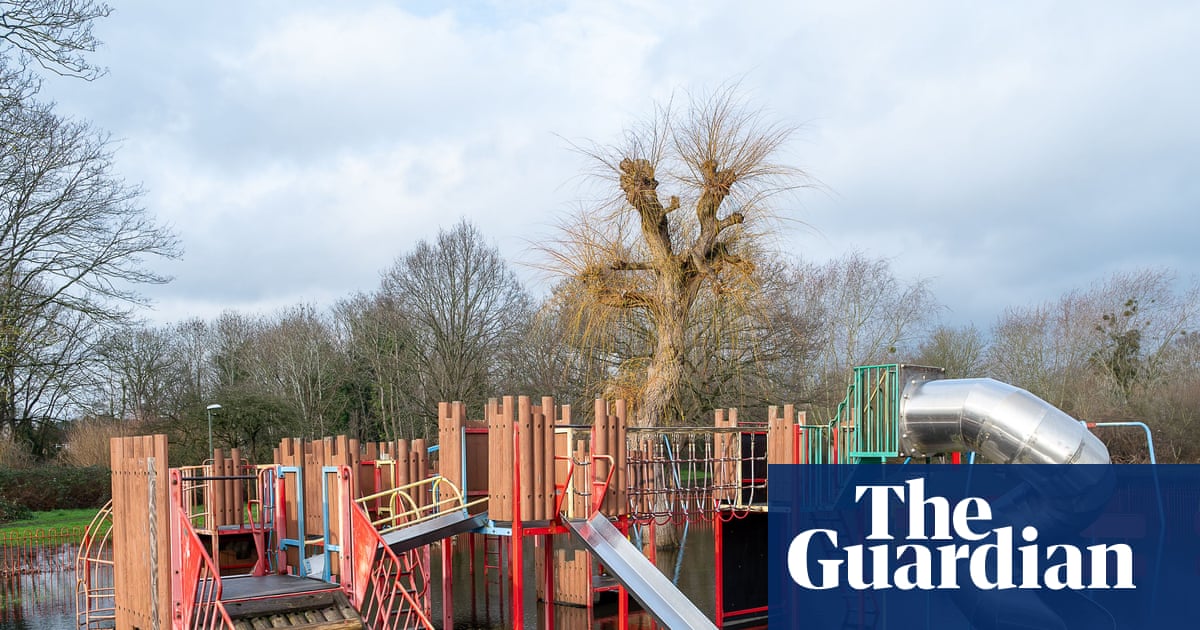
Persistent rain in south-west England, the Midlands and other parts of the UK has meant misery for hundreds of people whose homes and businesses have flooded and tough times for many more, from farmers and builders to motorists, sea swimmers and sportspeople.
Feel like the rain hasn’t stopped? ☔
For some places, it really hasn’t! 😦
North Wyke, Cardinham and Astwood Bank have recorded rain every single day so far this year 🌧️ pic.twitter.com/q8DchNZQjB
— Met Office (@metoffice) February 9, 2026
“It’s just a matter of trying to hang on,” said James Winslade, a beef and arable farmer on the Somerset Levels, where his 500 cattle were confined to a barn on what is now an island.
“We were prepared. We’ve got everything we need for the cattle, such as grain and water. But with global warming, as a nation we’ve got to invest more in infrastructure.”
Provisional Met Office statistics show that Northern Ireland experienced its wettest January in 149 years – and second wettest on record. Co Down has endured its wettest January on record with the soggiest spot being the Mountains of Mourne, where 790mm of rain has been recorded so far this year.
Wales has reached 39% of its February monthly average and 94% of its average winter rainfall already. Its wettest spot this year so far has been Nantyglo in the south Wales valleys, where 394mm of rain has fallen.
Farmers in many parts of the UK said they were struggling, with the rain making everything from lambing to growing crops difficult or, in some cases, impossible.
Kevin Gilbert, north-east chair of NFU Scotland, said farmers were being hit by a combination of drought last summer then heavy falls of rain and snow this winter.
He said farmers had been taking sheep and cattle on to higher ground – if they had access to it – or inside. “And winter crops – barley, oilseed rape and wheat – can only survive up to 10 days underwater. They’ve been underwater for a month, so they’ll be dead.”
Gilbert said he had been farming for 35 years, and these were the worst conditions he had encountered. “It’s the extremes that are so difficult.”
Horticulturists are also being hit. Hillier Nurseries, a producer of shrubs and trees in Hampshire, reported it was struggling to plant new trees and get them out of the ground to sell.
Fran Barnes, chief Executive at the Horticultural Trades Association (HTA), said: “Just months ago, the country was facing water restrictions. It is deeply frustrating that yet again we are experiencing floods, with inadequate investment in storing that water and a lack of investment in water infrastructure to give this country water resilience. Despite the current flooding, there is no certainty that we won’t face water restrictions again in six months’ time.
“It’s an issue facing our sector. Trying to grow trees and plants in drought or flood is incredibly difficult. Ironically, many of these growers are producing the environmental horticulture that our country will rely on in the future to mitigate the impacts of climate change and to help us achieve net zero. The right trees in the right places can alleviate winter flooding whilst also providing summer cooling.”
The heavy rain has led to sewage problems on beaches and inland. Swimming groups around the country, who usually leap in no matter what the weather, have not risked it for fear the heavy rain may have led to sewage spills.
On Monday there were 181 sewage alerts on the Surfers Against Sewage (SAS) live map. Chloe Flood, senior campaigns officer at Surfers Against Sewage, said: “It’s raining, they’re dumping. It’s the same classic water company behaviour. Years and years of leaving infrastructure to crumble whilst shelling out payments to shareholders and bosses means that sewage continues to pour into our wild waters.”
Across many parts of the UK, the rain has damaged buildings and roads. In Yorkshire, heavy rain caused the M62 to close completely for emergency repairs at the weekend, after apparently being damaged by the weather.
Motorists have been hitting potholes on both major and minor roads. Sam Kirby, a digital marketing consultant and volunteer coastguard rescue officer in Cornwall, said: “Incessant rain just about sums it up. Roads have been trashed by the weather. There are random cars dumped on the side of narrow country lanes because they’ve hit one and damaged their suspension.”
Juliet Line, a Cornwall councillor, said: “We’re all frustrated about the state of the roads. But the timing of all this couldn’t have been worse. We’re really up against the elements this year.”
The Met Office pinpointed three places where it had rained for 40 days straight – North Wyke, on the edge of Dartmoor in Devon, Cardinham, on Bodmin Moor and Astwood Bank, in Worcestershire.
Provisional Met Office figures for February (up to and including Sunday 8 February) show England has already reached 59% of its monthly rainfall average. The city of Aberdeen has reached 180% of its February average.
The continuous rain has made it hard for the building trade. Rico Wojtulewicz, of the National Federation of Builders, said heavy rain could hamper groundwork and constructing foundations. “Builders will try to stagger projects so they can get on with other things when the rain is too heavy.”
But Wojtulewicz said builders got on with it no matter the weather – and the relatively mild weather in many places this winter had meant that they had been able to do more masonry and concrete work. “There has to be quite a bit of strategising.”
Sporting fixtures, from football matches to horse races, have fallen foul of the weather. Perranporth golf club in Cornwall warned players and walkers to beware after a shaft opened up. High river levels have made life difficult for anglers.
The weather has flushed hibernating animals such as adders out of burrows and caused more frogs, toads and newts to be out and about much earlier than usual.
Charlcombe Lane in Bath closes to traffic, except for residents’ access, from Monday for the annual migration of toads, frogs and newts as they head to their breeding lake. This year a patrol already helped almost 500 cross the road before the closure.
Patrol manager Helen Hobbs said: “The increasing unpredictability of the weather with wetter and milder winters has meant that we’ve seen larger movements of frogs, toads and newts.”
There is an occasional bright spot. The bad weather has been a bonus for the Quantock Hills national landscape team in Somerset, which is running a “month of mud” festival.
And the weather has caused the timbers of a historic shipwreck to emerge on Studland beach in Dorset. It is thought to be the remains of a Dutch merchant ship that sank in 1631.
Steven Keates, a deputy chief forecaster at the Met Office, said the rain was likely to continue for many this week. Saturday could be dry, but he added: “This reprieve doesn’t last long, as the next set of Atlantic weather fronts looks set to move in from the west at the end of the weekend.”